 Owner’s manual
 Error Codes





Is the GE Profile refrigerator any good?
Yes. GE Profile refrigerators, including model PVD28BYNCFS, are a solid choice when you want premium features and strong long-term coverage on major cooling components. In the PVD28BYNCFS documentation, GE Profile models include a five-year sealed system warranty (compressor, condenser, evaporator, and connecting tubing), which is a meaningful quality signal.
What “good” means for this model
A refrigerator is “good” when it holds steady temperatures, makes ice reliably, and has supportable parts and service. For GE Profile PVD28BYNCFS, we see strong indicators in the documentation and common serviceability items.
Strengths most owners care about
- Sealed system coverage: GE Profile models include 5-year sealed system warranty coverage.
- Water filtration support: The manual calls for replacing the filter about every 6 months (or sooner if flow drops).
- Parts availability for common issues: Water, ice, and defrost components are standard repair paths.
- Clear operating specs for water supply: Helps prevent dispenser and ice maker problems.
- Service pathway: GE-authorized service is the standard route for warranty repairs.
Quick reality check: maintenance affects “good” more than the badge
If the water supply is out of spec or the filter is overdue, performance complaints (slow water, hollow ice, no ice) are common even on high-end units.
| Item | What to expect | What to do |
|---|---|---|
| Water filter | Replace about every 6 months | Use a compatible filter and reset the filter indicator per the PVD28BYNCFS owner’s manual |
| Water pressure | Needs adequate pressure for ice and water | Keep supply in the typical 25 to 120 psi range |
| Ice production | Depends on water flow and freezer temp | Troubleshoot water flow first, then ice maker |
Parts that commonly support “good performance”
If you are judging the refrigerator by ice and water performance, these are the parts that most often matter:
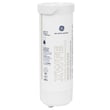
- GE refrigerator water filter XWFE (routine maintenance item)
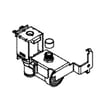
- Refrigerator dual water inlet valve assembly WR57X24979 (controls water to dispenser and ice maker)
- Refrigerator ice maker WR30X39345 (ice production)
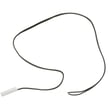
- Freezer defrost heater WR51X31995 and defrost sensor (defrost reliability)
Why it matters
A “good” refrigerator is one you can keep running predictably. Strong sealed-system warranty coverage plus regular filter changes and correct water supply conditions usually translate into fewer headaches and better-tasting water and ice.
Last updated: February 2026
What are the disadvantages of a bottom freezer refrigerator?
Bottom-freezer refrigerators like the GE PVD28BYNCFS put fresh food at eye level, but the tradeoffs are real: you bend more for frozen items, deep drawers can hide food, and the freezer section can feel heavier and less convenient to access. See the PVD28BYNCFS owner's manual for model-specific features and storage options.
Common disadvantages (what owners notice most)
- More bending and lifting: frozen foods sit low, so you crouch more often.
- Deep drawer organization: items stack; smaller packages can get buried.
- Heavier access: full-extension freezer drawers and baskets can be heavy when loaded.
- Space to open: the freezer drawer needs clearance in front of the refrigerator.
- More components in some designs: features like dispenser systems, fans, and sensors add complexity.
Practical ways to reduce the downsides
- Use bins to group foods (breakfast, veggies, meats) so you can lift one bin instead of digging.
- Keep frequently used frozen items in the upper basket.
- Avoid overloading the drawer; it reduces airflow and makes the drawer harder to slide.
- If you have ice and water features, replace the filter on schedule; a clogged filter can reduce dispenser flow.
Quick comparison: bottom freezer vs top freezer
| Feature | Bottom freezer | Top freezer |
|---|---|---|
| Fresh food access | Easier (eye level) | More bending |
| Frozen food access | More bending | Easier |
| Freezer organization | Drawer stacking | Shelf-style visibility |
| Typical cost | Higher | Lower |
Why it matters
If you use frozen foods daily, the bending and drawer organization can be the deciding factor. If you use fresh foods more often, bottom-freezer designs usually feel more convenient day to day.
Last updated: February 2026
What is the life expectancy of a GE Profile refrigerator?
A GE Profile refrigerator typically lasts 13 years with normal household use and basic maintenance. For your GE PVD28BYNCFS, keeping airflow clear, doors sealing tightly, and the water system maintained helps the compressor and sealed system reach that expected lifespan (see the PVD28BYNCFS owner's manual).
Typical lifespan and what usually fails first
Most refrigerators reach end-of-life due to cooling-system wear or control issues, not cosmetic parts.
- Compressor and sealed system: longest-life components, but most expensive when they fail
- Fans and sensors: common wear items that can cause warm temps or frost
- Ice maker and water system: frequent service area (clogs, valves, filter issues)
- Control boards: can cause intermittent cooling or dispenser problems
| Component area | What you may notice | Typical fix type |
|---|---|---|
| Sealed system (compressor/evaporator) | Not cooling, constant running | Professional sealed-system repair |
| Airflow (fans/defrost) | Frost buildup, warm fresh food | Replace fan, heater, or sensor |
| Water/ice | Slow water, no ice, small cubes | Filter/valve/ice maker service |
| Controls | Random beeping, display issues | Board or harness diagnosis |
Maintenance that extends life (and improves performance)
These steps reduce strain on the cooling system and help prevent nuisance failures.
- Replace the water filter about every 6 months (or sooner if flow drops)
- Keep condenser and ventilation areas free of dust and blockage
- Avoid overpacking; leave space for air circulation in fresh food and freezer sections
- Confirm doors close fully; fix gasket gaps and level the cabinet if needed
- Use the correct filter and install it fully seated to prevent leaks and low flow
Parts that commonly support water and ice performance
If you are troubleshooting water taste/flow or ice production on PVD28BYNCFS, these model-matched parts are often involved:
- GE refrigerator water filter XWFE (routine replacement)
- Refrigerator dual water inlet valve assembly WR57X24979 (no water to dispenser/ice maker)
- Refrigerator ice maker WR30X39345 (no ice or irregular harvest)
Why it matters
A refrigerator that is maintained to hit the typical 13-year lifespan usually runs more efficiently, holds safer food temperatures, and avoids the high-cost repairs that happen when airflow, defrost, or water issues are ignored.
Last updated: February 2026
What is the most common problem with GE Profile refrigerators?
The most common GE Profile refrigerator complaint is not cooling properly (fresh food too warm, freezer too warm, or both). On your GE PVD28BYNCFS, cooling issues are usually tied to airflow, frost buildup, or a sealed-system problem; we use the PVD28BYNCFS owner's manual to confirm settings and diagnostics.
Most common symptoms we see (and what they point to)
- Fridge warm, freezer OK: airflow restriction, fan issue, damper issue, or heavy loading blocking vents
- Freezer warm, fridge warm: condenser airflow problem, compressor/inverter issue, or sealed-system concern
- Frost on back wall or poor airflow: defrost problem (heater, sensor, control)
- Clicking or humming with no cooling: compressor start/inverter related
- Intermittent temps: door not sealing, frequent door openings, or control/thermistor feedback
Quick checks before replacing parts
- Verify temperature setpoints and any special modes in the PVD28BYNCFS owner's manual.
- Make sure air vents inside the fresh food section and freezer are not blocked.
- Check door closure and gasket contact all the way around.
- Clean condenser area and confirm the unit has proper clearance for airflow.
- If the display shows a fault, match it using GE refrigerator error codes.
Parts that commonly relate to “not cooling” on this model
| Symptom | Likely system | Example part for PVD28BYNCFS |
|---|---|---|
| Frost buildup, weak airflow | Defrost system | Freezer defrost heater WR51X31995 or refrigerator defrost sensor WR55X29875 |
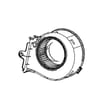
| Ice room warm, ice production drops | Ice room airflow | Refrigerator ice room fan motor assembly WR60X31997 |
| No cooling or unstable cooling | Compressor drive/control | Refrigerator inverter WR55X36435 |
Why it matters
When a GE Profile refrigerator is not cooling, food safety and compressor run time are the big concerns. Catching an airflow or defrost issue early can prevent heavier frost buildup and wider temperature swings.
Last updated: February 2026





