





Is it worth replacing your engine?
Yes, replacing the engine on your Briggs 28R707-0140-01 lawn and garden engine is worth it when the equipment frame, deck, transmission, and controls are in good shape and you want several more seasons of reliable use. It is not worth it when the machine has major wear elsewhere or the total repair cost is close to replacing the whole unit.
- Replace the engine if the mower or tractor chassis is solid (no severe rust, cracks, or bent deck).
- Replace the engine if you can confirm the crankshaft size and mounting pattern match your equipment.
- Repair instead if the issue is routine maintenance (filters, ignition, fuel delivery).
- Repair instead if the engine has spark and compression but runs poorly (often fuel or air related).
- Replace the whole unit if multiple big-ticket items are failing (engine plus transmission, steering, deck spindles).
Before committing to an engine swap, we recommend ruling out the most common causes of no-start, surging, or power loss:
| Symptom | Often caused by | Part to check first (if applicable) |
|---|---|---|
| Hard starting, black smoke | Restricted air flow | Briggs & statton air filter 496894S |
| Runs a few seconds then dies | Fuel restriction or carb issue | Briggs & statton fuel inlet 692317 |
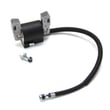
| No spark | Ignition failure or flywheel key issue | Briggs & statton magneto 591459 and Briggs & statton key 222698S |
- Total cost: engine price plus oil, fuel line, clamps, blades (if needed), and any shop labor.
- Time and tools: most swaps require basic hand tools, a torque wrench, and careful belt and throttle/choke linkage routing.
- Compatibility: crankshaft diameter/length, PTO type, and charging system output must match your equipment.
- Future maintenance: a fresh engine still needs regular oil changes and clean filtration.
A replacement engine can restore reliability and power, but only pays off when the rest of the machine can safely handle the renewed performance. If the underlying problem is a clogged filter or ignition fault, fixing that first saves money and downtime.
Last updated: February 2026
What is the lifespan of a B&S engine?
A Briggs lawn and garden engine like model 28R707-0140-01 typically lasts 1,000 to 2,000 hours with normal homeowner use and consistent maintenance; engines that get clean oil, clean air, and fresh fuel often reach 2,000 to 3,000+ hours before needing major internal work.
Lifespan depends more on maintenance and operating conditions than the brand name on the shroud.
- Light homeowner use: ~500 to 1,000 hours
- Average homeowner use: ~1,000 to 2,000 hours
- Excellent maintenance and clean operating conditions: ~2,000 to 3,000+ hours
- Commercial or dusty, hot, heavy-load use: often shorter unless serviced frequently
| Usage pattern | What shortens life fastest | What extends life most |
|---|---|---|
| Occasional mowing | Old fuel, sitting all winter | Fuel stabilizer, off-season storage steps |
| Weekly mowing | Dirty air filter, low oil | Regular oil changes, clean cooling fins |
| Heavy loads (towing, hills) | Overheating, over-revving | Correct throttle use, clean airflow |
These are the highest-impact habits for a Briggs engine like the 28R707-0140-01.
- Change oil on schedule and keep the oil level correct (never run low)
- Keep the air intake clean; replace a clogged filter like the Briggs & statton air filter 496894S
- Use fresh gasoline; avoid storing untreated fuel in the tank/carburetor
- Keep the engine cooling system clear (grass and debris around shrouds and fins)
- Fix small fuel or oil leaks early so the engine does not run lean or low on oil
Some symptoms are simple tune-up issues; others point to internal wear.
- Hard starting even with fresh fuel and a good spark
- Noticeable loss of power under load
- Excessive oil consumption or blue exhaust smoke
- Low compression (engine spins fast but will not “catch”)
- Persistent knocking or metallic noise
Knowing the typical hour range helps you decide whether to maintain, rebuild, or replace. For many engines, a few low-cost service parts (oil, filters, ignition components) restore performance and delay expensive internal repairs.
Last updated: February 2026
What engine is in the Briggs and Stratton 28R707-0140-01?
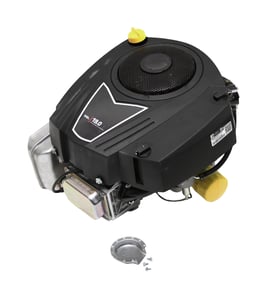
The Briggs 28R707-0140-01 is the engine model itself: a Briggs vertical-shaft, single-cylinder, 4-cycle gasoline lawn and garden engine. The “0140-01” suffix identifies the exact build specification (trim) for parts matching, such as ignition and filtration.
Briggs model numbers are used to match the correct parts and specifications for your exact engine build.
- 28R707: the base engine family/model
- 0140: the type code (configuration details)
- 01: the code (production/version details)
- The full string 28R707-0140-01 is what we use to ensure parts fit
If you are servicing a Briggs 28R707-0140-01, these are typical maintenance and repair items that must match the exact engine model and type code:
- Air filter and pre-cleaner (restricted airflow causes hard starting and surging)
- Fuel system parts (stale fuel issues often mimic ignition problems)
- Ignition components (no-spark or intermittent spark)
- Flywheel key (sheared key can cause backfiring or no-start)
- Oil seals and gaskets (leaks and low-oil shutdown concerns)
Here are a few model-matched examples from our parts list:
| What it affects | Example part for this model | When to consider replacing |
|---|---|---|
| Air intake | Briggs & statton air filter 496894S | Dirty, oil-soaked, or damaged filter |
| Ignition/spark | Briggs & statton magneto 591459 | No spark, weak spark, intermittent spark |
| Timing after impact | Briggs & statton key 222698S | Backfire after hitting an object, sudden no-start |
On Briggs engines, the same base model can have multiple type and code variations. Using the full 28R707-0140-01 ensures you get the correct carburetor parts, ignition parts, and seals for your exact build.
Last updated: February 2026
What are common B&S engine problems?
Common Briggs lawn and garden engine problems on model 28R707-0140-01 usually come from fuel delivery, ignition, and airflow issues: stale fuel, a dirty carburetor, weak spark, or a restricted air filter. Most no-start, surging, and rough-running complaints are fixed with basic maintenance and a few targeted parts.
- Won’t start or starts then dies: stale fuel, clogged carburetor passages, restricted fuel inlet
- Surges or hunts at idle: partially clogged carburetor, air leak, dirty air filter
- Runs rough or lacks power: dirty air filter, fouled spark plug, low compression (valve issue)
- Backfires or kicks back on start: sheared flywheel key, ignition timing shifted
- No spark: failed magneto/ignition coil, kill wire shorted
- Drain old fuel and refill with fresh fuel.
- Inspect and replace the air filter if it’s dark, oily, or packed with debris using the Briggs & statton air filter 496894S.
- Check for spark (spark tester is best). If no spark, inspect the kill wire and consider the Briggs & statton magneto 591459.
- If it surges or only runs on choke, clean the carburetor and inspect the Briggs & statton fuel inlet 692317 for restriction.
- If it backfires or the starter “jerks,” inspect the flywheel key using the Briggs & statton key 222698S.
| Symptom | Most likely system | Parts that commonly help on 28R707-0140-01 |
|---|---|---|
| No start, no spark | Ignition | Magneto/coil |
| Starts then stalls | Fuel | Fuel inlet fitting, carb service |
| Surging | Fuel/air | Air filter, carb service |
| Kickback/backfire | Timing | Flywheel key |
Fuel, air, and spark problems can mimic bigger failures. Fixing restrictions (air filter, fuel inlet) and restoring ignition timing (flywheel key) prevents hard starting, overheating, and repeat fouling.
Last updated: February 2026