


What is the average lifespan of a KitchenAid dishwasher?
A KitchenAid dishwasher typically lasts 10 years. For your KitchenAid KDFE104KPS2, good loading habits, regular cleaning, and fixing small leaks or drain issues early are what most often determine whether it reaches the 9 to 14 year range.
Typical lifespan and what affects it
Most KitchenAid dishwashers fall into this range:
| Usage and conditions | Typical lifespan | What usually shortens it |
|---|---|---|
| Average household use | 9 to 14 years | Hard water scale, neglected cleaning |
| Heavy daily use | 7 to 12 years | Overloading, frequent clogs, heat stress |
| Hard water without maintenance | 6 to 10 years | Mineral buildup in valves, spray system |
Maintenance that extends life (high impact)
We recommend these habits for the KDFE104KPS2:
- Clean the filter area and remove debris regularly (prevents pump and drain strain).
- Rinse out and inspect the lower spray arm holes for clogs (improves cleaning and reduces rewash cycles).
- Wipe the door sealing surfaces so the seals seat correctly.
- Run a dishwasher cleaner cycle periodically to reduce grease and mineral buildup.
- Keep the drain path clear (air gap or high loop, disposer inlet, and hose routing).
Parts that commonly drive “end of life” symptoms
When a dishwasher starts underfilling, leaking, or not draining, it often comes down to a few serviceable parts. On this model, these are common suspects:
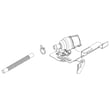
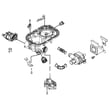
- Water fill problems: fill valve assembly W11434044
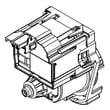
- Overfill protection issues: dishwasher float switch W11545764
- Leaks at the door or tub edge: gasket-tub,d W11483553
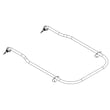
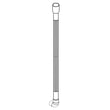
- Not draining or slow drain: hose-drain,e W11414944
Why it matters
A dishwasher near the end of its typical lifespan often shows up as longer cycles, poorer cleaning, standing water, or intermittent leaks. Addressing those early can prevent secondary damage to the sump, wiring, and door components.
For troubleshooting steps that match common KitchenAid fault patterns, use our KitchenAid he dishwasher error codes guide.
Last updated: February 2026
How do I tell how old my KitchenAid is?
To tell how old your KitchenAid KDFE104KPS2 dishwasher is, we use the serial number to decode the manufacturing date (year and week). On dishwashers, the serial tag is typically on the tub frame or door area; once you have it, you can match the date code format used for KitchenAid-built units.
Where to find the model and serial number
Check these common locations on a KitchenAid dishwasher:
- Along the top edge of the inner door (open the door and look up)
- On the left or right side of the inner door frame
- On the tub rim near the latch area
- Sometimes behind the lower access panel (toe-kick)
Write down both the model number (KDFE104KPS2) and the serial number exactly as shown.
How the serial number date code usually works
Most KitchenAid dishwashers use a serial format that includes a manufacturing week and year. The exact positions can vary by production run, so we recommend decoding it by pattern:
- Look for a 2-digit week (01 to 52) embedded in the serial
- Look for a 1-digit or 2-digit year indicator near the week code
- Confirm the result makes sense compared to when the dishwasher was installed or purchased
Quick sanity-check table
| What you see | What it usually means | What to do next |
|---|---|---|
| Week looks like 01-52 | Build week | Pair it with the year digit(s) |
| Year digit seems ambiguous | Could map to multiple decades | Use purchase/installation timing to pick the correct year |
| Serial tag is missing/illegible | Date can’t be read from the unit | Use install paperwork or service records |
Why it matters
Knowing the build date helps us choose the right repair approach for your KitchenAid KDFE104KPS2, especially when diagnosing age-related issues like leaks, no-fill, or no-drain symptoms.
If you’re troubleshooting at the same time
If your dishwasher is acting up while you’re checking the serial tag, these model-relevant parts are commonly involved:
- Fill valve assembly W11434044 (no fill, slow fill)
- Dishwasher float switch W11545764 (overfill protection, fill problems)
- Hose-drain,e W11414944 (drain issues, leaks under the unit)
For step-by-step help on a common symptom, use our DIY video: dishwasher not filling video.
Last updated: February 2026
What are the commonly replaced parts in a dishwasher?
For a KitchenAid dishwasher like model KDFE104KPS2, the most commonly replaced parts are the ones that control water flow, sealing, washing action, and starting. In real-world repairs, we most often see issues with inlet/valve parts, door seals, spray arms, and door latch components.
Most common dishwasher parts that get replaced
These parts wear out from heat, detergent, hard-water mineral buildup, and normal mechanical use:
- Water inlet valve or fill valve (no fill, slow fill, overfill)
- Door seals and gaskets (leaks at the door or along the tub edge)
- Spray arms (poor cleaning, clogged jets, noisy spraying)
- Door latch and switches (won’t start, stops mid-cycle)
- Drain hose and clamps (leaks under the unit, drain problems)
- Control board or electronic control (dead unit, erratic operation)
Common replacements available for KDFE104KPS2
When symptoms match, these model-specific parts are frequent fixes:
| Symptom you notice | Part that commonly fixes it | Example part on this model |
|---|---|---|
| Dishwasher won’t fill or fills slowly | Fill valve / inlet valve | Fill valve assembly W11434044 |
| Overfilling or fill errors | Float switch | Dishwasher float switch W11545764 |
| Leaking at the door edge | Door/tub sealing | Gasket-tub,d W11483553 or seal, door bottom W11664713 |
| Won’t start or stops when door moves | Door latch/switch | Latch assembly (includes switch) W11412299 |
| Not draining or leaking at drain line | Drain hose | Hose-drain,e W11414944 |
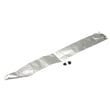
| Poor cleaning on lower rack | Lower spray arm | Dishwasher spray arm, lower W11550888 |
Quick checks before you order a part
We recommend these fast checks because they often solve the problem without replacing anything:
- Clean the spray arm holes and the filter area for food debris.
- Confirm the water supply valve under the sink is fully open.
- Check for kinks in the drain hose and a clogged sink/disposer connection.
- Inspect the door seal for tears, flattening, or detergent residue.
- Make sure the door closes firmly and the latch engages.
Why it matters
Replacing the right part restores proper water fill, wash pressure, and sealing. That prevents leaks, improves cleaning and drying performance, and helps avoid repeat breakdowns caused by running the dishwasher with low water flow or poor drainage.
For troubleshooting by symptom (especially blinking lights or fault codes), use KitchenAid he dishwasher error codes.
Last updated: February 2026
What is the most common problem with the KitchenAid dishwasher?
The most common problems we see on KitchenAid dishwashers like model KDFE104KPS2 are poor cleaning, not draining, door-area leaks, and a dishwasher that will not start. Most start with maintenance, loading, and drain routing; then move to water-in and door-safety parts.
Most common symptoms and likely causes
- Not cleaning well: clogged spray arm holes, blocked water feed, heavy soil in the sump area
- Not draining: kinked drain hose, clogged drain path, restriction at the sink or disposal connection
- Leaking at the front: debris on sealing surfaces, oversudsing, worn lower door seal
- Will not start: door not latching fully, door switch not closing, control settings
- Not filling: supply valve closed, inlet restriction, failed inlet valve
Quick checks before replacing parts
- Clear debris from the bottom of the tub and around the sump area.
- Confirm the lower spray arm spins freely and holes are open.
- Verify the drain hose has a proper high loop and is not kinked.
- Wipe the door sealing surfaces clean; use only dishwasher detergent.
- Run hot water at the sink for 30 to 60 seconds before starting a cycle.
Parts that commonly fix these issues on KDFE104KPS2
| Symptom | Part to check | What it does |
|---|---|---|
| Not filling or fills slowly | Fill valve assembly W11434044 | Lets water enter the dishwasher |
| Overfilling or fill errors | Dishwasher float switch W11545764 | Senses water level and stops filling |
| Leaks at the bottom/front edge | Seal, door bottom W11664713 | Seals the lower edge of the door |
| Will not start | Latch assembly (includes switch) W11412299 | Confirms the door is closed |
| Drains poorly | Hose-drain,e W11414944 | Carries water out to the drain |
Why it matters
Dishwashers rely on correct water level, strong spray, and a tight door seal. One restriction (inlet, spray, or drain) can cause dirty dishes, long cycles, and standing water.
Helpful DIY guidance
- Dishwasher not cleaning dishes video
- Dishwasher not draining video
- KitchenAid he dishwasher error codes
Last updated: February 2026