




What kind of gas do I put in my push lawn mower?
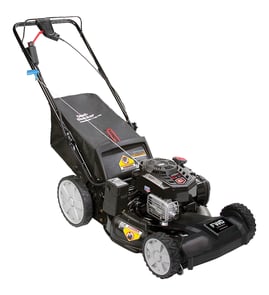
For a Craftsman push mower like model 917383222, use fresh regular unleaded gasoline. In most areas, E10 (up to 10% ethanol) is the standard and works well; avoid old fuel and higher-ethanol blends because they commonly cause hard starting and rough running.
- Use fresh regular unleaded from a busy station.
- E10 is OK for most walk-behind mower engines.
- Avoid E15/E20/E85; higher ethanol content often leads to fuel-system problems.
- Avoid stale gas (typically anything older than 30 days without stabilizer).
- Do not mix oil into the gas unless your mower is a 2-cycle engine (most Craftsman walk-behind mowers are 4-cycle and use straight gas).
| Fuel choice | Good for most 4-cycle push mowers? | Notes |
|---|---|---|
| Regular unleaded (87 octane) | Yes | Best everyday choice |
| E10 (up to 10% ethanol) | Yes | Common at pumps |
| Non-ethanol gas | Yes | Helpful for storage, if available |
| E15 or higher | No | Higher risk of starting and carb issues |
Fuel quality is the number-one cause of seasonal no-start problems. Fresh gas helps prevent varnish buildup in the carburetor and keeps the mower starting easily after storage.
If it surges, stalls, or will not start after sitting, old fuel is usually the culprit. We recommend draining the tank, refilling with fresh gas, and following our guide on how to keep lawn mower gas from going bad.
Last updated: February 2026
How much does it cost to repair a hydrostatic transmission on a lawn mower?
Hydrostatic transmission repair costs vary widely by mower type and what failed. For a walk-behind mower like Craftsman 917383222, the most common “won’t move” fixes are usually drive-belt, cable, wheel, or linkage related; true hydrostatic unit replacement (more common on riding mowers) is typically the highest-cost scenario.
- Diagnosis/inspection: $75 to $150
- Minor repair (adjustment, linkage, cable, fluid service where applicable): $100 to $300
- Drive system repair (belt, pulleys, wheel drive parts): $150 to $500
- Hydrostatic transaxle replacement (riding mowers): $800 to $2,500+ (parts and labor)
- Mower type: walk-behind vs. riding mower (riding mower hydrostatic transaxles cost far more)
- What failed: control linkage vs. internal pump/motor wear
- Labor time: seized fasteners, rust, and deck removal add time
- Parts availability: OEM assemblies cost more than small hardware
- Collateral damage: worn pulleys, bent brackets, or damaged mounting hardware
If the mower “won’t move,” we recommend ruling out common drive issues first:
- Confirm the drive control cable is actually pulling the engagement mechanism.
- Check for a slipping or broken drive belt (if equipped).
- Inspect wheels for stripped hubs or a stuck drive pawl.
- Look for missing clips or loose fasteners on the drive linkage.
- Verify the blade area is clear and nothing is binding the crankshaft.
These are common small parts that get replaced when linkages loosen or hardware goes missing:
| Part | What it’s used for | When it helps |
|---|---|---|
| Retainer clip 532085179 | Secures linkage/pins | Linkage keeps popping off |
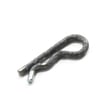
| Hairpin 532051793 | Cotter-style retainer | Rods/pins won’t stay in place |
| Shoulder bolt 532174719 | Pivot/guide fastener | Slop in a lever or bracket |
A hydrostatic replacement is one of the most expensive mower repairs, so confirming the problem is not a belt, wheel-drive, or linkage issue can save a lot of time and money. For motion problems, our lawn mower wont move troubleshooting video motion drive failure guide is a strong starting point.
Last updated: February 2026
What size belt is a Craftsman 917383222 deck mower?
For a Craftsman walk-behind mower model 917383222, there is no mower deck drive belt size to match because this model is a walk-behind mower (not a riding mower with a belt-driven cutting deck). If you are trying to fix a “won’t move” issue, the drive system parts (not a deck belt) are the right place to focus.
Model 917383222 is listed as a gas walk-behind mower. A “54-inch deck belt” spec applies to many riding mowers and lawn tractors, not walk-behind mowers.
Quick check:
- Walk-behind mower: you push it; cutting blade is direct-drive; no 54-inch deck
- Riding mower/lawn tractor: you sit on it; deck is belt-driven; deck width is often 42 to 54 inches
If the mower cuts but will not self-propel, these are the most common causes:
- Drive control cable out of adjustment or stretched
- Worn drive belt (self-propel belt) or traction belt (varies by design)
- Worn drive wheel gears or damaged wheel assembly
- Debris binding the transmission pulley area
- Incorrect handle control position or damaged selector components
For step-by-step help diagnosing a self-propel problem, use our DIY guide: lawn mower wont move troubleshooting video motion drive failure.
Even when the issue is not a belt, these parts are commonly replaced during blade and underside service:
| What you are servicing | Part that often gets replaced | Why it matters |
|---|---|---|
| Blade mounting | Lawn mower blade adapter 581547901 | A worn adapter can cause vibration, poor cut, or blade fit issues |
| Cutting blade | Lawn mower blade, 20-in 532145106 | A bent or dull blade reduces cut quality and stresses the engine |
| Hardware | Lawn & garden equipment screw 532851084 | Stripped or missing fasteners can prevent secure reassembly |
Ordering a “deck belt” for a walk-behind mower usually leads to the wrong part and delays the repair. Matching the repair to the correct drive system (self-propel components, blade adapter, blade, and hardware) gets the mower back to cutting and moving safely.
Last updated: February 2026
Why is my self-propelled lawn mower pulling to one side?
If your Craftsman self-propelled mower model 917383222 pulls to one side, the most common causes are uneven wheel traction (tire pressure or wheel wear), a dragging wheel, or a drive/height adjustment that is not matched side-to-side. Start with the wheels and deck height checks before replacing parts.
- Set both front wheels to the same cutting height (same notch/position on each side).
- Check tire pressure (if your wheels are pneumatic) and inflate both sides evenly.
- Clean packed grass from under the deck and around the wheels.
- With the engine off, push the mower forward; it should roll straight without resistance.
- Engage self-propel and observe which wheel slips or drags.
| What you notice | Likely cause | What to do next |
|---|---|---|
| Mower veers only when self-propel is engaged | One drive wheel is slipping or not driving evenly | Check for debris, worn drive components, or a binding wheel |
| Mower veers even when pushed (self-propel off) | Dragging wheel, bent hardware, or deck rubbing | Spin each wheel by hand; clear debris and check for rubbing |
| Pulling started after blade service | Blade adapter or blade not seated square | Reinstall blade and adapter correctly; inspect for damage |
If you find looseness at the blade mount or signs the blade is not running true, inspect the blade mounting stack-up. These parts are commonly involved:
- Lawn mower blade adapter 581547901 (connects the blade to the crankshaft; damage can cause vibration and uneven cutting feel)
- Lawn mower blade, 20-in 532145106 (a bent blade can increase drag on one side)
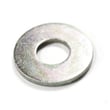
- Husqvarna lawn & garden equipment washer 532851074 (missing or incorrect washers can affect how securely parts clamp together)
A mower that pulls to one side is harder to control and often signals uneven drive traction or a dragging wheel. Fixing it early helps prevent premature wear on the drive system and reduces scalping from an uneven deck height.
If you are removing the blade to inspect the adapter or clean the deck, use our guide: lawn mower blade removal tool.
Last updated: February 2026