Error Codes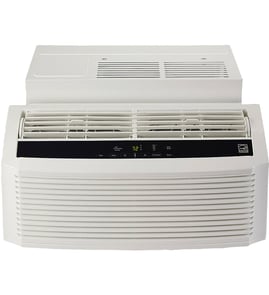




How many square feet will a 8000 BTU air conditioner cool?
An 8,000 BTU room air conditioner cools about 300 to 350 square feet in average conditions. Your GE AEG18DZL1 is a different, higher-capacity model; use this 8,000 BTU guideline only when sizing an 8,000 BTU unit, not the AEG18DZL1.
Quick sizing guide for 8,000 BTU
Use these targets to match BTU to room size:
- 300 to 350 sq ft: average insulation, 8 ft ceilings
- 250 to 300 sq ft: lots of sun, poor insulation, frequent door opening
- 350 to 400 sq ft: shaded room, good insulation, minimal heat sources
- Reduce coverage if ceilings are over 8 ft
- Reduce coverage if the room has west-facing windows or kitchen heat
What changes the square-foot number
Room size is only part of the cooling load. These factors shift the real-world coverage most:
- Sun exposure and window area
- Insulation quality and air leaks around doors and windows
- Ceiling height (more air volume to cool)
- Occupancy and heat-producing electronics
- Airflow through the unit (a clogged filter reduces output)
Rule-of-thumb table
| Room conditions | 8,000 BTU expected coverage |
|---|---|
| Average bedroom/living room | 300 to 350 sq ft |
| Hot, sunny, or drafty | 250 to 300 sq ft |
| Shaded and well insulated | 350 to 400 sq ft |
Why it matters
If BTU is too low, the air conditioner runs constantly and still feels warm. If BTU is too high, it short-cycles and removes less humidity, so the room can feel clammy. Keeping airflow strong with a clean filter WJ85X25180 helps any GE room air conditioner perform closer to its rated capacity.
Last updated: February 2026
What are the most common issues with AEG18DZL1?
The most common issues we see with the GE AEG18DZL1 room air conditioner are weak or no cooling, poor airflow, unusual noise, and power or control problems. These usually trace back to a dirty or damaged filter, fan issues, or a failing electrical component such as a capacitor.
Most common symptoms and what they usually mean
- Not cooling or cooling poorly: clogged filter, dirty coils, or sealed-system trouble (evaporator/condenser/compressor)
- Weak airflow: blocked filter, iced evaporator, or fan not moving enough air
- Rattling or loud humming: loose panels, fan blade damage, or motor/fan imbalance
- Won’t turn on: power cord/connection issue, control problem, or failed capacitor
- Freezing up (ice on front coil): restricted airflow (filter) or low refrigerant charge
Quick checks we recommend first
- Set mode to Cool and temperature well below room temp; wait 5 to 10 minutes.
- Clean or replace the air filter; for this model, use the correct filter WJ85X25180.
- Make sure the front grille and rear intake/exhaust are not blocked by curtains, furniture, or debris.
- If you see ice, turn the unit to Fan Only until fully thawed; then address airflow.
- If the unit hums but the fan does not spin, suspect a fan/capacitor issue.
Parts that commonly relate to these problems
| Symptom | Common part area | Example part on this model |
|---|---|---|
| Weak airflow | Air filter | Filter WJ85X25180 |
| Loud noise/vibration | Fan/blade | Room air conditioner condenser fan blade WJ73X10190 |
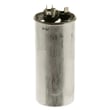
| Hums, struggles to start | Start/run component | Capacitor WJ20X10207 |
| No cooling at all | Sealed system | Compressor WJ98X20555 |
Why it matters
Airflow problems (especially a clogged filter) can cause icing, higher energy use, and extra strain on the compressor. Fixing airflow early is the fastest way to restore comfort and prevent bigger repairs.
Last updated: March 2026
What is the average lifespan of AEG18DZL1?
A GE room air conditioner like model AEG18DZL1 typically lasts 10 years with normal seasonal use and basic maintenance. Keeping airflow unrestricted and the coils clean helps the compressor and fan motor run cooler, which extends overall service life.
Typical lifespan and what affects it
The biggest drivers are run time, maintenance, and installation quality (level in the window, good sealing, and clear outdoor airflow).
- Clean the air filter regularly to prevent icing and overheating
- Keep the outdoor coil free of lint, leaves, and dirt
- Make sure the unit drains correctly and is slightly tilted outward
- Avoid running with blocked vents or closed louvers
- Use a dedicated outlet and avoid undersized extension cords
Maintenance schedule we recommend
| Task | How often | Why it matters |
|---|---|---|
| Clean/replace air filter | Every 2 to 4 weeks in season | Maintains airflow and efficiency |
| Clean evaporator/condenser coils | 1 to 2 times per season | Prevents icing and high head pressure |
| Check for vibration and loose fasteners | Start of season | Reduces noise and wear |
| Inspect power cord and plug | Start of season | Prevents intermittent power issues |
Parts that commonly impact longevity
If cooling is weak, airflow is low, or the unit ices up, these model-matched parts are often involved:
- Filter WJ85X25180 (restricted filter reduces airflow)
- GE centrifugal fan WJ73X25853 (poor airflow across coils)
- Capacitor WJ20X10207 (hard starting, weak fan or compressor performance)
- Compressor WJ98X20555 (sealed system cooling performance)
Why it matters
A room air conditioner that runs with poor airflow or dirty coils runs hotter and longer; that increases electrical stress on the capacitor and compressor and shortens the unit’s usable life.
Last updated: March 2026