Owner’s manual
 View engine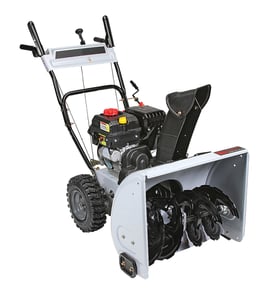



How do I tell what year my snowblower is?
For a Craftsman snow thrower model 917881053, we identify the year by reading the serial number on the ID decal and decoding it using the format shown in the 917881053 owner's manual. The decal is typically attached to the rear of the snow thrower housing, and recording the serial number also helps confirm correct replacement parts.
Where to find the model and serial number
Look for the identification decal in these common spots:
- Rear of the snow thrower housing (most common for this model)
- Frame near the wheels or axle area
- Near the belt cover or engine mounting area
- On the handle support/frame tube
How to decode the year (what to do next)
Once you have the serial number, use this process:
- Write down the full serial number exactly as shown (include letters).
- Check the serial number decoding section in the 917881053 owner's manual.
- If the engine has its own ID tag, record the engine model and code as well (engine dates can differ from the snowblower assembly date).
- Use the decoded year to match the correct parts diagrams and maintenance schedule.
Quick guide: snowblower date information sources
| What you read | Where it’s found | What it tells you |
|---|---|---|
| Snowblower serial number | Rear housing decal | Build year (decoded from serial format) |
| Engine model/code | Engine shroud/cover area | Engine manufacture date (varies by engine brand) |
| Purchase date | Receipt or records | Warranty start date and service history |
Why it matters
The build year affects parts fit and configuration. Items like belts, shear bolts, and drive components can change across production runs, so decoding the serial number helps us match the correct diagrams and avoid ordering the wrong part.
Last updated: February 2026
What is the best rated gas snow blower?
The “best rated” gas snowblower depends on your snow depth, driveway size, and how much traction and throwing distance you need. For most homeowners, a two-stage gas snowblower is the top choice for heavy, wet snow and larger areas; use your 917881053 owner's manual to match features and maintenance needs to your Craftsman setup.
How to choose the best gas snowblower for your needs
When ratings are high, it is usually because the machine fits the job. Use these decision points:
- Snow type and depth: light, powdery snow vs. heavy, wet snow
- Area size: short sidewalks vs. long, wide driveways
- Stage type: single-stage for lighter snow; two-stage for deeper snow and plow piles
- Ease of use: electric start, chute controls, and steering assist
- Serviceability: belt access, shear bolt availability, and common wear parts
Quick comparison: single-stage vs. two-stage
| Feature | Single-stage gas | Two-stage gas |
|---|---|---|
| Best for | Light snow, smaller areas | Heavy snow, larger areas |
| Clearing method | Auger contacts ground | Auger feeds impeller; better for packed snow |
| Typical maintenance | Scraper bar, paddles | Belts, shear bolts, skid shoes |
What “top rated” usually means in real-world use
High-rated gas snowblowers typically score well in these areas:
- Starts reliably in cold weather (good fuel, correct oil viscosity)
- Throws consistently without clogging (proper chute setup and speed)
- Maintains traction (tire pressure and drive system adjustment)
- Handles impacts safely (shear bolts protect the auger/gear case)
Why it matters for Craftsman model 917881053 owners
If you already own the Craftsman 917881053, the best value often comes from restoring performance with correct setup and maintenance. For example, the manual calls out unleaded regular gasoline (3.0 quarts capacity), oil type SAE 5W-30 or 10W-30 (API SG-SL), and tire pressure 14-17 PSI; those basics strongly affect starting, traction, and throwing performance.
If your current unit is not throwing well, common fixes include replacing a worn belt or damaged shear bolt, such as the snowblower auger drive belt 532408007 or snowblower shear bolt 588077502.
Last updated: February 2026
Is it worth fixing a snowblower?
Yes, it’s usually worth fixing a Craftsman snow thrower like model 917881053 when the problem is a normal wear item (belt, shear bolt, spark plug) or a simple adjustment, because those repairs restore performance without the cost of replacing the whole machine. Use the owner's manual to compare repair steps and maintenance needs before you decide.
Quick way to decide (repair vs. replace)
We use these checkpoints to make the call:
- Repair it if the engine runs well and the issue is in the drive or auger system (belt, shear bolt, cable adjustment).
- Repair it if the machine has been maintained (oil changes, spark plug replacement, bolts kept tight).
- Repair it if the problem is intermittent or seasonal (freeze-up, chute control out of adjustment).
- Consider replacing if the engine has persistent internal problems (hard starting with good fuel and spark, low power, heavy smoking).
- Consider replacing if major drivetrain components are damaged and multiple expensive parts are needed.
Common “worth fixing” repairs on this model
These are typical, high-value fixes that often bring a snowblower back to full operation:
- Replace a worn auger belt such as the snowblower auger drive belt 532408007.
- Replace broken auger protection hardware such as the snowblower shear bolt 588077502 (shear bolts are designed to fail to protect the auger/gearbox).
- Adjust or service chute and control components (binding, poor deflection control).
- Perform annual maintenance: oil change, spark plug replacement, and belt inspection (the manual calls out replacing the spark plug at least once a season or every 100 hours).
Cost and effort comparison
| Situation | Typical outcome | Usually worth it? |
|---|---|---|
| Belt slipping or auger not engaging | Restores throwing power | Yes |
| Shear bolt broken after hitting debris | Restores auger rotation | Yes |
| Routine maintenance overdue | Improves starting and engine life | Yes |
| Multiple major drivetrain parts needed | Costs add up quickly | Sometimes |
Why it matters
A snowblower that’s maintained the way the manual describes (oil level checks, periodic adjustments, annual spark plug and belt checks, and safe storage practices) typically delivers many more seasons of reliable service. Fixing normal wear items also helps prevent secondary damage, like belt debris, freeze-up, or overload stress on the auger drive.
Last updated: February 2026
What is the typical lifespan of a gas snowblower?
A typical gas snowblower lasts 10 to 20 years when we keep up with routine maintenance and off-season storage. For the Craftsman 917881053 snow thrower, following the maintenance schedule and storage steps in the owner's manual is the most reliable way to reach the high end of that range.
What most affects lifespan
- Oil changes and correct oil type (using the viscosity range recommended for temperature)
- Fuel system care during storage (preventing gum deposits)
- Belt condition and tension (worn belts slip and overheat)
- Shear bolt protection (shear bolts break to protect the gearbox and auger)
- Cleaning habits (keeping the housing clear of packed snow, dirt, and debris)
Maintenance milestones to plan for
The manual calls out seasonal and hourly service items that directly impact engine life and reliability.
| Item | Typical interval | Why it matters |
|---|---|---|
| Spark plug | Each season or ~100 hours | Easier starting, smoother running |
| Oil | At least each season | Reduces engine wear |
| Belts | Inspect each season | Prevents loss of auger/drive power |
| Cleaning | After each use | Helps prevent corrosion and buildup |
Parts that commonly wear first (and are normal to replace)
These are the kinds of wear items that usually get replaced long before the machine itself is “worn out”:
- Snowblower auger drive belt 532408007 (loss of auger engagement, squealing, burning rubber smell)
- Snowblower shear bolt 588077502 (auger stops suddenly after hitting a hard object)
- Skid shoes, scraper bar, and fasteners (wear from pavement and gravel)
When replacement makes more sense than repair
We usually recommend considering replacement when one or more of these are true:
- Major drivetrain damage (auger/impeller/gearbox) plus multiple other worn components
- The snowblower struggles with normal snowfall even after tune-up and belt replacement
- You are replacing several high-cost assemblies at once instead of a single wear item
Why it matters
A gas snowblower’s lifespan is mostly about preventing engine wear and corrosion. Proper storage (especially fuel system prep), correct oil, and timely belt and shear bolt replacement keep the Craftsman 917881053 throwing snow safely and consistently for many seasons.
Last updated: February 2026