


How long do Goodman air handlers last?
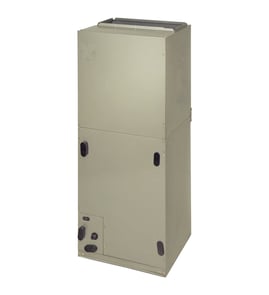
Most Goodman air handlers like model A42-15 typically last 10 to 15 years. With consistent maintenance (clean airflow, correct electrical operation, and prompt repair of worn components), it’s common to reach the upper end of that range and sometimes longer.
A Goodman air handler’s service life depends more on operating conditions than the brand name alone.
- Run time and climate: long heating and cooling seasons shorten life
- Airflow health: dirty filters and blocked returns overheat the blower motor and heater
- Moisture and corrosion: coil-area condensation can accelerate rust and electrical issues
- Electrical stability: loose connections and weak capacitors stress the motor
- Repair history: replacing failing wear parts early prevents bigger damage
These are the most common failure patterns we see in air handlers with coils:
| Symptom | Common cause | Typical fix |
|---|---|---|
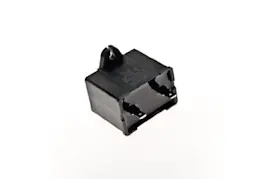
| Blower hums but won’t start | Weak run capacitor | Replace capacitor 7. 12907 |
| No or weak airflow | Worn blower wheel or failing motor | Inspect wheel, test motor; replace if needed |
| Heat strips do not heat | Failed heating element or sequencer/control issue | Test elements and controls; replace failed part |
| Loud vibration or scraping | Damaged blower wheel or debris | Clean housing; replace wheel if bent |
We recommend these practical steps to keep your A42-15 running longer:
- Change or clean the air filter on schedule (most homes: every 1 to 3 months)
- Keep return vents and supply registers open and unobstructed
- Vacuum dust from the blower compartment during seasonal service (power off)
- Have a technician check electrical connections and heater operation annually
- Address early warning signs (burning smell, repeated breaker trips, slow-start blower)
Air handlers fail gradually; catching a weak capacitor, noisy blower wheel, or overheating heater early can prevent a blower motor failure and reduce comfort problems, energy use, and downtime.
Last updated: February 2026
How much does it cost to replace a blower motor in a Goodman furnace?
Replacing a blower motor in a Goodman system typically costs about $300 to $900 total (parts plus labor), depending on motor type (PSC vs ECM), accessibility, and whether the technician also replaces related items like a run capacitor. For the Goodman A42-15 air handler, the blower motor itself is a major share of that total.
Costs vary by region and job complexity, but this is a practical way to think about the total:
| Cost item | Typical range | Notes |
|---|---|---|
| Blower motor part | $150 to $600 | ECM motors usually cost more than PSC motors |
| Labor | $150 to $400 | Often 1 to 3 hours depending on access and wiring |
| Diagnostic/service call | $75 to $150 | Sometimes credited toward the repair |
| Optional add-ons | $10 to $150 | Capacitor, wiring repair, wheel cleaning, etc. |
If your A42-15 uses the listed motor, the part price is a strong indicator of the parts portion of the repair:
- Motor 1/3 hp B13400312S (common blower motor listing for this model)
- Capacitor 7. 12907 (a weak run capacitor can mimic a bad motor)
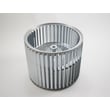
- Blower wheel B1368036S (a damaged or clogged wheel can overload the motor)
Before replacing the motor, we typically see these issues cause “no blower” or “weak airflow” symptoms:
- Failed run capacitor (motor hums, starts slowly, or needs a push)
- Dirty blower wheel or heavy dust buildup restricting airflow
- Loose/burned wiring connections or a failing control signal
- Overheating from a clogged filter or blocked return air
- Heat kit or sequencer issues on electric heat systems (blower timing problems)
A quick electrical check with a meter can prevent replacing the wrong part; our how to use a multimeter to test electrical parts video is a good starting point.
A failing blower motor can reduce airflow across the coil, which hurts comfort and efficiency and can lead to overheating or icing issues. Catching the root cause early often keeps the repair closer to the low end of the cost range.
Last updated: February 2026
What are the parts of an air handler?
An air handler (including the Goodman A42-15 air handler with coil) is the indoor unit that moves conditioned air through your ductwork. Most air handlers include a blower assembly, an evaporator coil, electrical controls, and often electric heat components, plus a drain system to manage condensation.
- Blower motor and blower wheel: pushes air across the coil and into the ducts
- Evaporator (cooling) coil: absorbs heat during cooling; can also support heat pump operation
- Electric heat kit components (if equipped): heating elements and safety controls
- Run capacitor: helps the blower motor start and run efficiently
- Sequencer/relays and wiring: controls when electric heat stages turn on
- Condensate drain pan and drain line: collects and routes away water from the coil
- Air filter rack or filter grille: holds the filter that protects the coil and blower
If you are troubleshooting airflow, no-heat, or a blower that will not start, these are common service parts for this model:
| Symptom | Most likely area to check | Common part types |
|---|---|---|
| Weak airflow | Blower section | Motor, blower wheel, filter |
| Blower hums but will not start | Motor electrical | Capacitor, motor |
| No heat (electric heat) | Heat kit section | Heating element, sequencer |
| Water around unit | Drain system | Drain pan/line, coil icing causes |
Knowing the major air handler components helps you troubleshoot faster and order the right replacement part the first time. For example, airflow problems usually point to the blower motor, blower wheel, or a restricted filter, while electric heat issues often involve heating elements and their controls.
Last updated: February 2026
How tall is a 2 ton Goodman air handler?
A 2-ton Goodman air handler height depends on the exact model and cabinet width, so there is no single “standard” height. For your Goodman A42-15 air handler with coil, confirm the cabinet dimensions on the unit data label, then match that to your closet or plenum clearance.
Most 2-ton, multi-position air handlers (including many Goodman-style cabinets) are commonly in the 40 to 55 inch overall height range, depending on whether the coil is integrated, the cabinet width, and the blower section design.
Use this as a planning range, then verify your exact unit:
- Check the data plate on the air handler cabinet (often inside the blower door or on the exterior panel)
- Look for overall height and cabinet width
- Measure from the bottom rail to the top of the cabinet (exclude field-installed transitions unless you need total installed height)
To avoid ordering the wrong plenum, stand, or return drop, measure these points:
- Cabinet height: bottom of cabinet to top of cabinet
- Installed height: cabinet height plus any field-installed base, filter rack, or transition
- Clearance: space needed to remove the blower door and slide out the blower assembly
- Drain and refrigerant line space: room for condensate trap, drain slope, and line set bends
| Measurement | What it includes | Why you need it |
|---|---|---|
| Cabinet height | Factory cabinet only | Fit in closet, match coil section |
| Installed height | Cabinet plus base/stand/transition | Total floor-to-duct clearance |
| Service clearance | Space in front/side | Access blower, wiring, and heater kit |
Air handler height affects duct alignment, condensate drainage, and service access. Even a 1 to 2 inch mismatch can force duct rework or make it hard to remove the blower or electric heat components later.
If you are servicing the blower or electric heat while verifying fitment, these model-matched parts are commonly involved:
Last updated: February 2026
How wide is a Goodman air handler?
Goodman air handler width depends on the exact model and cabinet size. For the Goodman A42-15 air handler with coil, the most reliable way to confirm width is to match the cabinet dimensions to the model’s data label and then compare to the correct replacement parts listed for this unit, such as the blower components.
Most residential Goodman air handlers are commonly built in cabinet widths around:
- 14 inches (compact cabinets)
- 17.5 inches (mid-size cabinets)
- 21 inches (larger cabinets)
- 24.5 inches (wide cabinets)
If you are measuring for a closet, platform, or return plenum, measure the metal cabinet, not the coil lineset, drain fittings, or electrical whip.
Use a tape measure and follow these steps:
- Turn off power at the breaker to avoid contact with live wiring
- Measure left-to-right across the front face of the cabinet
- Measure at the widest point of the sheet metal, not the door lip
- Ignore protruding items (refrigerant lines, condensate drain, wiring)
- If installed tight to framing, measure the opening and subtract clearance
| What you are doing | Why width matters | What to check |
|---|---|---|
| Replacing the air handler | Fit in closet or attic access | Cabinet width and service clearance |
| Replacing blower parts | Correct airflow and fit | Blower wheel diameter and motor mounting |
| Rebuilding electric heat | Heater kit fit and wiring | Heater element size and sequencer style |
When you are confirming the correct air handler, matching parts to model A42-15 helps prevent ordering the wrong cabinet size. Common air-handler parts on this model include:
- Blower wheel B1368036S (fits the blower housing and affects airflow)
- Motor 1/3 hp B13400312S (must match mounting and speed/rotation requirements)
- Capacitor 7. 12907 (must match microfarads and voltage rating)
Air handler width drives fit, duct transitions, filter rack alignment, and service access. A cabinet that is even 1 to 2 inches wider than expected can prevent installation or force ductwork changes.
Last updated: February 2026