Owner’s manual
 Error Codes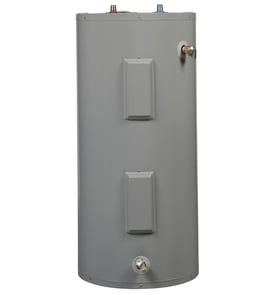




What is the life expectancy of a Kenmore water heater?
A Kenmore electric water heater like model 153316354 typically lasts 8 to 12 years. Lifespan depends most on water quality, temperature setting, and maintenance; keeping sediment down and protecting the tank with a healthy anode rod helps you reach the upper end of that range.
Typical lifespan and what changes it
Most electric tank water heaters fall into a predictable window; the difference between 8 years and 12 years is usually maintenance and water conditions.
- Hard water and sediment shorten life by insulating the heating element and overheating the tank bottom.
- High thermostat settings increase stress on the tank and elements.
- A depleted anode rod speeds up tank corrosion.
- Frequent leaks at fittings/valves can cause rust and damage around connections.
- Regular flushing helps reduce sediment buildup.
Maintenance checklist that extends service life
Use your owner's manual for the exact procedure and safety steps for your Kenmore Power Miser 6 electric water heater.
- Turn power OFF at the breaker before opening access panels.
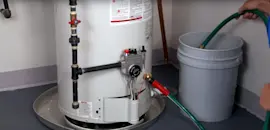
- Flush a few gallons from the drain valve periodically to reduce sediment.
- Inspect for moisture at the drain valve, element area, and piping connections.
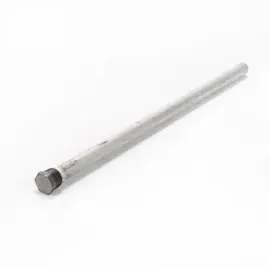
- Check and replace the anode rod when it is heavily worn.
- Keep thermostat settings reasonable for comfort and efficiency.
Parts that commonly affect longevity
If you are maintaining or rebuilding performance on model 153316354, these parts are often involved:
| Part | What it impacts | When to consider replacing |
|---|---|---|
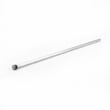
| Anode rod 100108260 | Tank corrosion protection | Rusty water, sulfur smell, or during preventive maintenance |
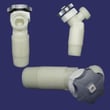
| Drain 100108269 | Flushing and draining | Valve won’t close, leaks, or won’t drain |
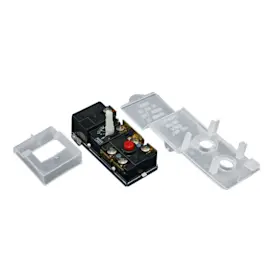
| Thermostat 100108683 | Temperature control | Water too hot/cold, inconsistent temperature |
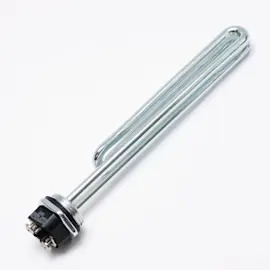
| Element 100108346 | Heating performance | Slow recovery, no hot water (after testing) |
Why it matters
Once the tank begins to corrode internally, repairs to elements or thermostats cannot stop a tank leak. Preventive maintenance, especially anode rod care, is the most effective way to get the full expected life from your Kenmore water heater.
Last updated: February 2026
What is the average cost of a new electric hot water heater?
A new electric water heater typically costs about $600 to $3,500 installed, with many standard tank replacements landing around $1,100 to $2,500 depending on tank size, efficiency, and installation labor. For Kenmore model 153316354, the manual also notes that installation costs vary based on how the unit is installed and serviced (see the owner's manual).
What drives the price most
- Tank size/capacity: larger tanks usually cost more to buy and install.
- Type: standard electric tank vs. heat pump water heater (higher upfront cost).
- Electrical and plumbing updates: new wiring, breaker work, shutoff valves, or piping changes.
- Location and access: tight closets, attic installs, or code-required upgrades add labor.
- Disposal and haul-away: removing the old tank can add fees.
Typical cost ranges (installed)
| Water heater type | Typical installed range | Best fit for |
|---|---|---|
| Standard electric tank (30 to 50 gal) | $1,100 to $2,500 | Most replacements in existing homes |
| Larger electric tank (65 to 80 gal) | $1,800 to $3,500 | High-demand households |
| Heat pump water heater | $2,000 to $5,500+ | Lower operating cost, higher upfront |
How this relates to Kenmore 153316354
Your Kenmore 153316354 is a Power Miser 6 electric water heater. If you are repairing instead of replacing, the manual’s parts list calls out element ordering based on whether the heater is set up for 3800W or converted to 5500W. Common replacement parts on this model include the element 100108346 and element 100093526.
Quick repair vs. replace check
| If you have this symptom | Common fix | Typical impact on cost |
|---|---|---|
| Not enough hot water | Replace a heating element or thermostat | Often far less than replacement |
| Water too hot/too cold | Adjust or replace thermostat | Low to moderate |
| Tank leaking | Replace the water heater | Highest cost |
Why it matters
Matching the heater type and capacity to your household avoids paying for oversized equipment, and it helps prevent “not enough hot water” complaints that are actually caused by a failed element, thermostat setting, or sediment buildup.
Last updated: February 2026
What's the difference between a 4500 watt and a 5500 watt hot water heater?
A 5500-watt electric water heater heats water faster than a 4500-watt unit, so you get quicker recovery after showers and other heavy hot-water use. The tradeoff is higher electrical demand; on Kenmore model 153316354, the manual calls for a 240V supply, 10 AWG wiring, and a 30-amp circuit when set up for 5500 watts (versus lighter requirements for lower wattage setups). See the owner's manual for the exact conversion and electrical requirements for your tank.
What changes when you go from 4500W to 5500W
- Faster recovery: the tank reheats sooner after hot water is used.
- Higher amperage draw: 5500W at 240V pulls more current than 4500W.
- Electrical requirements may change: wire gauge and breaker size often need to be upgraded.
- More heat output per hour: helpful for larger households or back-to-back showers.
- Not always a simple swap: the element and the water heater wiring configuration must match the rating plate.
Kenmore 153316354 specifics (what our manual says)
This Kenmore Power Miser 6 design uses a standard upper element and a lower element that can be configured for higher wattage on a 240V system. Before running the lower element at 5500W, the manual specifies:
| Setup item | Typical requirement for 5500W conversion (per manual) | Why it matters |
|---|---|---|
| Supply voltage | 240V | Element wattage is rated at 240V |
| Wire size | 10 AWG (Type TW, 60°C or equivalent) | Prevents overheating of wiring |
| Overcurrent protection | 30-amp capable | Prevents nuisance trips and overheating |
Picking the correct replacement element for your wattage
We match the replacement element to how the heater is configured:
- If your heater is operating at 3800W (factory setting on many versions), use the element 100108346.
- If your heater was converted to 5500W, use the element 100093526.
- Replace the seal whenever you remove an element; use the water heater heating element gasket 100108379.
Why it matters
Wattage affects both comfort (how quickly hot water returns) and safety (breaker size and wire gauge). Using a higher-watt element without the correct circuit capacity can overheat wiring or trip breakers.
Last updated: February 2026
What is usually the most common water heater problem?
The most common water heater problem we see is not enough hot water, often caused by a failing heating element, a thermostat issue, or heavy mineral scale buildup. On Kenmore model 153316354, rumbling noise and smelly water are also common symptoms tied to scale and the anode rod (see the owner's manual).
Most common problems and what they usually point to
- Not enough hot water: weak or failed heating element, thermostat out of calibration, or sediment reducing efficiency
- No hot water: tripped high-temperature limit reset on the thermostat, power supply issue, or failed element
- Rumbling or popping noise: mineral scale on the heating elements (common in hard-water areas)
- Smelly “rotten egg” hot water: anode rod reaction with certain water conditions
- Water too hot: thermostat set too high or thermostat not regulating correctly
Quick checks you can do safely
Before any inspection, turn off power at the breaker and confirm power is off.
- Check for a tripped breaker or loose wiring at the access area
- If you have no hot water, check the high-limit reset button behind the access panel
- If you hear rumbling, plan for element cleaning or replacement
- If hot water smells, inspect the anode rod condition and follow the manual’s guidance
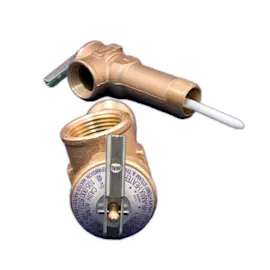
- If you see water on the floor, check the drain valve, fittings, and the temperature-pressure relief valve discharge path
Common symptom-to-part match (model 153316354)
| Symptom | Most likely area | Parts that commonly apply |
|---|---|---|
| Not enough hot water | Heating circuit | Element 100108346, thermostat 100108683 |
| Rumbling noise | Scale on element | Element 100093526, water heater heating element gasket 100108379 |
| Smelly hot water | Corrosion protection system | Anode rod 100108260 |
| Water at drain area | Drain valve or fitting | Drain 100108269 |
Why it matters
Catching the “common” problems early helps prevent bigger issues like repeated high-limit trips, poor recovery time, and leaks from stressed fittings. For this Kenmore Power Miser 6 electric water heater, scale and anode-related issues are especially important because they directly affect heating performance and water quality.
Last updated: February 2026
How do I know if my thermostat on an electric hot water heater is bad?
On your Kenmore 153316354 electric water heater, a bad thermostat is typically one that will not pass power correctly to the heating element or will not regulate temperature, leading to no hot water, not enough hot water, or water that is too hot. We confirm it by safely checking power, the high-limit reset, and thermostat continuity per the owner's manual.
Quick checks before testing the thermostat
- Turn OFF power at the breaker and verify power is off before touching wiring.
- If you suddenly had very hot water and then no hot water, press the red RESET button (high-limit) behind the access panel.
- Confirm the disconnect switch (if used) is ON and the home’s breaker/fuses are good.
- Make sure the cold water supply valve is open and piping is connected correctly (cold to cold inlet, hot to hot outlet).
- Check whether both thermostats are set to the desired temperature (factory setting is about 120°F).
How we test an electric water heater thermostat (basic method)
- Shut off power and remove the access panel and insulation to expose the thermostat.
- Inspect for obvious issues: loose wires, burned terminals, or melted insulation.
- Use a multimeter to check continuity across the thermostat terminals (with power off).
- Compare results on the upper and lower thermostats; either one can cause heating problems.
What the readings usually mean
| Test result (power OFF) | What it points to | What to do next |
|---|---|---|
| No continuity when it should be closed | Thermostat contacts not closing | Replace the thermostat |
| Continuity is present but water stays cold | Problem may be element, wiring, or high-limit | Test element and wiring |
| Water overheats or temperature swings | Thermostat not regulating | Replace the thermostat |
Parts that are commonly involved
If testing shows the thermostat is faulty, match the replacement to your model’s parts list. For this model, an example is the thermostat 100108683. If you remove a heating element for testing or replacement, plan on replacing the seal such as the water heater heating element gasket 100108379.
Why it matters
A thermostat that sticks open can leave you with no hot water; a thermostat that fails to regulate can overheat water and repeatedly trip the high-limit reset. Keeping the factory-recommended starting point (about 120°F) helps balance comfort, energy use, and safety.
Last updated: February 2026