 Owner’s manual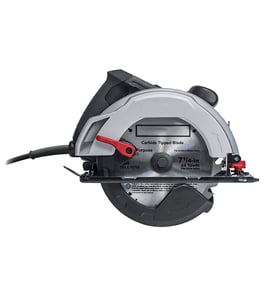

What are the parts of a circular saw machine?
A handheld circular saw like the Craftsman 32010861 is built around a motor that spins a blade, plus safety and adjustment parts that control depth, bevel, and guarding. For the exact component names and controls on this model, use the owner's manual.
Main parts you will see on most handheld circular saws
- Electric motor and motor housing
- Trigger switch (on/off control)
- Saw blade (cutting wheel)
- Spindle/arbor (shaft the blade mounts to)
- Spindle lock button (helps when removing/installing the blade)
- Lower blade guard (spring-loaded safety guard)
- Guard handle/lever (to retract the lower guard when needed)
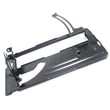
- Base plate/shoe (rides on the workpiece)
- Depth-of-cut adjustment (sets how far the blade extends below the shoe)
- Bevel adjustment (sets the cutting angle)
- Main handle and auxiliary handle (two-hand control)
What the Craftsman 32010861 manual calls out
Based on the model documentation, this saw includes features and controls such as:
| Component or feature | What it does | Why you use it |
|---|---|---|
| Trigger switch | Starts and stops the motor | Controls the cut safely and quickly |
| Lower blade guard system | Covers the blade when not cutting | Reduces accidental contact with the blade |
| Spindle lock button | Locks the spindle for blade changes | Helps you loosen/tighten the blade fastener |
| Depth and bevel adjustments | Sets cut depth and angle | Improves accuracy and reduces binding |
| Laser beam (feature) | Projects a cut line | Helps align the cut for accuracy |
Why it matters
Knowing the correct names and functions helps you troubleshoot safely (for example, a sluggish lower blade guard is a stop-use condition) and makes it easier to identify the right replacement parts and adjustments before you cut.
Safety notes when inspecting parts
- Unplug the saw before adjusting, cleaning, or changing the blade
- Keep hands away from the cutting area and blade
- Do not operate if the guard is damaged or returns slowly
- Use only accessories recommended for the tool
Last updated: February 2026
How to change an old Craftsman circular saw blade?
To change the blade on your Craftsman circular saw model 32010861, unplug the saw, lock the spindle with the spindle-lock button, loosen the blade screw with the blade wrench (counterclockwise), remove the outer “D” washer, then lift the blade out through the lower guard. See the step-by-step procedure in the owner's manual.
Step-by-step: removing the old blade
- Unplug the saw to prevent accidental starting.
- Set the saw on its side on a flat surface.
- Raise the lower blade guard using the guard handle.
- Press and hold the spindle lock button to keep the spindle from turning.
- Use the blade wrench to loosen the blade screw by turning it counterclockwise.
- Remove the blade screw and the outer “D” washer.
- Carefully remove the blade (the inner bushing stays in place).
Installing the new blade correctly
- Use a 7-1/4 inch maximum blade (larger blades can hit the guards).
- Slide the blade inside the lower guard and onto the spindle against the inner bushing.
- Confirm blade direction: the teeth point upward at the front of the saw.
- Put the outer “D” washer back on.
- Hold the spindle lock button; hand-tighten the blade screw clockwise, then tighten firmly with the wrench.
Blade fit and safety checks (before you plug in)
- Spin the blade by hand to confirm it clears the lower guard and base.
- Make sure the outer “D” washer sits flat and fully engages the spindle.
- Verify the lower blade guard returns quickly and does not stick.
Quick reference table
| Task | What you do | Direction |
|---|---|---|
| Loosen blade screw | Hold spindle lock; use blade wrench | Counterclockwise |
| Tighten blade screw | Hold spindle lock; hand-tighten then wrench-tighten | Clockwise |
| Blade size limit | Use correct diameter | 7-1/4 inch max |
Why it matters
Using the correct blade size and thickness helps the guard system work properly and reduces kickback risk. A blade that is too large or too thick can interfere with the guards or prevent the outer washer from seating correctly.
Last updated: February 2026
Why is my Craftsman circular saw not spinning?
If your Craftsman circular saw model 32010861 won’t spin, the most common causes are a power supply issue, a trigger switch problem, or worn motor brushes that can’t deliver power to the armature. Start with basic electrical checks, then inspect the brush and switch components using the owner's manual.
Quick checks first (fastest fixes)
- Confirm the saw is plugged into a working 120-volt, 60-Hz AC outlet (not DC power).
- Test the outlet with another tool or lamp; reset the breaker or GFCI if tripped.
- Inspect the cord and plug for cuts, burn marks, or loose prongs.
- Make sure the trigger is being fully squeezed and returns smoothly.
- Verify the blade can rotate by hand (unplugged) and the lower blade guard moves freely.
Likely causes and what to look for
Worn motor brushes are a frequent reason a circular saw stops spinning. Brushes can burn, chip, or wear down until they no longer maintain contact with the rotating armature, interrupting current flow.
Other common causes include:
- Trigger switch failure (no power passing through when squeezed)
- Loose or damaged internal wiring (especially near the handle)
- Motor overheating or internal motor damage (loss of power, burning smell)
Safe troubleshooting steps (unplug first)
- Unplug the saw before removing covers or inspecting internal parts.
- Check for sawdust buildup around vents and the guard area; clean it out.
- Inspect motor brushes (if accessible) for heavy wear, cracking, or scorching.
- Look for loose spade connectors or damaged wires in the handle.
What the manual confirms for this model
The 32010861 uses a 120V, 60 Hz AC supply and is controlled by a trigger switch; if it does not operate when plugged in, the manual directs you to check the power supply first. It also emphasizes unplugging the saw before adjustments, cleaning, or blade work. See the owner's manual.
Specs reference (helps confirm normal operation)
| Item | Typical value for model 32010861 |
|---|---|
| Power | 120V, 60 Hz AC |
| No-load speed | 5000 RPM |
| Blade diameter | 7-1/4 in. |
| Arbor size | 5/8 in. |
Why it matters
A saw that won’t spin is usually an electrical interruption (outlet, cord, trigger, brushes). Fixing the root cause prevents repeated overheating and reduces the risk of the saw starting unexpectedly during inspection.
Last updated: February 2026
Is 3/8 arbor the same as 10MM?
No. A 3/8-inch arbor is 9.525 mm, so it is close to 10 mm but not the same. For your Craftsman 32010861 circular saw, we recommend using a blade with the exact arbor size and hole shape specified for the saw so the blade mounts centered and runs true.
Quick size comparison
| Arbor label | Actual size | Same as the other? |
|---|---|---|
| 3/8 in. | 9.525 mm | No |
| 10 mm | 10.0 mm | No |
Why the difference matters on a circular saw
Your saw’s manual calls out using blades with the correct size and shape arbor hole because a mismatch can make the blade run erratically and increase the chance of losing control.
Common problems when the arbor does not match:
- Blade wobble or vibration
- Off-square cuts and rough cut quality
- Blade slipping or not clamping evenly
- Extra wear on the blade and mounting hardware
- Higher kickback risk if the blade binds
What to do for Craftsman 32010861
Use these checks before installing a blade:
- Confirm the arbor size listed for the saw in the owner's manual.
- Match the arbor hole shape (round vs. diamond) to the saw’s mounting hardware.
- Use the correct blade diameter and RPM rating for the saw.
- Tighten the blade fastener securely before cutting.
If you only have a 10 mm blade on hand
A 10 mm arbor hole is about 0.475 mm larger than 3/8 inch. That small gap is enough to prevent perfect centering on many saws.
Use this decision guide:
- Exact match available: use the correct 3/8-inch arbor blade.
- Not an exact match: do not force-fit; use a blade that matches the saw’s arbor and hole shape.
- Unsure: verify the arbor spec and mounting style in the owner's manual before buying or installing.
Why it matters
A circular saw blade spins at high speed; even a slight arbor mismatch can create vibration and erratic tracking. Using the correct arbor size helps the Craftsman 32010861 cut straighter, reduces binding, and improves overall safety.
Last updated: February 2026
How do I know what size blade my circular saw is?
For the Craftsman 32010861 circular saw, the blade size is based on the blade diameter the saw is designed to accept; this model’s maximum blade capacity is 7-1/4 inch. You can confirm the blade diameter by reading the markings on the blade, then match that diameter and arbor hole to your saw.
Quick ways to confirm blade size
- Read the blade label/etching: look for diameter (for example, 7-1/4 in.), arbor size, and tooth count.
- Check the saw’s manual specs: the maximum blade capacity for this model is listed in the owner's manual.
- Measure the blade diameter (if markings are worn): measure straight across the blade through the center.
- Confirm arbor (center hole) fit: the blade must match the saw’s arbor size so it seats flat.
- Check blade thickness (kerf): avoid blades so thick they prevent the outer washer from fully clamping the blade.
What to match when buying a replacement blade
A circular saw blade is not just “one size”; these specs must match your saw and the job.
| Spec to match | What it affects | What to look for |
|---|---|---|
| Blade diameter | Guard clearance and cutting depth | Up to 7-1/4 in. for model 32010861 |
| Arbor (bore) size | Whether the blade mounts correctly | Must match the saw arbor exactly |
| Blade thickness (kerf) | Whether washers clamp safely | Thin enough for the outer washer to engage |
| Tooth count | Cut speed vs. finish quality | Fewer teeth for fast cuts; more teeth for smoother cuts |
Safety checks before you measure or change the blade
- Unplug the saw before inspecting, measuring, installing, or removing a blade.
- Inspect the blade for cracks or damage before use.
- Make sure the lower blade guard moves freely and closes instantly.
- Never use a blade larger than 7-1/4 in.; it can contact the guards.
Why it matters
Using the correct blade diameter and thickness prevents guard interference and ensures the blade clamps securely on the spindle. That reduces binding and kickback risk and helps the saw cut efficiently.
Last updated: February 2026
