 Error Codes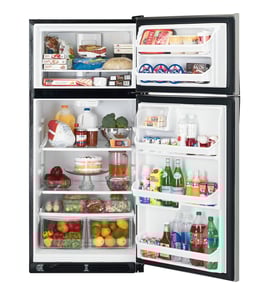



What is the top part of a refrigerator called?
In a typical top-mount refrigerator like the Sunbeam SNR10TFPA, the top section is the freezer compartment. It’s the coldest area of the appliance and is designed to keep food frozen while supporting overall cooling for the fresh-food section below.
Common names you’ll hear
People use a few different terms for the “top part,” depending on what they mean:
- Freezer compartment: the full upper section behind the freezer door
- Freezer door: the outer door that seals the freezer compartment
- Freezer liner: the interior walls of the freezer section
- Evaporator area: where cold air is produced (usually behind an interior panel)
- Evaporator fan: the fan that circulates cold air from the evaporator
Quick reference: top section vs. bottom section
| Refrigerator area | Typical location | Main job |
|---|---|---|
| Freezer compartment | Top (top-mount models) | Freezes food, helps drive cooling airflow |
| Fresh-food compartment | Bottom | Keeps food cold (not frozen) |
Why it matters
Knowing the correct name helps when you’re troubleshooting symptoms like warm freezer temps, frost buildup, or weak airflow. For example, a “freezer not cold” complaint often points to airflow or cooling components located in or behind the freezer compartment.
If you’re asking because something isn’t cooling
Start with these practical checks (no tools needed):
- Confirm the freezer door closes fully and seals all the way around
- Make sure vents inside the freezer are not blocked by packages
- Listen for the evaporator fan when the compressor is running
- Check for heavy frost on the back freezer panel (can indicate a defrost issue)
- Verify temperature settings haven’t been bumped warmer
For step-by-step help diagnosing airflow and fan issues, use our guide: how to fix your evaporator cooling fan.
Last updated: February 2026
What is the top mount refrigerator?
A top-mount refrigerator is a classic fridge layout where the freezer compartment is on top and the fresh-food (refrigerator) compartment is below. Your Sunbeam SNR10TFPA is a top-mount style, designed for straightforward storage and easy access to everyday refrigerated items.
How a top-mount refrigerator is laid out
In a top-mount design, cold air is produced and managed so both sections stay at safe temperatures.
Common features you will see:
- Freezer on top for frozen foods and ice trays
- Refrigerator section below for fresh foods and drinks
- Separate doors for freezer and refrigerator compartments
- Adjustable shelves and door bins (varies by model)
- Temperature controls that balance freezer and fresh-food cooling
Top-mount vs. other refrigerator styles
This quick comparison helps explain why many households choose top-mount models.
| Style | Freezer location | Best for | Typical tradeoff |
|---|---|---|---|
| Top-mount | Top | Value, simplicity, reliable storage | Freezer items are at eye level; fresh food is lower |
| Bottom-mount | Bottom | Frequent fresh-food access | Often higher cost; more complex layouts |
| Side-by-side | Left side | Narrow door swing, organized frozen storage | Narrower shelves for wide items |
| French door | Top (split) | Wide fresh-food shelves | More doors, more components |
Why it matters
Knowing you have a top-mount refrigerator helps when troubleshooting cooling, airflow, frost buildup, and door sealing issues because the freezer section often drives overall cooling performance.
Helpful DIY resources for common top-mount issues
If you are diagnosing performance problems, these guides match common refrigerator symptoms:
- Refrigerator common questions
- How to use your refrigerator efficiently
- How to fix a fridge door seal
Last updated: February 2026
What are the most commonly replaced parts in a refrigerator?
In a Sunbeam SNR10TFPA top-mount refrigerator, the parts we see replaced most often are the ones that affect sealing, airflow, temperature sensing, and water delivery (when equipped). Door gaskets, fan motors, thermistors, and defrost parts top the list because they directly impact cooling performance and energy use.
Most commonly replaced refrigerator parts
- Door gasket (door seal): stops warm air leaks that cause frost and long run times
- Evaporator fan motor: moves cold air through the freezer and into the fresh food section
- Condenser fan motor: cools the condenser and compressor area (on many designs)
- Thermistor (temperature sensor): tells the control when to run cooling
- Defrost system parts: defrost heater, defrost thermostat, and defrost timer/control (depending on design)
- Water inlet valve: common on models with an ice maker or water dispenser
- Shelves, bins, and drawers: often replaced due to cracks, warping, or broken rails
Quick symptom-to-part guide
| Symptom | Parts to check first | What you typically notice |
|---|---|---|
| Frost buildup, warm fridge | Door gasket, defrost parts, evaporator fan | Ice on back wall, weak airflow |
| Noisy operation | Evaporator fan, condenser fan | Buzzing, squealing, rattling |
| Temps swing up and down | Thermistor, control, airflow issues | Food freezing or warming |
| Leaks or no ice/water (if equipped) | Water inlet valve, water line, filter setup | Slow fill, no fill, dripping |
Why it matters
These parts are “high impact” because small failures (like a poor door seal or weak fan) quickly lead to bigger problems: spoiled food, heavy frost, higher electric bills, and extra wear on the compressor.
What we recommend before ordering parts
- Confirm the model number SNR10TFPA on the rating label
- Write down the main symptom (warm fridge, frost, noise, leak)
- Check for simple causes first: blocked vents, overpacked shelves, dirty condenser area
- Use our DIY help for targeted diagnosis, such as how to fix your evaporator cooling fan
Last updated: February 2026
What are the main 5 parts of a refrigerator?
The five main parts that make a refrigerator like the Sunbeam SNR10TFPA work are the compressor, condenser coil, evaporator coil, metering device (capillary tube or expansion device), and a temperature control (thermostat or electronic control). Together, they move heat out of the cabinet to keep food cold.
The “big 5” and what each one does
- Compressor: pumps refrigerant through the sealed system; it is the engine of cooling.
- Condenser coil: releases heat to the room air (often underneath or on the back).
- Evaporator coil: absorbs heat from inside the freezer or fresh-food section.
- Metering device (capillary tube/expansion device): drops refrigerant pressure so it can get cold before the evaporator.
- Temperature control (thermostat/control board): tells the compressor when to run to maintain set temperatures.
Common “supporting” parts people also mean
These are not part of the sealed refrigeration loop, but they are frequent causes of cooling complaints:
- Evaporator fan motor (moves cold air across the evaporator and into the refrigerator)
- Condenser fan motor (on many models, moves air across the condenser)
- Defrost system (defrost heater, defrost thermostat, timer/control)
- Door gasket (keeps warm, humid air out)
- Thermistor (temperature sensor on many electronic-control units)
Quick reference table
| Part | System | Typical symptom when it fails |
|---|---|---|
| Compressor | Sealed system | Not cooling, clicking, or runs but won’t get cold |
| Condenser coil | Heat rejection | Warm temps, long run times (especially if dirty) |
| Evaporator coil | Heat absorption | Poor cooling, frost pattern issues |
| Metering device | Pressure drop | Weak cooling, uneven frost, warm cabinet |
| Thermostat/control | Temperature regulation | Too warm, too cold, or short cycling |
Why it matters
When you know which “part family” is involved (sealed system vs. airflow/defrost vs. door sealing), you can troubleshoot faster and avoid replacing the wrong components. For airflow-related issues, we use steps like those in how to fix your evaporator cooling fan.
Last updated: February 2026
How many cubic feet is a top freezer refrigerator?
A top-freezer (top-mount) refrigerator is most often 14 to 22 cu. ft., but compact apartment-style units are smaller. The Sunbeam SNR10TFPA top-mount refrigerator is a compact model; plan on roughly 10 cu. ft. class capacity when comparing storage and fit.
Typical cubic-foot ranges for top-freezer refrigerators
- Compact/apartment size: 9 to 12 cu. ft.
- Small standard: 12 to 16 cu. ft.
- Most common household size: 16 to 20 cu. ft.
- Large top-freezer: 20 to 22 cu. ft.
Quick guide: capacity vs. household size
| Household size | Good target capacity | Notes |
|---|---|---|
| 1 to 2 people | 9 to 14 cu. ft. | Best for smaller kitchens and lighter shopping |
| 2 to 3 people | 14 to 18 cu. ft. | Typical “standard” top-freezer size |
| 4+ people | 18 to 22 cu. ft. | More freezer and shelf space |
Why cubic feet matters
Capacity affects how much food you can store without blocking airflow. In compact top-mount refrigerators like the Sunbeam SNR10TFPA, overpacking is the most common cause of warm spots and longer run times.
How to get the most usable space (and better cooling)
- Keep air vents clear in both compartments.
- Leave space between items for airflow.
- Avoid pushing food against the back wall where items can freeze.
- Let hot leftovers cool before loading the refrigerator.
- If temperatures swing or you hear unusual fan noise, use how to fix your evaporator cooling fan to troubleshoot airflow.
Last updated: February 2026





