Error Codes



Where to find model number on upright freezer?
For a Kenmore upright freezer like model 2539234110, the model number is printed on a rating label (sticker or metal tag) located on the cabinet, not on a removable part. Check the inside walls first, then the door area, then the exterior back or lower front.
- Inside the freezer compartment on a side wall (left or right)
- On the ceiling of the freezer compartment (common on uprights)
- Around the door opening (door jamb) near the hinge side
- Behind the lower front kick plate or toe grille
- On the exterior back panel near the bottom
- Open the freezer door and scan the side walls and ceiling with a flashlight.
- Look along the front frame where the door gasket seals.
- If you do not see it, remove the lower kick plate (if equipped) and check behind it.
- As a last step, pull the freezer forward and check the back near the compressor area.
| Label item | What it’s used for | Example format |
|---|---|---|
| Model number | Finds the correct parts list | 2539234110 |
| Serial number | Identifies production run | Letters and numbers |
| Electrical info | Confirms power requirements | Volts/amps |
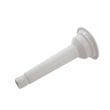
Using the exact model number helps us match the correct Kenmore upright freezer parts (like door trim, screws, or a drain tube) because similar-looking freezers can use different shelves, liners, and wiring.
If the label is damaged or missing, use our guide: how to find your appliance model number (and what it means for parts).
Last updated: January 2026
How many cubic feet is a Kenmore freezer model 2539234110?
The exact cubic-foot capacity for Kenmore upright freezer model 2539234110 varies by the specific product build and is typically listed on the model and serial tag or the original product specs. Most Kenmore upright freezers in this style are commonly in the 15 to 18 cu. ft. range.
Check these common locations for the rating label and specs:
- Inside the cabinet on a side wall (often near the upper section)
- Along the door opening (cabinet face frame)
- Behind the lower toe grille area (less common on uprights)
- On the back exterior panel near the compressor area
- On the original sales/spec label if it is still attached
Use this as a practical reference when you are planning space and storage.
| Upright freezer size | Typical capacity | Best for |
|---|---|---|
| Compact | 5 to 9 cu. ft. | Small households, overflow |
| Mid-size | 10 to 14 cu. ft. | Apartments, light bulk storage |
| Full-size | 15 to 18 cu. ft. | Family use, bulk shopping |
Capacity affects how much food you can store, how you organize shelves and bins, and whether airflow stays clear for steady temperatures. If the freezer is packed too tightly, it can lead to warm spots and heavier frost buildup.
If your real concern is performance (not storage volume), start with these checks:
- Confirm the temperature control is set correctly and the door closes tightly
- Make sure vents are not blocked by food packages
- Clean dust from the condenser area (if accessible)
- Watch for heavy frost that suggests an air leak or defrost issue
- If you see oily residue or the unit will not cool, sealed-system service is typically needed
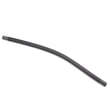
For drainage-related icing (water freezing at the bottom), the hose 5304512272 is a common part involved in routing defrost water away from the evaporator area.
Last updated: January 2026
What is the average lifespan of an upright freezer?
Most upright freezers, including Kenmore model 2539234110, typically last 10 to 20 years; a realistic average for many homes is 12 to 15 years. Lifespan depends most on temperature control, airflow around the cabinet, door seal condition, and keeping the refrigeration system clean.
- 10 to 12 years: heavy use, warm garage, dusty environment, or frequent door openings
- 12 to 15 years: common real-world average with normal use and basic upkeep
- 15 to 20 years: steady indoor location, good door seal, clean condenser area, stable temperatures
| Usage and environment | Typical outcome | What helps most |
|---|---|---|
| Hot garage or high humidity | Shorter lifespan | Better ventilation, stable room temps |
| Frequent door openings | More wear and frost | Fast loading, organized storage |
| Dusty area or pets nearby | Higher strain on cooling | Regular cleaning of intake/condenser area |
| Good seal and steady temps | Longer lifespan | Replace worn bumpers/grommets, keep door aligned |
- Keep the freezer level so the door closes consistently.
- Set temperature to about 0°F for food safety and efficient run time.
- Avoid overpacking; leave space for air circulation around shelves and vents.
- Watch for frost buildup and address it early (it can indicate airflow or door-seal issues).
- If you see water pooling or icing near the drain area, inspect the drain path and consider replacing the hose 5304512272 if it is cracked or restricted.
A freezer that runs warmer, frosts heavily, or runs constantly wears out the compressor and sealed system faster. Simple upkeep (airflow, stable temps, and a tight-closing door) reduces run time and helps the freezer reach the upper end of the 10 to 20 year range.
Last updated: January 2026