Installation guide
 Owner’s manual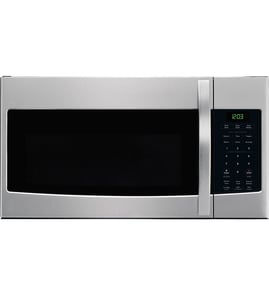



Are Kenmore microwaves good?
Kenmore microwaves are a good choice for most kitchens because they typically deliver solid everyday performance and strong value for the price. For the Kenmore 40185049010 microwave/hood combo, long-term satisfaction comes down to correct installation, proper venting setup, and routine filter care as outlined in the 40185049010 installation guide.
What “good” usually means for a microwave/hood combo
A microwave/hood combo has to do two jobs: heat food and move cooking smoke and grease. In real-world use, “good” usually comes down to these factors:
- Consistent heating across common cook settings
- Reliable door operation and interlock switching
- Effective ventilation for your cooktop setup
- Reasonable noise level from the fan and turntable
- Easy-to-maintain filters and light lens
What to check on your 40185049010 before you judge performance
Installation choices and cabinet fit can affect noise, vibration, and venting performance.
- Confirm the unit is installed level (an out-of-level microwave can vibrate and sound louder)
- Verify the ventilation type matches your kitchen setup: recirculating, outside top exhaust, or outside back exhaust
- Make sure at least one mounting point is secured into a wall stud (critical for stability)
- If your cabinet has a front overhang, use filler blocks so the case is not stressed by overtightened screws
- Use the correct grounded outlet and follow electrical safety steps during install
Common “good vs. not good” symptoms and likely causes
| What you notice | What it often points to | What to do first |
|---|---|---|
| Food runs cool or uneven | Heating system issue or incorrect use | Try a simple water heat test; then follow why is my microwave not heating |
| Loud humming or buzzing | Normal transformer hum or a failing high-voltage component | Stop using if heating is abnormal; have it serviced |
| Fan seems weak | Venting setup or grease buildup | Confirm vent type; clean or replace the grease filter |
| Turntable not rotating | Coupler or motor issue | Inspect the coupler and tray seating |
Why it matters
A “good” microwave/hood combo is as much about safe, stable mounting and correct venting as it is about cooking power. When the 40185049010 is installed level and vented correctly, it performs more consistently and tends to run quieter.
Last updated: February 2026
How big is a Kenmore microwave model 40185049010 in inches?
The Kenmore microwave/hood combo model 40185049010 fits a standard 30-inch over-the-range opening; the installation requirements call for 30 inches of cabinet-to-cabinet width and mounting over a range up to 30 inches wide. For the exact exterior width, height, and depth, use the 40185049010 installation guide.
What we can confirm for model 40185049010
The installation instructions specify the key fit dimensions that matter for replacing an over-the-range microwave and aligning it with your cabinets and range.
- Cabinet opening width: 30 inches (between cabinets)
- Range width compatibility: up to 30 inches wide
- Minimum mounting height: bottom of cabinet needs to be 30 inches or more from the cooking surface
- Mounting requirement: microwave must be secured to at least one wall stud
Quick fit checklist (measure before you buy)
Use a tape measure and confirm these items before ordering parts or planning a swap.
- Measure the space between cabinets (should be 30 inches)
- Measure cooktop to cabinet bottom clearance (30 inches minimum)
- Confirm there is a grounded outlet in the cabinet above
- Check for cabinet trim or overhang that could prevent the unit from sitting level
- Verify you can hit at least one wall stud with the mounting plate
Common “overall size” vs “opening size”
Many customers ask for the outside dimensions (W x H x D). For over-the-range units, the opening and mounting clearances are the first pass; the exact exterior dimensions vary by design.
| Measurement type | What it tells you | Typical use |
|---|---|---|
| Cabinet opening width | Whether it fits between cabinets | Replacement planning |
| Cooktop clearance | Safe mounting height | Installation safety |
| Exterior W x H x D | How far it sticks out and overall look | Matching cabinets/backsplash |
Why it matters
If the cabinet opening, cooktop clearance, and stud placement match the installation requirements, the Kenmore 40185049010 mounts correctly and vents properly. Getting these measurements right prevents alignment issues, door clearance problems, and rework during installation.
Last updated: February 2026
How much to replace a microwave door switch?
Replacing a door interlock switch on a Kenmore microwave/hood combo model 40185049010 typically costs $150 to $350 with professional service (trip, diagnosis, parts, and labor). If you do it yourself, the switch part is usually $15 to $50, but only if you can safely access and test the circuit.
Typical cost breakdown
Costs vary most by service call minimums and whether the door/latch is also damaged.
- Service call/diagnostic: $75 to $150
- Labor (door switch replacement): $75 to $200
- Door switch part: $15 to $50 (typical)
- Extra parts sometimes needed: latch parts, wiring connectors, or a fuse
| Repair approach | Typical total cost | Best for |
|---|---|---|
| DIY (part only) | $15 to $50 | Confident DIYers with electrical testing skills |
| Pro repair | $150 to $350 | Most homeowners, especially for over-the-range units |
| Pro repair with door/latch work | $250 to $500 | Doors that slam, don’t close squarely, or have broken tabs |
What usually drives the price up
A door switch often fails because the door is misaligned or the latch is worn, so the switch is not the only issue.
- Door not closing firmly or needing a “push” to start
- Broken or loose latch hooks
- Blown fuse after a door-slam event
- Multiple interlock switches in the latch bracket (some models use more than one)
- Hard-to-access over-the-range installation (time to remove and reinstall)
Safety and DIY notes (important)
Microwaves contain high-voltage components that can store a dangerous charge even when unplugged.
- Unplug the microwave before any inspection
- Do not open the cabinet unless you understand microwave high-voltage safety
- Use proper electrical testing methods before replacing parts
- Follow the disassembly steps and interlock adjustment guidance in the 40185049010 installation guide
Why it matters
A failing door interlock switch can prevent the microwave from running, cause intermittent operation, or blow a fuse. Fixing the underlying door alignment or latch wear helps the new switch last longer.
Last updated: February 2026
Where can I find my Kenmore microwave model number?
On Kenmore microwave/hood combo model 40185049010, the model number is typically printed on a rating label you can see when you open the door. Common spots include the door frame, the inner edge of the control panel area, or the back of the unit; confirm the exact label location in the 40185049010 installation guide.
Most common places to check
- Door frame (around the opening, behind the door)
- Along the side of the control panel (visible with the door open)
- Inside the cooking cavity (side wall or near the opening)
- Back panel (requires access behind the microwave)
- Upper cabinet area above the microwave (sometimes visible after installation)
How to read the label correctly
Look for a line that says Model or Model No. and match it exactly.
| What you see | What it means | What to do |
|---|---|---|
| Model number (example: 40185049010) | Identifies the exact microwave version | Use it to match parts and diagrams |
| Serial number | Production identifier | Keep it for service records |
| Electrical ratings (V, Hz, A) | Power requirements | Useful for installation and troubleshooting |
Why it matters
Kenmore microwave/hood combos can look identical across multiple versions, but parts like a door interlock switch, thermostat, or turntable components can vary by model. Using the exact model number helps us match the correct replacement part the first time.
Last updated: February 2026