
How to tell if an air compressor pressure switch is bad?
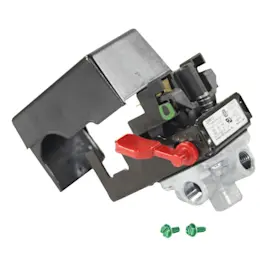
A bad pressure switch on your Coleman L0602112 air compressor shows up as starting and stopping problems: it may not start at all, it may run and never shut off, or it may short-cycle because the switch is not sensing tank pressure and controlling power to the motor correctly.
Common signs the pressure switch is failing
- Compressor will not start (no motor run) even with power available
- Runs continuously and does not shut off at normal cut-out pressure
- Short-cycles (rapid on and off) especially near cut-in pressure
- Stops too soon and leaves the tank under-pressurized
- Clicking/chattering from the switch area during start attempts
- Air leaking from the unloader valve area after shutoff longer than a brief hiss
Quick checks we use before replacing the switch
- Confirm power and cord condition: a weak outlet, damaged cord, or tripped breaker can mimic switch failure.
- Test with an empty tank: drain the tank to 0 PSI and try starting. If it starts empty but not with pressure in the tank, the unloader circuit or switch mechanism is often the issue.
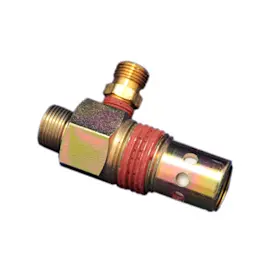
- Listen at shutoff: a short hiss is normal as the unloader releases head pressure; a constant leak points to unloader or check valve issues that can look like a bad switch.
- Inspect the switch housing (with power disconnected): burnt smell, heat discoloration, or visibly pitted contacts are strong indicators.
Pressure switch vs. other common causes
| Symptom | More likely the pressure switch | More likely something else |
|---|---|---|
| Won’t start with pressure in tank | Yes (unloader function in switch) | Check valve leaking back, motor/capacitor issue |
| Runs and never shuts off | Yes (not opening at cut-out) | Major air leak, worn pump valves/rings |
| Short-cycles near cut-in | Yes | Tank leak, regulator issue, loose wiring |
Why it matters
The pressure switch is the safety and control point for motor power based on tank PSI. When it fails, the compressor can become unreliable, overrun, or hard-start, which increases wear on the motor, pump, and check valve.
For step-by-step replacement guidance and related diagnostics, use our DIY resources like how to replace an air compressor pressure switch. For model-based parts lookup and ordering, search by L0602112 on Sears PartsDirect.
Last updated: February 2026
What are the 4 types of compressors?
The four common compressor types are reciprocating (piston), rotary screw, centrifugal, and axial. For a Coleman L0602112 air compressor, you will most often see a reciprocating (piston) design, which is a positive-displacement style used for shop and DIY air tools.
The 4 types at a glance
- Reciprocating (piston): Uses a piston and cylinder to compress air in strokes
- Rotary screw: Uses two meshing screws for continuous compression
- Centrifugal: Uses a high-speed impeller to add velocity, then converts it to pressure
- Axial: Uses multiple rotating and stationary blade stages (common in turbines)
How they’re grouped (and why that matters)
Most compressors fall into two big categories:
| Category | Types | What it means for you |
|---|---|---|
| Positive displacement | Reciprocating, rotary screw | Builds pressure by trapping air and reducing its volume; strong for tool use and general shop air |
| Dynamic | Centrifugal, axial | Builds pressure by accelerating air; common in large industrial systems |
Which type is most common for portable/shop air compressors
For many consumer and light-duty units like the Coleman L0602112, a reciprocating (piston) pump is the most common because it:
- Reaches useful PSI for nailers, inflators, and blow guns
- Is cost-effective to build and service
- Works well for intermittent use (fill tank, cycle off, repeat)
Why it matters
Knowing the compressor type helps you troubleshoot correctly. For example, piston units often relate symptoms to valves, seals, and pressure controls, while screw and centrifugal systems have different maintenance and failure patterns.
If you’re diagnosing performance issues (no start, low pressure, leaks), start with our DIY symptom and repair resources, then shop by model on Sears PartsDirect.
Helpful DIY guides for common compressor problems
- Air compressor won't start
- Air compressor won't build tank pressure
- Air compressor air leaks
- How to rebuild an air compressor pump
Last updated: February 2026
How to reset air compressor pressure switch?
On the Coleman L0602112 air compressor, a “reset” usually means clearing a tripped manual-reset pressure switch or overload. We reset it by shutting power off, bleeding tank pressure down, then pressing the reset button (if equipped) and restarting; if it keeps tripping, we troubleshoot the cause instead of forcing it.
Safe reset steps (manual-reset style)
- Turn the compressor OFF and unplug it.
- Pull the tank drain or open the outlet to bleed air pressure down (a common target is roughly 50 to 80 PSI so the motor can restart without load).
- Remove the pressure switch cover only if needed (power must stay disconnected).
- Press the reset button on the pressure switch (often red or black) if your switch has one.
- Plug in and start the unit; watch the cut-in and cut-out behavior.
If there is no reset button
Many pressure switches are automatic. In that case, “resetting” is simply:
- Power off and unplug
- Bleed tank pressure down
- Restore power and restart
If it still will not restart, use our troubleshooting path in air compressor won't start.
When adjustment is needed (not a reset)
If the compressor runs but does not switch on and off correctly, the switch may be misadjusted or failing.
Typical adjustment behavior (varies by switch design):
| Adjustment you make | What usually happens | What you might notice |
|---|---|---|
| Increase main spring tension | Higher cut-out (and often higher cut-in) | Tank pressure climbs higher before stopping |
| Decrease main spring tension | Lower cut-out (and often lower cut-in) | Stops sooner, may short-cycle |
| Bleed tank before restart | Reduces starting load | Motor starts easier |
For a repair-level fix, we follow how to replace an air compressor pressure switch.
Why it matters
A pressure switch that is repeatedly tripping is often reacting to a real problem (hard starting, overheating, or a control issue). Resetting without addressing the cause can lead to repeated shutdowns and poor pressure control.
What to check if it keeps tripping
- Power supply: weak outlet, long/light extension cord, or low voltage
- Tank pressure at restart: not bleeding down enough before restarting
- Unloader/check valve: trapped head pressure makes the motor struggle (see how to replace an air compressor check valve)
- Motor overheating: clogged cooling fins, poor ventilation, heavy duty cycle
- Pressure switch contacts: pitted/burned contacts causing intermittent operation
For model-based parts lookup and diagrams for the Coleman L0602112, we use the parts list on this model page or search by model at Sears PartsDirect.
Last updated: February 2026
How to read air compressor specs?
To read specs on your Coleman L0602112 air compressor, focus on the numbers that determine whether it can run your tools: PSI (pressure), CFM or SCFM (airflow), and tank size (run time). Airflow at a stated pressure is the best real-world performance indicator.
The key specs and what they mean
- PSI (pounds per square inch): The pressure the tank and regulator can supply; tools have a minimum PSI requirement.
- CFM or SCFM (cubic feet per minute): The volume of air delivered; this is what keeps air-hungry tools running.
- SCFM vs CFM: SCFM is standardized, so it is the best number for comparing compressors.
- Tank capacity (gallons): Affects how long you can run before the motor cycles on; it does not replace low airflow.
- Duty cycle (%): How long the compressor can run in a time period without overheating.
Quick matching guide
Use your tool’s required PSI and CFM as the baseline, then choose a compressor that meets or exceeds those numbers.
| Tool type | Spec to prioritize | What to compare |
|---|---|---|
| Spray gun, DA sander | SCFM @ 90 PSI | Compressor SCFM should meet tool SCFM |
| Nailers (short bursts) | PSI + tank size | Enough PSI; larger tank reduces rapid cycling |
| Inflation, blow gun | PSI | Moderate PSI and modest airflow usually works |
Why it matters
Reading specs correctly prevents weak tool performance, constant cycling, and overheating. For most air tools, SCFM at 90 PSI is the number that best predicts whether the compressor will keep up.
If performance seems worse than the specs
- Check for air leaks at fittings, hose, drain valve, and quick-connects
- Verify the regulator is set correctly and gauges respond
- Drain tank moisture; water reduces effective air volume
- If it will not build pressure, follow air compressor won't build tank pressure
For parts lookup by model number, use Sears PartsDirect.
Last updated: February 2026