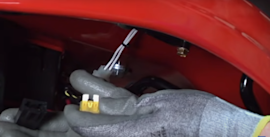
Installation guide
 Owner’s manual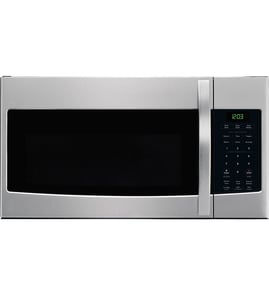



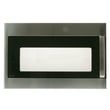
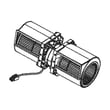
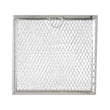


What are common problems with GE PVM9179SK2SS microwaves?
Common issues on the GE PVM9179SK2SS microwave/hood combo include the oven not starting, running but not heating, loud or unusual noises, turntable problems, and venting or airflow complaints. Many “won’t start” symptoms trace back to power, door-closure, or control settings listed in the owner's manual.
Most common symptoms and what they usually mean
- Oven will not start: tripped breaker, blown house fuse, loose plug, door not fully latched, or Start/Pause not pressed.
- Control panel lights up but won’t run: door not securely closed, a selection needs to be canceled, or time not entered.
- Runs but does not heat: high-voltage circuit problem (service-level repair).
- Loud buzzing, grinding, or rattling: turntable motor, fan blade, or something contacting the fan.
- Turntable not rotating: failed turntable motor or obstruction.
- Poor odor removal in recirculating mode: charcoal filter needs replacement.
Quick checks we recommend first (no tools)
- Reset power: unplug for 60 seconds, then plug back in.
- Check the home breaker or fuse.
- Open and close the door firmly; confirm it latches.
- Re-enter a simple cook cycle: set time, then press Start/Pause.
- If a prior setting is stuck, press Cancel/Off and try again.
Parts that commonly fix specific problems
| Symptom | Common part to check/replace | Example part for this model |
|---|---|---|
| Won’t start or intermittent start | Door interlock switch/lever | Micro-switch WB24X830, microwave door interlock switch lever WB06X10128 |
| Turntable not turning | Turntable motor | Microwave turntable motor WB26X10233 |
| Weak venting in recirculation | Charcoal filter | Microwave charcoal filter WB02X11544 |
| Runs but no heat (advanced) | High-voltage diode/capacitor/magnetron | Microwave high-voltage diode WB27X1160, microwave magnetron WB27X10939 |
Why it matters
Microwave “no start” problems are often simple (power, door, or settings), while “no heat” problems involve high-voltage components. Sorting the symptom correctly helps you avoid replacing the wrong part and reduces downtime.
Last updated: February 2026
What's the average lifespan of a GE microwave?
Most GE microwaves average about 7 to 10 years of service life in normal home use. For a GE over-the-range microwave/hood combo like PVM9179SK2SS, lifespan depends most on daily run time, ventilation heat exposure, and keeping the cavity and filters clean per the owner's manual.
Typical lifespan ranges (what we see most often)
- Light to moderate use (reheating, defrosting): 8 to 10 years
- Heavy use (multiple long cook cycles daily): 5 to 8 years
- Harsh conditions (grease buildup, frequent overheating from cooktop): 3 to 6 years
Quick guide: repair vs. replace
| What’s failing | Common symptom | Usually worth repairing? |
|---|---|---|
| Door interlock system | Won’t start, stops when door moves | Often yes (switches/levers) |
| Venting/airflow items | Loud fan, poor odor removal | Often yes (filters, fan parts) |
| High-voltage heating circuit | Runs but does not heat | Sometimes (depends on part cost) |
| Control board or door assembly | Dead display, erratic keypad, door damage | Depends on total cost |
What shortens microwave life fastest
- Running the microwave empty
- Repeated cavity arcing (metal/foil, damaged waveguide cover, splatter buildup)
- Blocked airflow from grease and dust buildup around vents
- Slamming the door or forcing a sticky latch
- Using the hood fan too little while cooking (heat soak into the microwave)
Maintenance that helps PVM9179SK2SS last longer
- Clean interior splatters often to prevent hot spots and arcing
- Use the hood fan when cooking on the range, especially high heat
- If you recirculate (non-vented), replace the charcoal filter on schedule; use the correct microwave charcoal filter WB02X11544
- Keep the door closing smoothly; if the latch feels inconsistent, inspect the interlock lever and switch mounts
- Follow venting and clearance requirements in the installation guide to reduce heat and vibration stress
Why it matters
A microwave/hood combo works in a hotter, greasier environment than a countertop unit. Good airflow and clean filters reduce overheating, which is one of the biggest drivers of early failures in magnetron and thermal cut-off circuits.
Last updated: February 2026
Do all over the range microwaves have the same dimensions?
No. Over-the-range microwaves do not all share the same dimensions; most are designed around a common 30-inch cabinet width, but height and depth vary by model and installation needs. For your GE PVM9179SK2SS microwave/hood combo, use the measurements and clearances in the installation guide before replacing or swapping units.
What is “standard” for over-the-range microwaves?
Most over-the-range (OTR) microwaves are built to fit typical kitchen layouts, but “standard” really means “common,” not identical.
- Width: Most are about 30 inches wide (to match standard cabinet openings)
- Height: Commonly 16 to 18 inches (low-profile models are shorter)
- Depth: Often 15 to 18 inches, depending on door style and venting design
- Mounting: Bracket and top-bolt locations vary by model
- Venting: Some are set up for outside venting, others for recirculating
What to check before you replace an OTR microwave
We recommend confirming fit in three places: cabinet opening, wall mounting, and venting path.
- Measure the cabinet opening width and the space between upper cabinets
- Confirm clearance over the cooktop (gas and electric installations can differ)
- Check whether your setup is outside vented or recirculating
- Compare the mounting plate and top cabinet bolt pattern requirements
- Verify the power outlet location and cord reach
Quick fit checklist (what usually changes)
| Fit item | Why it matters | What to compare |
|---|---|---|
| Width | Must match cabinet span | 30-inch class vs 24-inch class |
| Depth | Door swing and cabinet interference | Front projection past cabinets |
| Height | Space between range and cabinet | Low-profile vs standard |
| Venting | Airflow and duct alignment | Top/rear/recirculating |
Why it matters
Even when two microwaves are both “30-inch OTR” units, differences in depth, mounting points, and venting can turn a simple swap into a cabinet or duct modification. Using the GE PVM9179SK2SS specs and install template details helps you avoid misaligned bolts, blocked vents, and poor airflow.
Last updated: February 2026