Error Codes




How to clean a GE gas range?
For the GE JGSS66SEL5SS gas range, we recommend cleaning spills promptly, using non-scratch tools, and keeping burner parts dry and properly seated. For tougher messes, a paste of baking soda and vinegar or a gentle cleanser can help; remove all residue before cooking.
Safe, effective cleaning steps
- Turn all controls off and let the range cool completely.
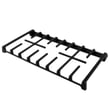
- Remove grates and burner caps; wash with warm water and mild dish soap.
- For baked-on soil, apply a baking soda paste (baking soda plus a little water), let it sit 15 to 30 minutes, then wipe.
- Use vinegar on a cloth to cut grease and help lift residue; wipe again with clean water.
- Dry parts fully before reassembling so burners light and flame properly.
What to clean (and how)
| Area | What to use | What to avoid |
|---|---|---|
| Cooktop surface | Mild dish soap, soft sponge, microfiber cloth | Abrasive pads, harsh powders that scratch |
| Burner caps and heads | Warm soapy water; soft brush for ports | Soaking igniters; reassembling while wet |
| Oven interior | Mild degreaser or baking soda paste; wipe-rinse-dry | Spraying cleaner into gas burner area |
| Stainless exterior | Stainless cleaner or soapy water; buff dry | Chlorine bleach; gritty scrubbers |
Quick checks if burners click but do not light after cleaning
- Confirm caps are centered and sitting flat (misalignment blocks gas flow).
- Make sure burner ports are clear; use a soft brush, not a toothpick that can break off.
- Dry moisture around the igniter area; trapped water causes weak spark and delayed ignition.
- If ignition stays unreliable, inspect the range spark module WB13X24741 and related wiring.
Why it matters
Keeping the cooktop, burner caps, and oven cavity clean helps prevent smoke, odors, uneven flames, and ignition problems. It also reduces the chance of corrosion and premature wear on ignition and gas components.
Last updated: February 2026
What are the benefits of JGSS66SEL5SS?
The GE JGSS66SEL5SS gas range is built for easier cleanup and flexible cooking: sealed cooktop burners help contain spills, and the broil function supports high or low settings so you can better match heat to what you’re cooking.
Key benefits you’ll notice day to day
- Sealed cooktop burners: help keep spills from dripping below the cooktop surface.
- Deep-recessed cooktop: helps contain boilovers for faster wipe-downs.
- Flexible broiling: lets you adjust broil intensity (hi or low) to suit different foods.
- Electronic clock and timer: supports more consistent timing for baking and broiling.
Features at a glance
| Benefit | What it helps with | Typical use case |
|---|---|---|
| Sealed burners | Cleanup and spill control | Sauces, pasta water, soups |
| Deep-recessed cooktop | Containing messes | Boilovers and splatters |
| Hi/low broil control | Better browning control | Melting, finishing, crisping |
| Clock/timer | Timing accuracy | Multi-dish meals |
Why it matters
Most range frustrations come down to mess and heat control. On the JGSS66SEL5SS, sealed burners and a recessed cooktop reduce cleanup time, while adjustable broiling helps you avoid under-browning or scorching when finishing foods.
Parts that support these benefits
If performance drops (weak flame, uneven heating, or ignition trouble), these common parts are often involved:
- Range spark module WB13X24741 (drives burner sparking)
- Range surface burner valve WB21X20612 (controls gas flow to a surface burner)
- Range oven temperature sensor WB24X25557 (helps the oven regulate temperature)
Last updated: February 2026
What is the life expectancy of a GE gas range?
A GE gas range like model JGSS66SEL5SS typically lasts 13 to 15 years. With normal home cooking and basic upkeep (keeping burners clean and fixing ignition issues early), it can reach about 18 years before major repairs become more common.
Typical lifespan and what changes it
Most ranges wear out from heat stress, grease buildup, and ignition or control failures. These factors have the biggest impact:
- Cooking frequency (daily use shortens lifespan)
- Cleaning habits (spills and grease left on burners accelerate problems)
- Ignition performance (slow lighting strains igniters and gas components)
- Ventilation and heat management (excess heat can stress controls)
- Timely small repairs (a minor part now can prevent a bigger failure later)
Repair vs. replace: a quick guide
Use this as a practical decision check for a GE gas range.
| Situation | Usually makes sense to… | Why |
|---|---|---|
| Range is under ~10 years old and heats normally | Repair | Parts costs are typically lower than replacement value |
| 13 to 15 years old with one clear failure | Repair (case-by-case) | A single part can restore reliable operation |
| Repeated ignition issues plus uneven baking | Consider replacing | Multiple systems may be wearing out together |
| Gas smell, damaged wiring, or unsafe operation | Stop using and service | Safety comes first |
Parts that commonly affect “end of life” symptoms
If your range is otherwise in good shape, these are common fixes that restore performance:
- Range oven burner igniter WB13X40206 for weak or delayed bake ignition
- Range oven temperature sensor WB24X25557 for temperature swings or underbaking
- Range spark module WB13X24741 when burners click but do not light consistently
- Range surface burner valve WB21X20612 if a burner will not adjust properly
Why it matters
Knowing the expected lifespan helps us plan smart repairs. On a GE range, restoring reliable ignition and accurate oven temperature often delivers the biggest improvement in day-to-day cooking without replacing the entire appliance.
Last updated: February 2026
What model is my GE gas range?
Your GE gas range model number is printed on the model and serial tag; on many GE ranges (including JGSS66SEL5SS), it’s located behind the rear control panel on a small metal “flag” you can flip up to view the label.
Where to look on model JGSS66SEL5SS
Use these quick checks to find the tag without moving the range:
- Stand at the front of the range and reach behind the center of the rear control panel.
- Feel for a small metal flag or tab.
- Rotate or flip the flag upward to reveal the model and serial label.
- Write the model number exactly as shown (letters and numbers).
- Take a clear photo of the label for ordering parts.
What the label tells you (and why it matters)
The model tag typically includes both a model number and a serial number. For parts lookup and diagrams, the model number is the key because it matches your exact burner setup, ignition system, and control configuration.
| You need this | Used for | Example for this page |
|---|---|---|
| Model number | Correct parts and diagrams | JGSS66SEL5SS |
| Serial number | Production details and service reference | Varies by unit |
Common mistakes that cause wrong parts
These are the most common issues we see when customers shop for GE range parts:
- Reading the serial number instead of the model number
- Missing a character at the end (for example, leaving off “SS”)
- Using a similar model from a different series
- Ordering by a part’s appearance instead of matching the model
If the label is hard to read
If the tag is greasy or faded, gently wipe it with a damp cloth and a little mild dish soap, then dry it. Avoid abrasive pads that can remove printing.
Helpful related tip
If you’re not sure you’re reading the tag correctly, use our guide: how to find your appliance model number (and what it means for parts).
Last updated: February 2026
Who makes GE gas ranges?
GE gas ranges (including model JGSS66SEL5SS) are made by GE Appliances, which is owned by Haier. GE Appliances designs, manufactures, and sells GE-branded cooking appliances, including gas ranges like this one.
Quick ownership and brand breakdown
- Brand on the appliance: GE
- Appliance manufacturer: GE Appliances
- Parent company: Haier
- Product type: GE gas range
Why this matters when buying parts
Ownership does not change how you match parts; the model number and the part ID are what determine fit. For example, if you are replacing the oven light, we match by the exact part listing for this model, such as the 40a15bulb 40A15.
Common identifiers you will use for parts lookup
| What you have | Example for this range | What we use it for |
|---|---|---|
| Model number | JGSS66SEL5SS | Confirms the exact parts diagram and fit |
| Part ID | 40A15 | Identifies the exact part listing |
| Part number | STD372401 | Manufacturer number used for cross-reference |
Tips to avoid ordering the wrong part
- Match the full model number exactly: JGSS66SEL5SS
- Use the part ID from the parts list when possible
- Compare the part name to what you are replacing (burner cap, igniter, sensor)
- If the issue is performance-related, confirm symptoms before replacing parts
- For electrical checks, use a meter and safe testing practices (power off when accessing wiring)
Related DIY help
If you are troubleshooting electrical components (like an igniter circuit or light socket), our how to use a multimeter to test electrical parts video helps you test safely and avoid replacing good parts.
Why it matters
GE Appliances is the maker behind the GE brand, but your model number drives parts compatibility. Using the correct model and part identifiers prevents returns and gets your range heating and lighting correctly again.
Last updated: February 2026