Owner’s manual
 Error Codes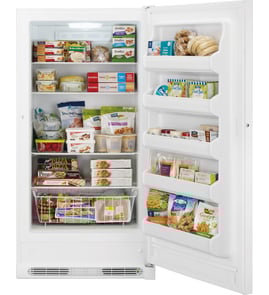

What is the average lifespan of an upright freezer?
An upright freezer typically lasts 10 to 15 years. With good installation, steady temperatures, and basic care, many units run 15 years or longer. For your Wc Wood upright freezer model F15NAA, following the care and setup guidance in the F15NAA owner's manual helps maximize service life.
Typical lifespan and what affects it
Most upright freezers fall into this range:
| Usage and care level | Typical lifespan | What it usually looks like |
|---|---|---|
| Average household use | 10 to 15 years | Normal wear, occasional minor repairs |
| Well maintained | 15 to 20 years | Stable temps, clean cabinet and seals, good airflow |
| Poor airflow or heavy abuse | 7 to 10 years | Hot running, frequent cycling, frost or temp issues |
Maintenance habits that extend freezer life
We see these steps make the biggest difference over time:
- Keep the freezer level so the door seals evenly and the compressor runs normally.
- Maintain air clearance around the cabinet (the manual calls for space at the top, back, and sides).
- Set and keep a consistent temperature; many uprights are designed to hold around 0°F under normal conditions.
- Clean the door gasket and door liner with mild detergent and warm water; dry thoroughly.
- Avoid overloading with warm food; add unfrozen food in smaller batches so the compressor is not overworked.
- Use Fast Freeze only when needed (some models); return to the normal setting after 24 to 48 hours.
Signs your upright freezer is nearing end of life
These symptoms often show up in the last few years of service:
- Temperature swings or food softening even after adjusting the control
- Compressor running almost constantly (beyond normal cool-down periods)
- Excessive cabinet heat, unusual noises, or frequent tripped breakers
- Door not sealing well (gasket gaps, moisture, heavy frost in non no-frost units)
Why it matters
A freezer that cannot reliably hold safe temperatures wastes energy and risks food quality. Good airflow, correct temperature settings, and basic cleaning reduce strain on the sealed system and help your F15NAA deliver long, dependable service.
If you need help finding replacement parts by model number, we recommend starting with the parts list for F15NAA, or searching by model on Sears PartsDirect.
Last updated: February 2026
What is the disadvantage of an upright freezer?
The main disadvantage of an upright freezer (including the Wc F15NAA) is that it loses cold air faster when the door opens, so it can use more energy and see bigger temperature swings than a chest freezer. Fixed shelves also make very bulky items harder to store.
Common disadvantages (and what they mean day to day)
- More cold-air loss at the door: Cold air spills out when you open an upright door, so the compressor may run more.
- Less forgiving in outages: Temperature can rise faster during a power loss because cold air is not “trapped” the way it is in a chest freezer.
- Bulky-item limits: Shelves and door bins can restrict large boxes, turkeys, or odd-shaped packages.
- Frost and airflow issues: Uprights are more sensitive to blocked vents and overpacking, which can lead to uneven freezing.
- Door seal dependence: A worn gasket or a door left slightly ajar can cause frost buildup and warmer temps.
How to reduce the downsides on a Wc F15NAA
We recommend these habits to keep temperatures steadier and reduce run time:
- Keep the freezer indoors and away from heat sources.
- Leave proper clearance for airflow (typical guidance is 3 inches on top and sides, 1 inch at the back).
- Avoid loading it with unfrozen food until it has time to get fully cold.
- Organize so you can grab items quickly and close the door fast.
- Keep the door gasket clean and dry so it seals tightly.
Upright vs. chest freezer: quick comparison
| Feature | Upright freezer | Chest freezer |
|---|---|---|
| Organization | Easier (shelves/bins) | Harder (stacking) |
| Energy use | Often higher | Often lower |
| Power outage hold time | Often shorter | Often longer |
| Bulky items | Sometimes harder | Usually easier |
Why it matters
If you open the door frequently or store lots of large items, the upright design can cost more to run and make temperature management more sensitive. Following the placement, clearance, and loading guidance in the F15NAA owner's manual helps you get the best performance.
For replacement parts and diagrams for the Wc F15NAA, start with the model parts list; you can also search by model number on Sears PartsDirect.
Last updated: February 2026
What are the parts of a standing freezer?
A standing (upright) freezer like the Wc F15NAA uses a sealed refrigeration system plus airflow and controls to pull heat out of the cabinet and keep food near 0°F. The core components work together to circulate refrigerant, move air, and regulate temperature (see the F15NAA owner's manual).
Main parts you will find in most upright freezers
- Compressor: pumps refrigerant through the sealed system.
- Condenser: releases heat into the room air; this is why the outside can feel warm during operation.
- Metering device (capillary tube): controls refrigerant flow into the evaporator.
- Evaporator (cooling coil): absorbs heat inside the freezer.
- Temperature control (thermostat/control): sets and maintains cabinet temperature.
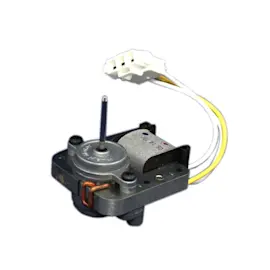
- Evaporator fan (common on no-frost models): moves air across the coil and throughout the cabinet.
How these parts work together (quick flow)
| System area | What it does | What you notice |
|---|---|---|
| Compressor + condenser | Moves heat out of the freezer | Cabinet exterior may feel warm (normal) |
| Capillary tube + evaporator | Creates cold inside the cabinet | Food freezes and stays frozen |
| Controls + airflow | Maintains steady temperature | More stable temps, fewer warm spots |
No-frost vs. manual-defrost: what changes
Many upright freezers are no-frost, meaning frost is collected on the cooling coil and periodically melted so water drains to a pan and evaporates. In no-frost designs, the freezer relies more on airflow components (fan, drain path, and defrost function) to prevent ice buildup.
Why it matters
Knowing the major parts helps you troubleshoot symptoms faster. For example, warm cabinet walls often point to normal heat rejection at the condenser, while poor freezing usually points to airflow, control settings, or a sealed-system issue.
Helpful model-specific operating notes
- A common starting setting is around “4” to maintain near 0°F under normal conditions.
- Plan 6 to 8 hours of cool-down time before loading frozen food.
- Avoid overloading with unfrozen food; a typical guideline is no more than 2 to 3 lb per cubic foot at one time.
You can look up diagrams and order replacement parts by model number on Sears PartsDirect.
Last updated: February 2026
Why is the upright freezer not freezing?
If your Wc F15NAA upright freezer is running but not freezing, the most common causes are a warm temperature control setting, not allowing enough cool-down time, hot room conditions, airflow restrictions from overloading, or a failure in the sealed cooling system or controls.
Quick checks first (fastest fixes)
- Allow normal cool-down time: After first start-up, the compressor can run continuously; cooling can take 6 to 8 hours or longer depending on room temperature and door openings.
- Set the temperature colder: Turn the temperature control to a higher number for colder temperatures.
- Confirm room conditions: The freezer operates most efficiently when the room is 40°F to 90°F.
- Avoid loading too soon: Do not load food until the freezer has had time to get properly cold.
- Prevent airflow blockage: Do not pack items tightly against interior surfaces; leave space for air circulation.
What to check next (by symptom)
Freezer runs a lot but stays warm
- Verify the door closes fully and the gasket seals all the way around.
- Limit door openings; warm, humid air quickly raises cabinet temperature.
- Check for heavy frost or ice that could restrict airflow (especially on manual-defrost styles).
Power light is off (some models)
- Check the outlet, plug connection, and home circuit (fuse or breaker).
- Remember: a power light indicates power presence; it does not confirm safe food temperature.
Temperature and usage guidelines
| Situation | What we recommend | Why it matters |
|---|---|---|
| First start-up | Wait 6 to 8 hours or longer | Normal pull-down time |
| Hot room | Keep room 40°F to 90°F | Improves cooling efficiency |
| Overpacked cabinet | Leave airflow gaps | Prevents warm zones |
| Frequent door openings | Open briefly, close firmly | Reduces heat and moisture load |
Why it matters
When a freezer cannot remove heat fast enough, food softens and the compressor can run excessively. Correct settings, proper loading, and good airflow solve many “not freezing” complaints without parts replacement.
When to move from checks to repair
If the control is set colder, the room is within range, you have waited through the full cool-down period, and temperatures still do not drop, follow the diagnostic and operating guidance in the F15NAA owner's manual. For model-based parts lookup and ordering, use Sears PartsDirect.
Last updated: February 2026
Is it worth getting an upright freezer?
Yes; an upright freezer is worth it when you want fast access and better day-to-day organization than a chest freezer. For the Wc Wood F15NAA upright freezer, proper installation, airflow clearance, and the right electrical supply help you get the best performance and operating cost.
When an upright freezer is the better choice
- You want easy access to frequently used items without stacking and digging.
- You prefer built-in organization (shelves, door bins, and compartments vary by design).
- You have limited floor space and want vertical storage.
- You open the freezer often and want quicker visibility of what you have.
- You want a freezer that is easier to inventory and rotate (first in, first out).
Upright vs chest freezer: practical comparison
| What matters most | Upright freezer | Chest freezer |
|---|---|---|
| Everyday access | Faster | Slower (more digging) |
| Organization | Easier | Often needs baskets/stacking |
| Cold loss when opened | Higher | Lower |
| Power-outage cold retention | Moderate | Strong |
| Floor space | Usually smaller | Usually larger |
Setup details that affect “worth it” for the F15NAA
Installation and placement have a direct impact on efficiency and temperature stability. We cover these requirements in the F15NAA owner's manual.
- Use a dedicated, properly grounded 115V, 60 Hz, 15 or 20 amp circuit.
- Avoid extension cords; use an outlet that cannot be switched off.
- Allow airflow clearance: 3 inches at the top, 1 inch at the back, 3 inches on each side.
- Place it indoors, away from heat sources.
- Operate it where room temperature is typically 40°F to 90°F.
Why it matters
Choosing between upright and chest comes down to convenience versus maximum cold retention. If you access frozen foods weekly and want clear organization, an upright freezer pays off in time saved and less food waste.
If you need to look up replacement parts by model number, start with the parts list for F15NAA or search by model on Sears PartsDirect.
Last updated: February 2026