Owner’s manual
 Error Codes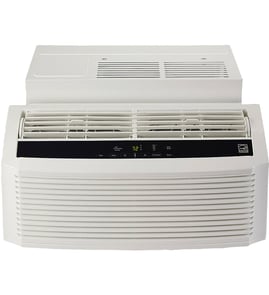



How much should a new 2.5 ton AC unit cost?
A new 2.5-ton central AC system (about 30,000 BTU) typically costs $4,000 to $9,000 installed in the U.S., with higher prices when you include a matching indoor coil, refrigerant line work, electrical upgrades, or a new furnace/air handler. Your GE AHE18DXL2 is a room air conditioner, so central-AC “tonnage” pricing does not apply to this model.
What drives the price for a 2.5-ton central AC?
- Equipment scope: outdoor condenser only vs. condenser + indoor coil (or full system)
- Efficiency rating: higher efficiency usually costs more up front
- Ductwork condition: repairs, sealing, or resizing can add cost
- Electrical requirements: new disconnect, breaker, or wiring upgrades
- Refrigerant work: line set replacement, evacuation, and charge
- Labor and access: attic installs, roof access, long line runs
Typical cost ranges (installed)
| What you’re buying | Typical installed range | Best fit when |
|---|---|---|
| Condenser replacement only | $3,500 to $6,500 | Existing coil/air handler is compatible and in good shape |
| Condenser + indoor coil | $4,500 to $8,000 | Coil is old, leaking, or mismatched |
| Full system (AC + air handler/furnace changes) | $6,000 to $12,000+ | Major upgrades, airflow issues, or aging indoor equipment |
How this relates to your GE AHE18DXL2 room air conditioner
Room air conditioners are sized in BTU, not tons. If you are troubleshooting cooling or airflow on the AHE18DXL2, start with maintenance items and controls in the AHE18DXL2 owner’s manual, and keep the filter clean (a clogged filter can reduce cooling and cause icing).
Common room AC fixes that improve performance
- Clean or replace the air filter
- Confirm the unit is on a dedicated, properly grounded outlet (per manual guidance)
- Make sure the front grille and filter are installed correctly
- Verify temperature and mode settings (Cool vs Fan)
- Clean lint and debris from the intake and outlet areas
Why it matters
A “2.5-ton AC” quote can vary widely because installation details often cost as much as the equipment. For the AHE18DXL2, basic airflow and electrical checks prevent many “not cooling” complaints without major parts replacement.
Last updated: February 2026
How to reset a GE window AC?
To reset your GE AHE18DXL2 window (room) air conditioner, unplug it for about 2 to 3 minutes, then plug it back in and wait up to 3 minutes for the compressor time delay to clear. If the plug’s safety device tripped, press RESET on the cord plug.
Quick reset options (most common)
- Power reset: Unplug for 2 to 3 minutes, then restore power.
- Cord plug reset (GFCI-style): While plugged in, press TEST, then RESET on the plug.
- Breaker reset: If the circuit tripped, reset the breaker, then allow the 3-minute delay.
- Control reset: After power is restored, reselect your mode and temperature.
Step-by-step: safest way to reset
- Turn the unit OFF.
- Unplug the power cord from the wall outlet.
- Wait 2 to 3 minutes.
- Plug the unit back in.
- If needed, press RESET on the plug.
- Wait up to 3 minutes before expecting cooling; the compressor has a built-in protective delay.
If it still will not run or cool
- Confirm the unit is on its own grounded 3-prong outlet (no adapter plugs).
- Make sure airflow is not blocked by curtains, blinds, or furniture.
- Clean the filter; a dirty filter can cause weak cooling and icing. Use the room air conditioner air filter WJ71X10668 if your filter is damaged.
- If the RESET button will not stay engaged, stop using the unit and have a qualified technician check it.
What the unit does after a power interruption
| Situation | What you’ll see | What to do |
|---|---|---|
| Brief outage | Unit restarts in last settings | Wait for normal operation |
| Compressor delay | Fan may run, cooling delayed | Wait about 3 minutes |
| Plug interrupter tripped | No power to unit | Press RESET on plug |
Why it matters
Resetting clears minor electronic glitches and restores safe power delivery through the cord’s current interrupter; waiting for the compressor delay helps prevent overload trips and protects the sealed system.
For model-specific electrical and safety details, follow the AHE18DXL2 owner’s manual.
Last updated: February 2026
Is 1 ton AC enough for a 12X12 room?
Yes. For a typical 12 x 12 room (about 144 sq. ft.), a 1-ton air conditioner is more than enough cooling capacity; most rooms that size need roughly 5,000 to 8,000 BTU. For your GE AHE18DXL2 room air conditioner, correct installation, airflow, and settings matter more than “tons” for comfort.
Quick sizing guidance (12 x 12 room)
Most cooling issues in a small room come from heat load and airflow, not a lack of capacity.
- Room size: 144 sq. ft.
- Typical BTU range: 5,000 to 8,000 BTU
- When you may need more: strong afternoon sun, poor insulation, high ceilings, lots of electronics, frequent door opening
- When you may need less: shaded room, good insulation, low occupancy
| Room conditions | What you’ll notice | What to do first |
|---|---|---|
| Hot sun, weak insulation | Runs longer, feels warm | Close blinds, seal gaps, use higher fan |
| High humidity | Feels clammy | Use Cool mode, avoid oversizing |
| Poor airflow | Uneven temps | Clean filter, clear vents |
How to get the best performance from the AHE18DXL2
The manual notes that cooling can take about 3 minutes to start after switching into a Cool setting; that delay is normal compressor protection.
- Set Cool mode and choose Med or High fan for faster pull-down
- Use Auto fan for steadier comfort once the room is close to set temp
- Try Energy Saver only after the room is comfortable (it cycles the fan with the compressor)
- Keep the set temperature realistic (the control range is 61°F to 86°F)
- Keep airflow strong by cleaning or replacing the filter (use the owner's manual)
Parts that most affect cooling in a small room
If the unit runs but comfort is poor, start with airflow and control inputs.
- Room air conditioner air filter WJ71X10668: restricted airflow can reduce cooling and cause icing
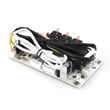
- Room air conditioner electronic control board WJ26X25626: can affect compressor and fan operation
- Room air conditioner fan motor WJ94X20191: weak airflow across coils reduces performance
Why it matters
An oversized unit can short-cycle (turn on and off too often), which often leaves humidity higher and comfort worse. A properly sized unit with clean airflow and correct settings cools faster, dehumidifies better, and uses less energy.
Last updated: February 2026
Why is my GE window air conditioner not getting cold?
If your GE AHE18DXL2 window air conditioner runs but is not getting cold, the most common causes are an incorrect Cool setting, a dirty air filter restricting airflow, or an iced-up coil blocking air movement. Start with settings and airflow checks in the AHE18DXL2 owner's manual.
Quick checks that fix most “not cold” complaints
- Confirm Cool mode (not Fan) and lower the set temperature.
- Give it time; when first turned on, the room needs time to cool down.
- Clean the filter; GE recommends cleaning it at least every 30 days.
- Close doors and windows; reduce heat sources in the room.
- Check for cold air escaping (open registers or returns can pull cooled air away).
Airflow first: filter and coil icing
Restricted airflow is the fastest way to lose cooling and trigger icing.
- Remove, clean, and fully dry the filter; replace it if damaged.
- If you see frost or ice behind the front grille, set High Fan or High Cool with a higher temperature until the ice melts.
- After thawing, recheck airflow and filter condition.
Helpful part for this model:
Symptom guide
| What you notice | Most likely cause | What we do next |
|---|---|---|
| Weak airflow | Dirty filter | Clean or replace filter |
| Frost or ice on coil | Low airflow or very low setting | Thaw, then improve airflow |
| Runs but room stays warm | Heat load or air leaks | Seal room, verify settings |
Why it matters
When airflow drops, the evaporator cannot absorb heat properly; the coil can ice up and the unit can run without actually cooling the room.
Last updated: February 2026