Installation guide
 Owner’s manual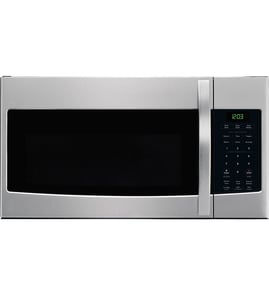




How big is a Kenmore microwave model 79080359310 in inches?
For the Kenmore microwave/hood combo model 79080359310, the overall size is typically about 29 3/4 inches wide, 16 1/4 inches high, and 16 inches deep. For the exact cabinet and mounting measurements used for installation, use the 79080359310 installation guide.
What to measure (and why it matters)
Microwave/hood combos have two “sizes” that matter: the outside cabinet size and the required mounting clearances (wall plate, upper cabinet holes, venting path). Using the installation dimensions prevents fit issues over a range.
- Overall width: confirms it fits above a standard range (many are designed for 30-inch spaces)
- Overall height: helps confirm clearance to upper cabinets and backsplash
- Overall depth: affects how far it projects over the cooktop
- Mounting layout: determines where the wall bracket and top bolts must land
- Venting direction: changes how much space you need behind or above the unit
Quick size reference
| Measurement | Typical for model 79080359310 | Where to confirm |
|---|---|---|
| Width | 29 3/4 in. | 79080359310 installation guide |
| Height | 16 1/4 in. | 79080359310 installation guide |
| Depth | 16 in. | 79080359310 installation guide |
Before you buy or install
Use these checks to avoid a mismatch with your cabinet opening and vent setup:
- Measure the space between cabinets at the mounting height.
- Confirm your range is 36 inches wide or less (this model type is intended for use above ranges up to 36 inches wide).
- Verify the upper cabinet depth and the microwave’s front projection.
- Identify whether you are venting outside (roof or wall) or recirculating.
- Follow the template and hole locations in the 79080359310 installation guide before drilling.
Why it matters
A microwave that “almost fits” can still fail installation if the top-bolt locations, wall plate position, or venting path do not line up. Using the installation guide dimensions protects your cabinets, ducting, and mounting strength.
Last updated: February 2026
How do I reset my Kenmore Elite microwave?
To reset your Kenmore microwave model 79080359310, unplug it (or switch off the breaker) for about 1 minute, then restore power. This clears many control glitches. For control-panel resets such as demo mode or unit settings, follow the steps in the 79080359310 owner's manual.
Quick reset options (most common)
- Power reset: Unplug the microwave for 60 seconds, then plug it back in.
- Stop/Cancel reset: Press STOP once to cancel a running function (like the kitchen timer).
- Settings reset (units): If the display shows kg, pressing START resets the oven controls to lbs.
- Demo mode toggle: Demo mode is turned on or off using a specific Clock & Settings button sequence.
Resetting settings from the control panel
Many “reset” requests are really about turning off demo mode or restoring a setting.
| What you want to fix | What to do | What you should see |
|---|---|---|
| Cancel a timer/alarm | Press STOP once | Timer cancels (countdown stops) |
| Switch kg to lbs | Press START when kg is displayed | Units change to lbs |
| Turn demo mode ON/OFF | Press Clock & Settings multiple times, then press START | Demo mode changes state |
Why it matters
A reset is the fastest way to clear a frozen keypad, stuck display, or odd behavior after a power flicker. If the microwave runs but does not heat, a reset will not correct a failed heating circuit; use the troubleshooting steps in the 79080359310 owner's manual.
Last updated: February 2026
How do you unlock a Kenmore Elite microwave?
To unlock the controls on your Kenmore microwave/hood combo model 79080359310, press and hold the Cancel/Off key (often marked with an X) for about 3 seconds until the Control Lock indicator turns off. Then the keypad should respond normally.
Quick unlock steps
- Close the door fully (a partially latched door can keep the keypad from responding).
- Press Cancel/Off.
- Press and hold Cancel/Off for 3 seconds.
- Watch for the Control Lock icon or message to disappear.
- Test a simple function (for example, set the clock or start a short cook time).
- If it still will not unlock, unplug the microwave for 1 minute, restore power, then try again.
What to check if it still will not unlock
A control lock issue can look like a keypad failure. These checks help you separate a settings issue from a door-switch problem.
| Symptom | Most likely cause | What we recommend |
|---|---|---|
| Display works but most keys do nothing | Control lock is on | Repeat the 3-second Cancel/Off hold; confirm lock icon turns off |
| Works only when you push the door in | Door not fully latching | Inspect the latch area; check the latch hook and door switches |
| Random beeps, starts then stops | Door interlock not proving closed | Have the door interlock switches checked and replaced if needed |
Why it matters
The door interlock system and control lock both prevent unsafe operation. If the microwave thinks the door is open, it can disable cooking and make the keypad seem “locked” even when control lock is off.
Parts that commonly affect “locked” or non-responsive behavior
If the lock feature is off and the keypad still will not respond consistently, these model-compatible parts are common suspects:
- Microwave door interlock switch 5304509460 (door safety interlock)
- Microwave door switch 5304509459 (door sensing switch)
- Latch hook 5304509457 (helps the door engage the switches)
For model-specific keypad and lock details, follow the control panel section in the 79080359310 owner’s manual.
Last updated: February 2026
Is Kenmore a good microwave?
Kenmore microwaves are a good choice for most homes because they’re built for dependable everyday cooking at a solid value; satisfaction mainly comes down to the exact model and how it’s installed and maintained. For Kenmore model 79080359310, following the care and safety guidance in the 79080359310 use and care guide helps you get the best long-term performance.
What “good” means for a microwave/hood combo
A microwave/hood combo like Kenmore 79080359310 has two jobs: cooking and ventilation. A “good” unit typically delivers consistent heating, reliable door safety operation, and effective venting and lighting.
Common strengths customers look for:
- Even heating for reheating and defrosting
- Simple, durable controls for daily use
- Effective hood fan performance for steam and odors
- Easy-to-clean interior and filters
- Readily available replacement parts (lights, switches, filters)
What affects reliability the most
Installation and routine care matter as much as the brand name. The installation instructions call out that proper installation is the installer’s responsibility and that basic mechanical and electrical skills are needed; using the 79080359310 installation guide helps prevent avoidable issues.
Quick reliability checklist
- Use the correct venting setup (recirculating vs. outside vent)
- Keep grease filters clean so airflow stays strong
- Avoid running the microwave empty
- Keep the door closing smoothly and latching firmly
- Replace worn door-switch parts promptly if the unit will not start
If performance problems show up
Here are the most common “is it still good?” symptoms and what they usually point to.
| Symptom | Most common cause | Typical next step |
|---|---|---|
| Runs but does not heat | High-voltage component issue | Use pro service for diagnosis |
| Will not start, door feels “off” | Door switch or latch issue | Inspect latch and switches |
| Light out under microwave | Surface light bulb failed | Replace the bulb |
If the microwave will not start and the door is not registering as closed, the door interlock system is a frequent culprit; the microwave door switch 5304509459 is one of the model’s door-switch parts.
Why it matters
A microwave that heats inconsistently or has door-switch problems is frustrating and can shorten component life. Keeping airflow, door latching, and basic maintenance on track is what makes a Kenmore microwave feel “good” year after year.
Last updated: February 2026
What is the code for a microwave above a stove?
For Kenmore over-the-range microwave model 79080359310, the key “code” requirement is the installation clearance and electrical setup: the bottom of the cabinet (and microwave) needs to be 30 inches or more above the cooking surface, and the unit must be on a separate 15 to 20 amp grounded outlet in the cabinet above the microwave. See the installation guide for the exact placement rules.
Minimum clearances and placement (what inspectors look for)
These are the practical items that typically matter for an over-the-range microwave/hood combo installation:
- 30 in. minimum from the cooking surface to the bottom edge of the cabinet/microwave
- 30 in. wide open space between the cabinets (no obstructions)
- 66 in. minimum from the floor to the top of the microwave
- Microwave must be level; decorative trim that interferes should be removed
- If venting outdoors, follow the hood exhaust duct preparation steps in the install instructions
Electrical requirements (often treated like “code”)
This model’s installation instructions call out specific electrical requirements:
- 120 VAC, 60 Hz
- 15 amps (rated), 1.6 kW
- No extension cord
- Power cord plugs into a separate 15 to 20 amp branch circuit, single grounded outlet
- Outlet box location: in the cabinet above the microwave
| Item | What to plan for | Where it’s specified |
|---|---|---|
| Cooktop-to-microwave clearance | 30 in. minimum | Install instructions |
| Circuit/outlet | Dedicated 15 to 20A grounded outlet | Install instructions |
| Extension cord | Not allowed | Install instructions |
Why it matters
Correct clearance protects cabinets and the microwave from heat and helps the vent hood work properly. A dedicated grounded circuit helps prevent nuisance tripping and reduces the risk of overheating wiring.
Last updated: February 2026
What is the life expectancy of a Kenmore microwave?
Most Kenmore microwaves, including the Kenmore 79080359310 microwave/hood combo, typically last 9 to 10 years with normal household use and basic maintenance. Heavy daily use, poor ventilation, and repeated overheating can shorten that lifespan.
What affects microwave lifespan most
- Daily run time (multiple long heat cycles per day wears components faster)
- Ventilation and grease buildup in an over-the-range setup
- Door closing habits (slamming can damage the latch and door switches)
- Running empty (overheats internal components)
- Power quality (surges can stress the control board)
Signs it is nearing end of life (or needs repair)
If your 79080359310 shows these symptoms, we treat them as repair-or-replace decision points:
- Food heats very slowly or not at all
- Loud humming or buzzing that is new
- Display works but cooking stops randomly
- Turntable stops turning consistently
- Door does not close firmly or you must lift/push to start
Quick symptom-to-likely-area guide
| Symptom | Common area involved | What we check first |
|---|---|---|
| Runs but does not heat | High-voltage system | Professional diagnosis recommended |
| Dead, no display | Power supply protection | Fuse and wiring checks |
| Starts then stops | Overheat protection | Thermostat, airflow, filters |
| Will not start with door closed | Door safety circuit | Door switches and latch alignment |
Why it matters
A microwave/hood combo depends on safe door interlocks and good airflow. Keeping the venting and filters clean helps prevent overheating, nuisance shutdowns, and premature failure. For model-specific care and cleaning intervals, follow the 79080359310 use and care guide.
Practical ways to help it reach 10 years
- Clean grease filters regularly and keep the vent path clear
- Use microwave-safe cookware and avoid metal or foil
- Do not run the microwave empty
- Close the door gently; if it feels loose, inspect the latch area
- Use a surge protector rated for the microwave’s electrical requirements
Last updated: February 2026