

What is the average lifespan of a garbage disposal?
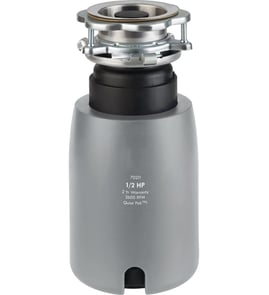
Most garbage disposals last 8 to 15 years, and the typical average is about 10 to 12 years. For a Kenmore 6051 garbage disposal, lifespan depends most on what goes down the drain, how often it runs, and whether jams and leaks are addressed quickly.
Typical lifespan by use and care
- Light use (small household, careful use): 12 to 15 years
- Average use: 10 to 12 years
- Heavy use (frequent grinding, tougher scraps): 8 to 10 years
- Poor use (grease, fibrous foods, repeated jams): often under 8 years
| What you notice | What it usually means | What to do next |
|---|---|---|
| Frequent resets or humming | Jammed impellers or failing motor | Clear jam, then evaluate replacement if it repeats |
| Persistent leaks from the housing | Seal or body wear | Plan for replacement (leaks rarely stay “small”) |
| Loud grinding or rattling | Foreign object or worn components | Remove object; replace if noise returns |
| Slow draining with disposal running | Partial clog downstream | Clear drain line; avoid forcing more food through |
How to extend the life of your disposal
- Run cold water before, during, and after grinding (about 15 to 30 seconds after).
- Feed scraps gradually, not all at once.
- Avoid grease, fats, and oils (they coat the grind chamber and trap debris).
- Skip fibrous foods (celery, corn husks, onion skins) that can wrap and jam.
- Avoid hard items (bones, fruit pits) that can damage grinding components.
- If it jams, shut off power and clear it safely; do not keep flipping the switch.
Why it matters
A disposal that is near end-of-life can start tripping the reset, leaking, or struggling under normal loads. Replacing it before a failure helps prevent sink downtime and reduces the chance of water damage under the cabinet.
For help confirming you have the right Kenmore model number before ordering, use how to find your appliance model number (and what it means for parts).
Last updated: February 2026
Is it cheaper to repair or replace a garbage disposal?
Repair is usually cheaper for a Kenmore 6051 garbage disposal when the problem is minor (a jam, a reset trip, or a loose connection). Replacement is usually the better value when the unit is older or has a leak, repeated overheating, or persistent electrical issues.
Quick rule of thumb (cost and value)
In most homes, small fixes cost less than a new disposal plus installation, but major failures quickly justify replacement.
- Repair makes sense when: it is jammed, humming, intermittently stopping, or the reset button trips occasionally
- Replace makes sense when: the housing leaks, the motor is failing, it frequently trips the breaker, or corrosion is visible
- Age matters: disposals typically last 8 to 12 years; beyond that, replacement is usually the better long-term value
Common scenarios and the best choice
| What you notice | Most likely issue | Usually cheaper option |
|---|---|---|
| Hums but will not spin | Jammed impellers or stuck rotor | Repair (unjam and reset) |
| Completely dead | No power, tripped reset, bad switch | Repair (electrical checks) |
| Leaking from the bottom | Seal or internal housing failure | Replace |
| Loud grinding, poor performance | Worn components, internal damage | Replace (often) |
What we recommend checking first (before you decide)
- Press the reset button on the bottom of the disposal
- Confirm the breaker is on and the wall switch works
- Look for a jam (use a hex key or the manual turn feature if your unit has it)
- Inspect for leaks at the sink flange, dishwasher inlet, and discharge tube
- If it is hardwired, check for loose or burned wires in the junction box (power off first)
For safe electrical troubleshooting, follow steps in how to use a multimeter to test electrical parts video.
Why it matters
A leaking disposal can damage the cabinet base and wiring, and repeated trips can point to a failing motor or a wiring problem. Making the repair vs. replace decision early helps avoid water damage and repeat service costs.
Last updated: February 2026
Which is better, 1/2 hp or 3/4 hp garbage disposal?
A 3/4 HP garbage disposal is better for frequent cooking, larger households, and tougher food scraps because it grinds faster, jams less, and typically runs quieter. A 1/2 HP disposal is the better value for lighter, everyday use and smaller households with mostly soft food waste.
How to choose the right horsepower for your kitchen
Use these quick rules to match power to how you actually use your Kenmore disposal setup.
- Choose 1/2 HP if you scrape mostly soft leftovers (cooked veggies, small scraps) and run the disposal briefly.
- Choose 3/4 HP if you cook often, have a busy sink, or deal with more fibrous scraps.
- If you get frequent jams, stepping up to 3/4 HP usually reduces stall-outs.
- If noise is a priority, higher horsepower models are often quieter because they grind more efficiently.
- If your drain line clogs easily, more consistent grinding (often from 3/4 HP) can help, but good flushing habits still matter.
What “better” looks like in real use
| Feature | 1/2 HP | 3/4 HP |
|---|---|---|
| Best for | Light, everyday scraps | Heavier use and tougher scraps |
| Grinding speed | Moderate | Faster |
| Jamming risk | Higher with fibrous waste | Lower overall |
| Noise level | Often louder | Often quieter |
| Typical cost | Lower | Higher |
Food waste habits that matter more than horsepower
Even the best motor struggles with poor loading and flushing. We recommend:
- Run cold water before, during, and 10 to 20 seconds after grinding.
- Feed scraps gradually, not all at once.
- Avoid packing in fibrous peels (celery, corn husks) in large amounts.
- Keep grease, oil, and fat out of the disposal to prevent drain buildup.
- If it stalls, shut power off and clear the jam safely (never reach in).
Why it matters
Choosing the right horsepower helps prevent nuisance jams, reduces strain on the motor, and can extend the life of your disposal system under the sink. If you are shopping parts or a replacement for Kenmore model 6051, confirming your exact model identification first prevents fit and wiring mismatches; use how to find your appliance model number (and what it means for parts).
Last updated: February 2026
Why don't plumbers like garbage disposals?
Plumbers often dislike garbage disposals because, when they are used like a trash can, they increase the chances of clogs, jams, and leaks in the drain system. With a Kenmore 6051 garbage disposal, the unit can grind food, but it cannot prevent grease buildup, starchy paste, or fibrous scraps from causing plumbing problems downstream.
What typically causes the problems
Most “garbage disposal issues” plumbers see are really drain and usage issues. The biggest troublemakers include:
- Grease, fats, and oil (they coat pipes and trap debris)
- Starches like rice, pasta, and potato peels (they swell and turn into paste)
- Fibrous foods like celery, corn husks, and onion skins (they wrap and tangle)
- Coffee grounds and eggshells (they create gritty sludge)
- Hard items like bones, fruit pits, and shells (they can jam the grinding area)
What plumbers would rather you do
Using the disposal as a “rinse assist” instead of a food-waste bin reduces service calls and protects your plumbing.
| Best practice | What it prevents | Quick tip |
|---|---|---|
| Scrape plates into the trash first | Heavy buildup in the trap and branch drain | Treat the disposal as a last step, not the first |
| Run cold water while grinding | Grease smearing and slow drains | Keep water running 15 to 30 seconds after |
| Feed small amounts gradually | Jams and overload | Avoid dumping a full bowl at once |
| Avoid problem foods | Blockages and wrapped debris | Compost fibrous scraps when possible |
If your disposal is already clogging or jamming
These steps address the most common causes without guessing at model-specific parts.
- Turn off power at the switch or breaker before checking anything
- Reset the disposal (many units have a reset button on the bottom)
- Clear visible obstructions with tongs (never your hand)
- If it hums but will not spin, free the jam using the manual turning point underneath (if equipped)
- If the sink backs up, clear the P-trap and branch drain; the clog is often past the disposal
For safe electrical checks (switch, outlet, wiring, overload), use our guide: how to tell if a fuse is blown.
Why it matters
A garbage disposal can be convenient, but plumbing repairs are usually more expensive than changing habits. Preventing grease and starch buildup protects the drain line, reduces odors, and helps the Kenmore 6051 run with less strain.
Last updated: February 2026