

How to reset E4 error code?
To clear an E4-style error on your Whirlpool WDT540HAMZ4 dishwasher, we reset power and then address the most common cause: a water issue (overfill, leak into the base, or a drain problem). Start with a Cancel/Drain, then do a brief power reset.
- Press Cancel/Drain to stop the cycle and force a drain.
- If the control won’t respond, turn power off at the breaker for 1 minute, then turn it back on.
- Run a short cycle and watch for standing water, suds, or leaks under the unit.
- If the code returns quickly, move to the checks below.
On many dishwashers, E4 points to a water level or leak/overflow condition. These are the most common real-world causes:
- Excess suds from the wrong detergent or too much rinse aid
- Water not draining fast enough (partial clog, kinked hose)
- Leak into the base pan triggering a float condition
- Fill problem causing incorrect water level
- Eliminate suds: Use only dishwasher detergent; if you see foam, stop the cycle and run a rinse/drain until suds are gone.
- Check filters: Clean the sump filter area; a clogged filter can slow draining and cause water level issues. If your filter is damaged, replace the dishwasher filter WPW10463906.
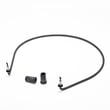
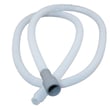
- Inspect the drain path: Make sure the drain hose is not kinked or crushed; replace a soft or split hose with the dishwasher drain hose 8269144A.
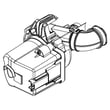
- Confirm draining: If you hear the pump hum but water stays, the drain pump can be failing; the correct replacement is the dishwasher drain pump W10876537.
| Symptom you see | Likely area | Part on this model page |
|---|---|---|
| Water left in tub | Drain system | Dishwasher drain pump W10876537 or dishwasher drain hose 8269144A |
| Poor wash plus water issues | Filtration/sump | Dishwasher filter WPW10463906 |
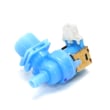
| Overfilling or odd fill behavior | Fill system | Valve-water WPW10327249 |
Resetting clears the control, but fixing the underlying water, drain, or leak condition prevents repeat shutdowns, protects the circulation system, and helps the dishwasher heat and dry normally.
For code lookups and what the control is detecting, use our Whirlpool he dishwasher error codes guide.
Last updated: February 2026
What does F4 mean on a whirlpool dishwasher?
On a Whirlpool dishwasher like model WDT540HAMZ4, an F4 code commonly points to a drain problem (the dishwasher is not pumping water out as expected). Clearing the water path and checking the drain components usually resolves it; if not, a drain part may need replacement.
- Press Cancel/Drain and listen for the drain pump; you should hear a steady pump sound.
- Check the sink drain/disposer inlet where the dishwasher hose connects; clear any blockage.
- Inspect the drain hose for kinks, crushing, or a low loop that can trap water.
- Remove standing water and check the sump area for labels, glass, food, or twist ties.
- Clean the filter area; a clogged filter can slow water flow and trigger drain-related errors.
If the checks above do not restore draining, these model-compatible parts are the most common fixes:
- Dishwasher drain pump W10876537
- Dishwasher drain hose 8269144A
- Dishwasher drain hose WPW10545278
- Dishwasher sump and seal assembly WPW10482462
| Symptom you notice | Most likely area | Part to consider |
|---|---|---|
| Hums but does not move water | Drain pump jammed or failed | Dishwasher drain pump W10876537 |
| Drains slowly or only sometimes | Hose routing or partial clog | Dishwasher drain hose 8269144A or dishwasher drain hose WPW10545278 |
| Leaks plus poor draining | Sump seals or sump blockage | Dishwasher sump and seal assembly WPW10482462 |
- Open the door and press Cancel/Drain.
- Close the door and let it run the drain portion.
- Start a short cycle and confirm the tub begins filling, then later drains fully.
A true drain fault can leave dirty water in the tub, cause odors, and stop the cycle mid-run. Fixing the drain path protects the circulation system and helps prevent repeat error codes.
For code definitions and troubleshooting steps that match Whirlpool dishwashers, use our guide: Whirlpool dishwasher error codes.
Last updated: February 2026
What model is the Whirlpool quiet partner 3?
Whirlpool Quiet Partner III is a dishwasher series name, not one single model number. A commonly referenced Quiet Partner III model is GU2200XTSS3, but the exact model for your unit is the number printed on the dishwasher’s model and serial tag.
Look for the model and serial label in one of these common spots:
- Along the top or side edge of the door (visible when you open the door)
- On the inner door frame near the tub opening
- On the side of the tub behind the door seal area
- Occasionally behind the toe panel at the bottom front
“Quiet Partner III” is a marketing/series label used across multiple Whirlpool dishwashers. That means:
- Two Quiet Partner III dishwashers can use different racks, pumps, and controls
- Parts look similar but may not interchange
- The full model number is the only reliable way to match parts
| What you see | What it means | Example |
|---|---|---|
| Quiet Partner III | Series/line name | Quiet Partner III |
| GU2200XTSS3 | Specific model number | GU2200XTSS3 |
| WDT540HAMZ4 | Specific model number (this page) | WDT540HAMZ4 |
If your tag shows WDT540HAMZ4, use the parts list for this model and match by symptom. Common examples on this model page include the dishwasher drain pump W10876537 and dishwasher spray arm WPW10491331.
Using the exact model number prevents ordering the wrong drain hose, circulation components, or heating parts, and it keeps troubleshooting accurate when you’re chasing issues like not draining, poor cleaning, or no heat.
Last updated: February 2026