Owner’s manual
 View engine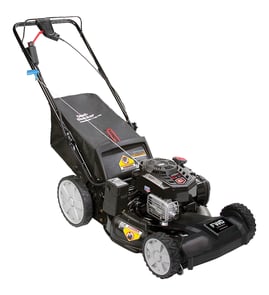



What size belt for a 42 in CRAFTSMAN lawn mower?
A 42-inch Craftsman riding mower deck belt size does not apply to the Craftsman walk-behind mower model 917379120. For model 917379120, the correct drive belt is the V-belt used for the self-propel drive system; match it by the model-specific parts list in the 917379120 owner's manual.
How to identify the right belt for your Craftsman mower
A “42-inch” deck belt is for a riding mower or lawn tractor cutting deck. A walk-behind mower like 917379120 uses a drive belt to turn the transmission for the wheels.
Use these checks:
- Confirm your mower type: riding mower (42-inch deck) vs. walk-behind (typically 21 to 22-inch cut).
- Look up the belt by model number 917379120 (not by deck size).
- Inspect the old belt for cracking, glazing, or stretching.
- Compare belt routing to the diagram before removal.
- Replace any worn hardware that affects belt tracking (guards, fasteners, adjusters).
The belt used on Craftsman 917379120
For Craftsman 917379120, the belt listed in the drive system breakdown is a V-belt. On this model page, the matching belt is belt 532157769.
Quick comparison
| Mower type | What “42-inch” refers to | Belt you need |
|---|---|---|
| Riding mower / lawn tractor | Cutting deck width | Deck belt sized for a 42-inch deck |
| Walk-behind mower (917379120) | Not applicable | Self-propel drive V-belt |
Why it matters
Using a deck belt size for the wrong mower type leads to poor fit, slipping, or the mower not moving. Matching the belt to 917379120 ensures correct length, width, and traction for the drive system.
Last updated: February 2026
Should I use 87 or 91 gas for lawn mower?
For the Craftsman lawn mower model 917379120, use 87-octane (regular) unleaded gasoline for normal operation. Higher octane (like 91) does not add power or “clean” the engine; the bigger fuel problems for walk-behind mowers are stale fuel, water in fuel, and dirty fuel containers. For fuel and storage details, follow the 917379120 owner's manual.
What to use (and what to avoid)
- Use: Fresh, clean 87-octane unleaded gas.
- Avoid: Old gas from last season; it commonly causes no-start and rough-running issues.
- Avoid: Gas from rusty or dirty cans; rust and dirt can plug fuel passages.
- Avoid: Storing the mower indoors with gas in the tank; fumes can be hazardous.
- Do: Let the engine cool before storing the mower.
Quick fuel guidance table
| Situation | What we recommend | Why |
|---|---|---|
| Everyday mowing | 87 octane | Correct for small mower engines; reliable starting |
| Hard starting after storage | Drain old fuel, refill with fresh 87 | Stale fuel is a top no-start cause |
| Fuel can is old/rusting | Replace the fuel can | Rust and dirt in gas cause problems |
| End of season | Don’t store gas from one season to the next | Prevents varnish and fuel system issues |
Why it matters
Most “needs premium gas” symptoms are actually fuel quality problems. The manual troubleshooting list for this mower calls out stale fuel and water in fuel as common reasons the engine will not start, so using fresh 87-octane and good storage habits prevents the most frequent failures.
Related maintenance that helps starting and performance
- Replace the spark plug at the start of each season or every 100 hours (whichever comes first).
- Keep the mower housing clean; built-up grass and debris can make the engine run hotter.
- Clean under the drive cover at least twice a season.
- If the mower will not start, check basics first: fuel level, air filter condition, and spark plug wire connection.
Last updated: February 2026
What year is CRAFTSMAN Model 917379120?
Craftsman model 917379120 is a model number, not a date code; it does not tell the year by itself. To find the year, use the product’s date code (often on the mower’s ID tag or engine label) and confirm the format shown in the 917379120 owner's manual.
Where to find the year information
On walk-behind mowers like the Craftsman 917379120, the build date is typically tied to a separate serial/date code, not the model number.
Check these common locations:
- The mower deck near the rear discharge area or wheel height adjuster
- The handle support area (near the lower handle brackets)
- The engine shroud or engine label (engine maker date code)
- A sticker/plate that lists model and serial together
How to decode the date once you find it
Many Craftsman mower tags use a numeric date code format, but the exact pattern varies by production run. Use this quick guide to avoid mixing up model and date:
- Model number (example: 917379120): identifies the mower design and parts list
- Serial/date code: identifies when a specific unit was built
- Engine code: may indicate engine build date, which can be close to mower assembly date
Common date-code patterns you may see
| What you find on the tag | What it usually means | What to do |
|---|---|---|
| 6-digit number (MMDDYY) | Month, day, year | Convert the last 2 digits to the year |
| 8+ digits or mixed letters/numbers | Manufacturer-specific serial/date | Match the format to the manual’s identification section |
| Engine-only code | Engine build date | Use it as a reference, then confirm mower tag date |
Why it matters
Knowing the year helps us match the correct walk-behind mower parts and revisions (for example, drive components like the belt 532157769 or cutting parts like the lawn mower blade 532406713) so you get the right fit the first time.
Last updated: February 2026
How to find Craftsman model number?
On Craftsman walk-behind mowers like model 917379120, the model and serial numbers are printed on a decal on the rear of the lawn mower housing. Use that model number to match the correct parts list and diagrams in the owner's manual.
Where to look on a Craftsman walk-behind mower
Check these common spots in this order:
- Rear of the mower deck or rear housing (most common for 917379120)
- Top of the deck near the engine mounting area
- Near the rear discharge or side discharge opening
- On the handle support area (less common)
- On a label near the wheel height adjuster area
What to write down (and why)
Record both numbers exactly as shown:
- Model number (example: 917379120) to ensure parts fit
- Serial number to identify production changes within the same model
- Date of purchase (helpful for maintenance tracking)
Quick reference
| Item | What it’s used for | Example format |
|---|---|---|
| Model number | Correct parts diagrams and part compatibility | 917.379120 or 917379120 |
| Serial number | Identifies the specific unit build | Letters and numbers |
Why it matters
Craftsman mower parts can vary by production run, even when the mower looks the same. Using the exact model number from the decal helps you choose the right blade, drive parts, and control cables the first time.
Last updated: February 2026
What size deck does a CRAFTSMAN Model 917379120 have?
The Craftsman walk-behind mower model 917379120 has a 22-inch cutting deck (22-inch cutting width). This is the deck size used to match the blade and related cutting hardware; you can verify it on the cover/spec section of the owner's manual.
Deck size for model 917379120
On walk-behind mowers, “deck size” typically means the cutting width (the swath of grass cut in one pass). For model 917379120, the manual identifies it as a 22-inch side-discharge mower.
Quick spec summary
| Spec | What it means | 917379120 |
|---|---|---|
| Deck size (cutting width) | Width cut in one pass | 22 in. |
| Drive type | Self-propelled vs. push | Power-propelled |
| Discharge | Where clippings exit | Side discharge |
Parts that must match the 22-inch deck
Matching deck size prevents poor cutting, vibration, and fit issues when replacing wear items.
- Use a blade designed for a 22-inch deck (length and center mounting pattern)
- Confirm the blade adapter matches the engine crankshaft and blade pattern
- Replace worn fasteners with correct thread size and locking style
- Keep the discharge deflector and deck skirt components intact for safe discharge control
A common deck-matched replacement blade for this model is the lawn mower blade 532406713.
Why it matters
Deck size drives compatibility for the blade, blade adapter, and discharge components. Using the wrong cutting width can leave uncut strips, overload the engine, or cause unsafe vibration.
Last updated: February 2026