
Can WD-40 be used on hedge trimmer blades?
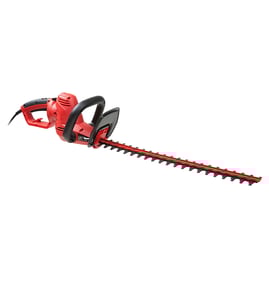
Yes. On a Craftsman 315796640 22" hedge trimmer, we use WD-40 as a light cleaner and short-term lubricant to leave a thin protective film on the blades after trimming; wipe off the excess so it does not attract debris.
- Turn the trimmer off and disconnect power (unplug cord or remove the battery).
- Brush off clippings and sap; a stiff nylon brush works well.
- Lightly spray WD-40 along both sides of the cutting bar.
- Run the blades briefly (only after reconnecting power) to distribute the film.
- Disconnect power again and wipe the blades until they feel lightly coated, not wet.
WD-40 works well for cleaning sticky sap and preventing surface rust between uses. For heavy, long-duration lubrication, a dedicated hedge trimmer blade lubricant or light machine oil typically lasts longer.
| Goal | WD-40 | Blade lubricant / light oil |
|---|---|---|
| Remove sap and grime | Very good | Good |
| Short-term corrosion protection | Good | Good |
| Long trimming sessions | Fair | Better |
| Dust and clipping resistance | Can attract debris if overapplied | Better when applied lightly |
A clean, lightly lubricated cutting bar reduces drag, helps the motor work less, and can improve cut quality on hedges and shrubs. Over-spraying, on the other hand, can trap grit and speed up blade wear.
If you are troubleshooting power issues after cleaning or storage, use how to tell if a fuse is blown to rule out a simple electrical problem.
Last updated: February 2026
Is it worth repairing a hedge trimmer?
Yes, repairing a Craftsman 315796640 22-inch hedge trimmer is worth it when the issue is routine wear (dull blades, loose hardware, damaged cord, or a simple electrical fault) and the tool is otherwise in good shape; those fixes restore cutting performance for far less than replacing the trimmer.
Use these checks to make a clear call before you spend time or money:
- Repair if the trimmer runs but cuts poorly; blades are dull, gummed up with sap, or slightly nicked.
- Repair if the problem is a cord/plug, switch, or loose connection you can diagnose safely.
- Repair if the motor sounds normal and the issue is limited to the blade set or gear housing noise.
- Replace if the motor smokes, repeatedly trips breakers, or has a strong burnt smell.
- Replace if the housing is cracked near the handle or blade mount (safety risk).
Many “needs repair” complaints are solved with basic upkeep:
- Clean sap and debris from the blade teeth
- Lightly lubricate the blades after cleaning
- Tighten accessible screws and fasteners
- Check blade alignment and obvious bends
- Sharpen blades (or have blades serviced if badly damaged)
| Symptom | Most common cause | Typical fix |
|---|---|---|
| Cuts unevenly, tears leaves | Dull or dirty blades | Clean and sharpen; lubricate |
| Runs but stalls in thicker growth | Dull blades or binding | Sharpen; check for bent teeth |
| Won’t start | Power issue or switch/wiring fault | Inspect cord/plug; test switch |
| Trips breaker | Shorted cord, moisture, motor fault | Dry out; inspect cord; electrical testing |
A hedge trimmer with blunt or binding blades forces the motor to work harder, increases heat, and makes trimming rough on plants. Keeping the blade set sharp and clean extends motor life and improves cut quality.
For safe electrical troubleshooting steps, use our guide: how to use a multimeter to test electrical parts video.
Last updated: February 2026
What is the difference between a hedge trimmer and a hedge cutter?
A hedge trimmer (like the Craftsman 315796640 22" hedge trimmer) is designed for shaping and routine maintenance cuts on hedge growth using fast, reciprocating blades. A hedge cutter is a broader term that often refers to heavier-duty tools built to power through thicker, woodier branches.
| Feature | Hedge trimmer | Hedge cutter |
|---|---|---|
| Typical use | Shaping, light pruning, finishing work | Heavier pruning, rough cutting, thicker growth |
| Cutting action | Reciprocating dual blades | Varies by tool type; often more aggressive cutting |
| Best on | Small stems and soft growth | Larger, tougher branches (within tool limits) |
| Cut quality | Cleaner, more precise | Faster bulk removal, less “finish” precision |
- Use a hedge trimmer for straight lines, clean edges, and frequent touch-ups.
- Choose a heavier-duty cutter-style tool when you need more cutting force for woody growth.
- Match blade length and tooth spacing to the hedge size and stem thickness.
- Avoid forcing any trimmer through branches that are too thick; it increases wear and can damage the blade drive.
- For corded or battery tools, keep power supply and extension cords (if used) sized correctly for the load.
Using the right tool protects the blade set, motor, and gear drive, and it also improves results. A hedge trimmer is built for controlled, repeatable trimming; using it like a brush cutter leads to binding, overheating, and premature part wear.
If you’re troubleshooting power or intermittent operation on an electric hedge trimmer, our guide on how to tell if a fuse is blown helps you quickly rule out a simple electrical issue before digging deeper.
Last updated: February 2026
Which is better, a 20V or 40V hedge trimmer?
A 20V vs 40V comparison applies to cordless hedge trimmers; Craftsman model 315796640 is a 22-inch hedge trimmer model line that is commonly found in gas-powered configurations, so voltage is not a “better” choice for this specific model. Use 20V or 40V only when you are shopping cordless.
| What you care about | 20V cordless | 40V cordless |
|---|---|---|
| Best use | Light trimming, small shrubs | Denser hedges, longer sessions |
| Weight and fatigue | Lighter | Heavier |
| Cut speed under load | More slowdown | Holds speed better |
| Battery cost | Lower | Higher |
- Choose 20V for routine touch-ups on soft, green growth and shorter run times.
- Choose 40V when you regularly cut thicker, denser hedges and want fewer bog-downs.
- Match the tool to your existing battery platform if you already own compatible batteries and chargers.
- Prioritize sharp blades and proper technique; dull blades make any trimmer feel underpowered.
- If you need all-day runtime, plan for spare batteries (cordless) or a fuel mix and tune-up parts (gas).
Many owners choose gas for longer continuous cutting and cordless for lower noise and simpler starts.
- Cordless: lighter maintenance, limited by battery runtime
- Gas: longer runtime, requires fuel mix and periodic service
Picking the right power system prevents stalling, ragged cuts, and fatigue. For cordless tools, higher voltage systems typically maintain blade speed better in dense material; for gas tools, engine condition and blade sharpness drive performance.
For “won’t start,” weak power, or intermittent shutoff symptoms, electrical testing basics still help when diagnosing switches, wiring, and safety interlocks:
Last updated: February 2026