Error Codes




What brand of dryer has the least problems?
No single brand is “problem-free,” but for the fewest service issues over time, we typically see the best results from simpler, proven dryer designs with strong parts support. Your GE electric dryer model GTD48EASW0WB is in that simpler, traditional style, which generally helps reduce long-term problems compared with feature-heavy models.
Across full-size household dryers, these brands are commonly chosen for reliability:
- Speed Queen: commercial-style build, fewer electronics
- Whirlpool family brands (Whirlpool, Maytag): widely serviced, strong parts availability
- LG: often strong performance and owner satisfaction
- GE: solid mainstream reliability, especially in straightforward models
- Electrolux: can be strong, depending on model and feature set
Even within the same brand, reliability changes a lot by model series and complexity. We recommend prioritizing:
- Simple controls (fewer boards and sensors to fail)
- Good airflow design and short, smooth venting
- Easy-to-source wear parts (belt, idler, glides, door switch)
- A drum support system that stays quiet over time
- A brand with local service coverage
| Design choice | Tends to cause fewer problems | Tends to cause more problems |
|---|---|---|
| Controls | Mechanical or basic electronic | Complex touch UI, many sensors |
| Drying system | Vented, standard heater | Ventless systems (more components) |
| Maintenance | Easy lint and vent access | Hard-to-clean airflow paths |
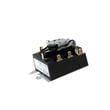
If you already own the GE GTD48EASW0WB, the best way to keep problems low is preventive maintenance and replacing common wear items before they damage other components. For example, a worn belt or pulley can lead to noise, poor tumbling, or no-start symptoms; the correct replacement is the GE dryer drum belt WE03X29897.
Airflow restrictions are one of the biggest causes of overheating, long dry times, and thermostat or heater failures. Our guide dryer takes a long time to dry walks through the most common airflow-related causes.
Last updated: January 2026
What is the lifespan of a GE dryer?
A GE electric dryer like model GTD48EASW0WB typically lasts about 10 years with normal household use. Regular airflow maintenance (lint screen and venting) and addressing wear items early can push real-world life closer to the low-to-mid teens.
- Venting that is short, smooth, and not restricted
- Cleaning the lint screen every load (and washing it occasionally to remove residue)
- Avoiding chronic overloading (extra strain on the drum belt, idler, and motor)
- Keeping the dryer level to reduce vibration and bearing wear
- Fixing small issues early (squeals, thumps, long dry times)
If the dryer runs but starts squealing, thumping, or stops tumbling, these model-compatible parts are often involved:
- GE dryer drum belt WE03X29897
- Dryer idler pulley WE03X31620
- Dryer drum glide bearing WE03X37319
- Dryer heating element WE11M10001 (for no-heat or weak-heat complaints)
- Clean the lint screen every cycle; confirm strong airflow at the outside vent hood
- Inspect and clean the vent duct periodically (more often with pets)
- Do not run the dryer with a crushed or kinked exhaust duct
- Stop using the dryer if you smell burning or notice repeated overheating; have it checked
| Usage pattern | Typical lifespan | What usually fails first |
|---|---|---|
| Light (few loads/week) | 12 to 15 years | Belt, glides, idler |
| Average (most households) | About 10 years | Belt, motor wear, heat components |
| Heavy (daily loads) | 7 to 9 years | Motor, drum support parts, heat system |
A dryer that is struggling to move air runs hotter and longer, which accelerates wear on thermostats, the heating circuit, and moving parts. Keeping airflow strong is the simplest way to protect performance and extend the service life.
Last updated: January 2026
What is the most common problem with a GE dryer?
For a GE electric dryer like model GTD48EASW0WB, the most common issues we see are no heat or long dry times. In many cases, the root cause is restricted airflow (lint buildup or a crushed vent) that overheats the dryer and can trip safety thermostats.
- Clean the lint screen before every load; replace it if it is torn or warped (GE dryer lint screen WE03X23881).
- Check the exhaust vent for kinks, crushing, or heavy lint buildup.
- Confirm strong airflow outside at the vent hood while the dryer runs.
- Avoid overloading; packed loads dry slowly even with good heat.
- Use a timed dry cycle once to compare results (helps separate airflow vs. sensor/cycle issues).
If GTD48EASW0WB runs but does not heat, these are typical culprits:
- Failed heating element (dryer heating element WE11M10001)
- High-limit thermostat opened from overheating (dryer high-limit thermostat WE04X26139)
- Operating thermostat not regulating temperature correctly (dryer operating thermostat WE04X25201)
- House power issue (dryer may run on 120V but needs full 240V to heat)
| Symptom | Most likely cause | What we recommend first |
|---|---|---|
| Runs, no heat | 240V supply issue or failed heater | Verify breaker and outlet voltage; then test heater |
| Long dry times, clothes hot | Vent restriction | Clean venting and lint path |
| Long dry times, clothes cool | Heating circuit problem | Test thermostats and heating element |
Airflow problems are the most common “starter” issue because they make drying slow and can overheat the heater housing. That overheating can open thermostats and turn a simple vent cleaning into a no-heat repair.
For step-by-step troubleshooting that matches this symptom, use dryer takes a long time to dry.
Last updated: January 2026