Owner’s manual
 Error Codes



What are the disadvantages of a bottom freezer?
Bottom-freezer refrigerators like the Samsung RF32FMQDBSR put fresh food at eye level, but the tradeoff is that frozen items sit low in a pull-out drawer. The main disadvantages are more bending for freezer access, heavier drawers, and typically higher purchase and repair costs than simpler top-freezer designs.
- You have to bend or squat to reach frozen foods, especially items at the bottom of the drawer.
- Freezer drawers can feel heavy when fully loaded; that extra weight increases wear on rollers, rails, and hinges.
- Organization can be harder because food stacks in a deep bin; small items can get buried.
- Cold air spills out faster when the drawer is open, so the freezer may run longer after frequent access.
- Bottom-freezer models often include more features (ice maker, dispenser, control boards), which can raise repair complexity.
Heavier doors and drawers put more stress on moving hardware over time. On the RF32FMQDBSR, these are common categories to watch:
| Wear area | What you might see | Example part on this model |
|---|---|---|
| Drawer support and movement | Drawer feels rough, noisy, or misaligned | Refrigerator roller DA61-04703A |
| Door alignment and closing | Door sags, doesn’t seal evenly, or swings oddly | Samsung refrigerator door hinge, left DA61-08309A |
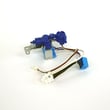
| Ice and water features (if equipped) | Ice production issues, slow dispensing | Refrigerator water inlet valve DA62-04027A |
If your household uses frozen foods multiple times a day, the bending and drawer weight can be a real convenience issue. If you use the freezer less often, the fresh-food-at-eye-level layout is usually the bigger win.
- Keep the heaviest frozen items toward the top of the drawer for easier lifting.
- Use bins to separate categories (meat, vegetables, snacks) so items do not get buried.
- Avoid overloading the drawer; it reduces strain on rollers and helps the drawer close fully.
- If you notice sealing issues, address alignment early to prevent frost buildup and temperature swings.
- Use the care and use guidance in the owner's manual for loading, cleaning, and door adjustment basics.
Last updated: February 2026
What is the most common problem with Samsung refrigerators ice?
On Samsung RF32FMQDBSR refrigerators, the most common ice problem is ice maker freeze-ups and ice buildup that leads to clumping, jams, slow ice production, or no ice at all. The usual causes are restricted water flow, low water pressure, warm air leaks, or a failing valve or ice-handling component.
- Make sure the ice bin is fully seated and not overpacked with clumped ice.
- Replace the water filter on schedule; a restricted filter can reduce fill and cause small, hollow cubes.
- Confirm the freezer is set cold enough for steady ice production (typical target is 0°F).
- Check that doors close tightly; warm air leaks create frost and ice buildup around the ice room.
- Look for a slow dispenser flow, which often points to a filter or water supply issue.
If the quick checks do not help, these parts are frequent culprits for ice maker and dispenser symptoms:
| Symptom | Most likely area | Related part on this model |
|---|---|---|
| No ice or slow ice | Water supply into the refrigerator | Refrigerator water inlet valve DA62-04027A |
| Small cubes, slow fill | Restricted filtration | Refrigerator water filter DA29-00019A |
| Ice clumps, jams, grinding | Ice handling in the bucket/auger | Refrigerator auger motor DA31-00105M |
| Ice room frost, inconsistent ice | Airflow and temperature control | Refrigerator temperature sensor DA32-10104N |
Ice maker freeze-ups are usually a symptom of airflow, temperature, or water-flow problems. Fixing the root cause prevents repeat jams, protects the auger motor, and helps the ice maker cycle normally.
For control settings, filter replacement intervals, and any built-in test or reset steps, use the owner's manual.
For deeper troubleshooting by symptom, we also recommend why your Samsung fridge stopped making ice and how to fix it.
Last updated: February 2026
What's the lifespan of a bottom freezer fridge?
A bottom-freezer refrigerator typically lasts 15 to 20 years with normal household use and basic maintenance. For your Samsung RF32FMQDBSR, keeping airflow clear, temperatures stable, and the water system maintained helps you reach the upper end of that range; see the owner's manual for model-specific care guidance.
Most bottom-mount and French door refrigerators land in the same general life range, but real-world lifespan depends on usage and conditions.
- Compressor run time (hot kitchens and frequent door openings shorten life)
- Condenser airflow (dust and blocked vents increase wear)
- Ice maker and dispenser use (more moving parts, more wear)
- Water quality (scale and sediment stress valves and filters)
- Door seal condition (air leaks force longer cooling cycles)
A refrigerator rarely fails all at once; it usually shows patterns that repairs become more frequent or costly.
| Symptom | Common system involved | What we check first |
|---|---|---|
| Warm fresh food section | Evaporator fan, defrost, sensors | Airflow and frost buildup |
| Not making ice | Water supply, valve, ice maker | Filter, fill, and freezing |
| Loud humming/clicking | Compressor start components | Overload protector and wiring |
| Water under fridge | Defrost drain system | Drain tube and grommet |
These steps reduce strain on the sealed system and help prevent common bottom-freezer problems.
- Keep vents inside the refrigerator and freezer unblocked
- Set temps to typical targets: 37°F fresh food, 0°F freezer
- Replace the water filter on schedule; the refrigerator water filter DA29-00019A is the listed filter for this model
- Clean spills and check for slow drains to prevent puddles and icing
- Confirm doors close firmly and gaskets seal all the way around
A refrigerator that runs longer and harder to hold temperature wears out key components sooner (compressor, fans, control boards). Simple airflow and water-system maintenance often prevents the “constant running” cycle that shortens service life.
Last updated: February 2026