Owner’s manual
 View engine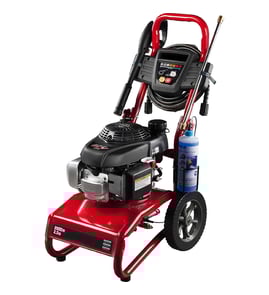



How to tell if your pressure washer pump is bad?
On the Craftsman 580768050 pressure washer, a “bad pump” usually shows up as no pressure, erratic or chattering pressure, low water volume, or leaks. Before condemning the pump, confirm the water supply is on and flowing strongly, and that the nozzle and inlet screen are clear per the 580768050 owner's manual.
Quick checks before you blame the pump
Many “pump” symptoms are caused by setup, water supply, or a restriction.
- Verify the garden hose is connected and the water is turned ON before starting (running dry can damage the pump).
- Confirm adequate supply: most units need about 3 GPM from a household spigot.
- Check the water inlet screen; clean it if dirty and replace it if damaged.
- Remove the wand/lance and hold the trigger until you get a steady stream of water, then reattach.
- Inspect the inlet hose for kinks or leaks.
- Make sure the nozzle is not obstructed and you are in the correct pressure mode.
Signs the pump itself is failing
If the checks above are good and symptoms persist, the pump is the likely cause.
| Symptom | What it often means | What to do next |
|---|---|---|
| Pressure pulses or chatters | Air leak on inlet side, worn valves/seals | Recheck inlet hose and screen; inspect pump head for leaks |
| Low pressure even with good water supply | Internal wear (valves, seals, plungers) | Try a known-good nozzle; if unchanged, plan pump service/replacement |
| Water leaking from pump head | Failed seals or gasket | Inspect pump head area; consider replacing the pump head gasket |
| No pressure at all | Severe internal failure or major restriction | Confirm nozzle and outlet path are clear; then suspect pump |
Parts that commonly relate to “pump problems”
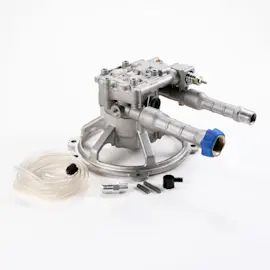
If you see water leaking at the pump head seam, a gasket issue is common. The correct match listed for this model is the gasket B2668GS.
Why it matters
Continuing to run with poor water supply, a clogged inlet screen, or with hoses disconnected can quickly damage the pump and turn a small issue (like a restriction) into a full pump failure.
Last updated: January 2026
What is the life expectancy of a gas pressure washer?
A gas pressure washer like the Craftsman 580768050 typically lasts 5 to 7 years for average residential use, which usually works out to roughly 100 to 500 operating hours. With consistent maintenance and proper storage (especially winterizing the pump), many units run longer.
Typical lifespan ranges (what we see most often)
Life expectancy depends more on hours and care than calendar years.
- Light residential use: 100 to 200 hours
- Average residential use: 200 to 500 hours
- Prosumer or well-maintained heavy-use units: 500 to 2,000+ hours
- Commercial-grade belt-drive systems (in general): 2,000 to 3,000+ hours
Maintenance habits that extend life
The Craftsman 580768050 manual emphasizes steps that directly protect the pump, hose, and chemical system.
- Rinse the chemical selector system after every use to prevent clogs and leaks
- Drain the pump after use (pull the recoil several times with the switch in Stop)
- Inspect the high-pressure hose for cuts or fraying; replace damaged hose instead of repairing
- Store the unit in a clean, dry area
- Protect the pump from freezing; winterize with RV antifreeze (non-alcohol type)
Quick “wear and tear” checklist
Use this to judge whether you are near end-of-life or just due for service.
| What you notice | Most common cause | What to do next |
|---|---|---|
| Low pressure or surging | Nozzle restriction, air leak, pump wear | Clean/verify nozzle, check hose and inlet, then evaluate pump |
| Chemical won’t draw | Not in low-pressure mode, clogged selector system | Set dual lance to low pressure, rinse system |
| Leaks at hose or fittings | Worn hose, damaged gasket, loose clamp | Inspect and replace the leaking part |
| Hard starting or stalling | Fuel issues, dirty air filter, carburetor varnish | Refresh fuel, service engine maintenance items |
Parts that commonly affect performance
A worn or damaged hose is one of the fastest ways to lose pressure and shorten pump life.
Why it matters
A pressure washer can “seem worn out” when the real issue is storage damage (freezing), chemical-system clogging, or a failing high-pressure hose. Following the winter storage and rinse steps in the 580768050 owner's manual prevents the most expensive failures.
Last updated: January 2026
Is it worth repairing a pressure washer?
Yes, repairing a pressure washer is worth it when the problem is a wear item (like a leaking hose or worn seals) and the total repair cost stays well below the cost of a comparable new unit. For the Craftsman 580768050, we start by using the 580768050 owner's manual maintenance checks to pinpoint whether the issue is simple or a major pump/engine failure.
Quick decision checklist
- Repair it when the issue is a leak, clog, or damaged accessory (hose, gun, wand, nozzle)
- Repair it when the unit has been reliable and the fix is straightforward
- Replace it when the pump is severely damaged from freezing or internal wear
- Replace it when the engine has major mechanical problems (hard starting plus low power plus smoke)
- Replace it when multiple expensive issues show up at the same time
What to check first on model 580768050
The manual calls out several before-each-use inspections that often reveal low-cost fixes.
- Inspect the high-pressure hose for cuts, leaks, abrasions, bulging, or loose couplings
- Check the gun and wand assembly for leaks and confirm the trigger returns properly
- Check and clean the garden hose inlet screen (clogs reduce pressure)
- Purge air from the pump and verify steady water supply before running at high pressure
- Confirm the chemical selector is rinsed after use and stored with the selector in OFF
Repair vs. replace: simple cost guide
| Situation | Typical outcome | What we recommend |
|---|---|---|
| Hose leaks or coupling damage | Pressure loss, safety risk | Replace the hose (do not repair) |
| Inlet screen clogged, air in pump | Low pressure, surging | Clean, purge, and retest |
| Freeze damage to pump | Leaks, no pressure | Often replacement is more practical |
| Multiple leaks plus poor engine performance | Unreliable operation | Compare total repair cost to a new unit |
Parts that commonly make repair worthwhile
A leaking high-pressure hose is a common, fixable problem. The manual is clear: never repair a high-pressure hose; replace it with one that meets the minimum pressure rating.
Why it matters
Pressure washer leaks are not just messy; a high-pressure hose leak can be dangerous and can also mask the real reason for low pressure. Starting with the manual’s inspection list helps you avoid replacing the machine when a single part is the real cause.
Last updated: January 2026