Owner’s manual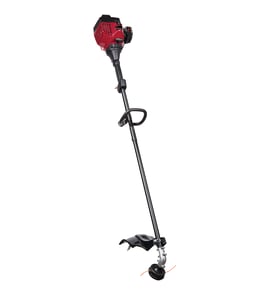




How to change trimmer line on a gas trimmer?
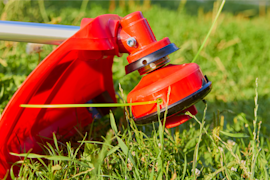
To change trimmer line on your Weed EATER TE475 gas line trimmer, remove the cap, lift out the spool and line guide ring, then install a pre-wound spool or refill the spool and reassemble. Use only 0.080 inch (2 mm) cutting line for proper performance.
Before you start (safety and setup)
- Disconnect the spark plug boot before maintenance.
- Let the muffler and engine cool completely.
- Clean grass, dirt, and debris off the cutting head so parts seat correctly.
- Inspect the trimmer head; replace any chipped, cracked, or broken components.
- Wear gloves and eye protection.
Steps to replace the line (spool-style head)
- Remove the cap: Hold the spool and unscrew the cap in the direction shown on top of the cap.
- Remove parts: Lift off the line guide ring and remove the spool.
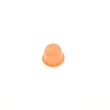
- Keep the dust cup in place: When you remove or install the spool, make sure the dust cup stays installed over the shaft.
- Install line/spool:
- Pre-wound spool: Install the replacement spool and remove any tape strip holding the line.
- Refilled spool: Wind and secure the line in the spool slots (use 0.080 inch line).
- Thread the line: Thread the line through the line guide ring.
- Set line length: Rest the guide ring on the spool and place the line into the slot; leave about 4 to 6 inches (10 to 15 cm) extending from the center.
- Reinstall the cap: Keep the line in the slot while screwing the cap onto the shaft; hand-tighten only.
Quick specs and do nots
| Item | TE475 guidance |
|---|---|
| Line diameter | 0.080 inch (2 mm) |
| Line advance | Automatic (do not tap head) |
| Cap tightness | Hand-tight only |
- Do not use wire, rope, or string.
- Do not tap the head on the ground to advance line; it can break parts and cause the head to malfunction.
- Keep cutting line at the proper length; the unit advances line automatically on startup.
Why it matters
Correct line diameter and proper reassembly prevent poor cutting, excessive line wear, and trimmer head damage. Keeping the head clean also helps the spool feed smoothly and reduces jams.
For diagrams and model-specific details, follow the line replacement section in the owner's manual.
Last updated: February 2026
What are the common problems with weed eaters?
The most common problems we see on the Weed EATER TE475 gas line trimmer are fuel delivery issues (old fuel, cracked fuel lines, clogged fuel filter), restricted airflow (dirty air filter), and carburetor problems that cause hard starting, stalling, or low power. Many fixes are basic cleaning and a few wear-part replacements listed in the owner's manual.
Most common symptoms and what usually causes them
- Won’t start or only starts with choke: stale fuel, clogged carburetor passages, restricted fuel filter, air leak in fuel lines
- Starts then stalls: partially plugged fuel filter, carburetor metering issue, dirty air filter
- Runs but lacks power: dirty air filter, restricted muffler/spark arrestor screen, carburetor out of tune
- Surges at idle: air leak, carburetor mixture issue, dirty fuel system
- String head problems (won’t feed, breaks often): wrong line size, line wound incorrectly, worn limiter or head components
Quick checks we recommend first (fast, low-cost)
- Drain old fuel and refill with fresh, properly mixed fuel (2-cycle mix).
- Inspect fuel lines for cracks, soft spots, or loose connections.
- Replace the air filter if it is dirty or oil-soaked.
- Check the fuel filter for restriction.
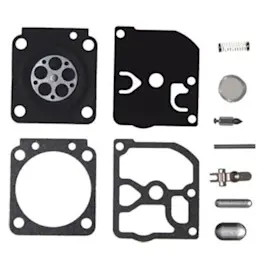
- If symptoms persist, clean or replace the carburetor.
Parts that commonly solve fuel and power complaints
| Problem area | What fails most often | Example part for TE475 |
|---|---|---|
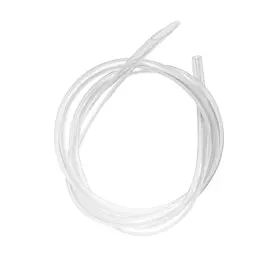
| Fuel delivery | Cracked/soft fuel line | Poulan lawn & garden equipment fuel line, small 530069247 |
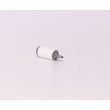
| Fuel delivery | Restricted fuel filter | Craftsman lawn & garden equipment engine fuel filter 530095646 |
| Air intake | Dirty air filter | Ayp lawn & garden equipment engine air filter 530036575 |
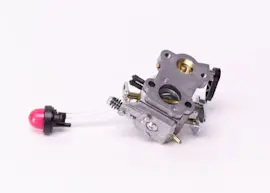
| Fuel metering | Gummed carburetor | Carburetor 530071822 |
Why it matters
A 2-cycle trimmer like the TE475 depends on the right fuel mix and steady airflow. Small restrictions (a dirty filter or a pinched fuel line) quickly show up as hard starting, stalling, and weak cutting power.
Last updated: February 2026
What is the gas mix for a string trimmer?
For the Weed EATER TE475 gas line trimmer, mix unleaded gasoline with synthetic 2-cycle air-cooled engine oil at 40:1. That equals 3.2 oz of 2-cycle oil per 1 gallon of gas. Follow the fuel and safety steps in the owner's manual.
Correct 40:1 mix amounts
- 1 gallon gas: 3.2 oz 2-cycle oil
- 1/2 gallon gas: 1.6 oz 2-cycle oil
- 1 quart gas: 0.8 oz 2-cycle oil
- Use fresh unleaded gasoline
- Use synthetic 2-cycle oil made for air-cooled engines
What oil to avoid (prevents engine damage)
Do not use these in the TE475 fuel mix:
- Automotive (4-cycle) engine oil
- Marine 2-cycle oil
- Old fuel that has been sitting for weeks or months
Quick mixing checklist
- Use an approved fuel container.
- Add the measured 2-cycle oil first.
- Add fresh unleaded gasoline.
- Cap and shake to fully blend.
- Refuel outdoors; keep away from sparks and flames.
Storage tip (why your trimmer may run poorly later)
If a gas and oil mix sits, the oil can separate from the gasoline. For storage longer than about 30 days, we recommend draining the tank and running the engine until the fuel lines and carburetor are empty; then start next season with fresh 40:1 mix.
Why it matters
Running the wrong ratio (too lean on oil, or the wrong oil type) can cause hard starting, overheating, poor performance, and internal engine wear. Using the correct 40:1 mix helps protect the piston, rings, and crankshaft bearings.
| Mix ratio | Oil per 1 gallon gas | Notes |
|---|---|---|
| 40:1 (TE475 spec) | 3.2 oz | Use synthetic 2-cycle oil for air-cooled engines |
| 50:1 | 2.6 oz | Too little oil for this model |
Last updated: February 2026
Why do landscapers take the guard off string trimmers?
Landscapers sometimes remove the debris shield (guard) to improve visibility and reach in tight edging areas, and to reduce drag when moving quickly. On the Weed EATER TE475, we recommend keeping the guard installed because it helps control thrown debris and supports safer cutting technique described in the owner's manual.
What the guard changes (speed vs. safety)
Removing the guard can make the trimmer feel faster in certain situations, but it also changes how debris is thrown and how the cutting line is controlled.
- Better sightline to the cut edge for edging and trimming
- Easier access under fences, shrubs, and along hardscape edges
- Less chance of the guard bumping obstacles
- More debris thrown toward the operator (higher injury risk)
- More chance of damaging the trimmer head from impacts
- Greater risk of line striking hard objects and sending material flying
What the TE475 manual emphasizes
The TE475 cutting guidance is built around using the shield to manage debris direction and safe body positioning.
| Manual-based safety point | What it means in real use |
|---|---|
| Inspect area and remove hard objects | Rocks, wire, and glass become dangerous projectiles when hit by line |
| Keep engine below waist level | Helps you stay balanced and keeps the cutting path controlled |
| Cut right-to-left so debris is thrown away | The shield helps direct thrown material away from you |
| Use only 0.080 in (2 mm) round line | Wrong line can feed poorly and increase hazard |
If you want cleaner edging without removing the guard
These steps keep performance high while staying closer to the intended design.
- Use the correct 0.080 in (2 mm) round trimmer line
- Let the tip of the line do the cutting (do not crowd the line)
- Use less than full throttle near fences, posts, and gravel
- Shorten line to about 4 to 5 inches when working near delicate bark or tight areas
- Avoid tapping the head on the ground to advance line (the TE475 advances automatically)
Why it matters
A guard is not just a cover; it is part of the trimmer’s debris-control system. With the guard installed, you get more predictable throw direction, less chance of injury, and less chance of damaging the cutting head when working around hard objects.
Last updated: February 2026