Owner’s manual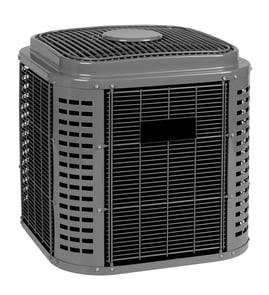




How do I know if my AC is 410A or R-22?
For your Icp split-system air conditioner model NXA648GKA100, the fastest way to tell whether it uses R-410A or R-22 is to read the refrigerant type printed on the outdoor unit’s rating plate (nameplate). We also recommend checking the refrigerant information section in the owner's manual.
Where to check (in order)
- Outdoor condenser nameplate: Look for “Refrigerant” followed by R-410A or R-22 (HCFC-22).
- Service valve area: Some units have a refrigerant label near the service ports; keep the panel in place and read the label.
- Paperwork from installation or service: Invoices often list the refrigerant type used.
- System age clue: Many systems installed before about 2010 are R-22; many installed after that are R-410A.
What not to use as proof
- Refrigerant line size alone
- “Puron” or “R-22 free” stickers that may be missing or added later
- Guessing based on brand or model family
Why it matters
R-410A and R-22 operate at different pressures and use different service practices. Using the wrong refrigerant or tools can damage the compressor and create a safety risk.
Quick comparison
| Item | R-22 | R-410A |
|---|---|---|
| Common label | R-22 or HCFC-22 | R-410A |
| Typical system age | Often pre-2010 installs | Often 2010 and newer |
| Service pressure | Lower | Higher |
If the nameplate is missing or unreadable
We use the model number NXA648GKA100 to match the correct documentation and parts. If you are servicing the outdoor unit, shut off power at the disconnect before removing panels, and use the owner's manual for safety and maintenance guidance.
Last updated: February 2026
How much is central air for 2000 sq ft?
For a 2,000 sq ft home, a typical installed central air conditioning system usually lands in the $6,000 to $12,000 range, with higher-efficiency equipment, difficult access, or ductwork changes pushing the total higher. For Icp model NXA648GKA100, the outdoor unit is only one part of the full system cost.
What drives the price most
- System size (tons/BTU) needed for your climate and insulation
- Efficiency rating (higher efficiency typically costs more up front)
- Ductwork condition (repairs, sealing, resizing, or adding returns)
- Electrical work (disconnect, breaker, wiring, or grounding updates)
- Refrigerant line set work (reuse vs. replace, length, routing)
- Labor complexity (roof, tight side yard, crane needs, permitting)
Typical cost breakdown (installed)
| Cost item | Typical share of total | Notes |
|---|---|---|
| Outdoor condenser + indoor coil/air handler | 40% to 60% | Equipment choice and efficiency matter most |
| Labor and commissioning | 25% to 40% | Includes evacuation, charge, airflow setup |
| Ductwork repairs or upgrades (if needed) | 0% to 30% | Can be the biggest swing factor |
| Electrical and controls | 5% to 15% | Includes disconnect, wiring, thermostat |
How to keep costs under control (without sacrificing reliability)
- Replace or clean the return air filter monthly during heavy use; dirty filters are a leading cause of poor cooling and compressor stress.
- Keep the outdoor coil and fins clear of leaves, lint, and grass clippings.
- Maintain clearance around the outdoor fan area so airflow is not restricted.
- Confirm the thermostat is set to COOL and below room temperature before assuming a system failure.
- Ask the installer to verify airflow and drainage (condensate drain should flow freely).
Why it matters
Central AC pricing varies because comfort and efficiency depend on correct sizing, airflow, and clean heat-transfer surfaces. Even a great condenser like the Icp NXA648GKA100 can perform poorly if the filter is clogged or the outdoor coil is blocked.
For model-specific operating and maintenance guidance, use the owner's manual.
Last updated: February 2026
What is the average lifespan of a central air conditioning unit?
Most central air conditioning units last 15 to 20 years. For your Icp split-system air conditioner model NXA648GKA100, lifespan depends most on airflow (clean filters), outdoor coil cleanliness, and electrical health; consistent maintenance keeps efficiency up and helps prevent compressor damage (see the NXA648GKA100 owner's manual).
Typical lifespan ranges
- 15 to 20 years for most modern central AC systems
- 10 to 12 years is common for older systems or units with poor maintenance
- Coastal, high-heat, or dusty environments often shorten service life
Maintenance that most affects lifespan (and why)
The homeowner maintenance steps below are the biggest drivers of long-term reliability:
- Replace or clean the return air filter monthly; dirty filters are a leading cause of inadequate cooling and compressor failures.
- Keep the outdoor unit coils and fins clear of grass clippings, leaves, lint, and dirt.
- Confirm thermostat settings (COOL mode, setpoint below room temperature) before assuming a failure.
- Check breakers and fuses if the system will not run.
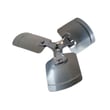
- Keep the condenser fan area unobstructed so the fan blade can move air properly.
Quick “replace vs. repair” guide
| What you’re seeing | What it usually means | Typical next step |
|---|---|---|
| Rising energy bills with normal runtime | Loss of efficiency (often dirty filter or coils) | Clean/replace filter; clean outdoor coil |
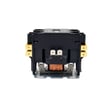
| Frequent no-cool calls or hard starts | Electrical wear (contactor/capacitor issues are common) | Have electrical components tested |
| Loud outdoor unit noise or vibration | Fan blade damage or imbalance | Inspect fan area; replace damaged parts |
| Cooling is weak and unit runs constantly | Airflow restriction or coil blockage | Filter and coil cleaning; airflow check |
Why it matters
A central AC can still “run” past its prime, but reduced airflow and dirty outdoor coils force longer run times, lower efficiency, and increase the risk of expensive compressor damage.
Parts that commonly come up in lifespan-related repairs
If troubleshooting points to airflow or electrical switching issues, these model-specific parts are commonly involved:
Last updated: February 2026