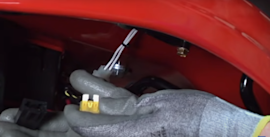
Installation guide
 Owner’s manual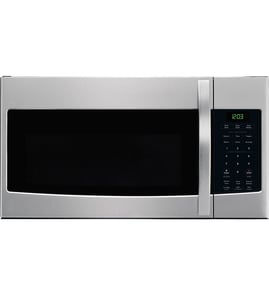



Can I look up Frigidaire parts by model number?
Yes. For your Frigidaire microwave/hood combo model PLMV169DCD, looking up parts by the full model number is the most reliable way to get compatible replacement parts because it matches the exact configuration, wiring, and door-safety interlock design used on your unit.
How to find and use the model number
Use the complete model number exactly as printed on the appliance data tag, then cross-check it against the parts list and diagrams.
- Look for the data tag on the microwave frame area (commonly inside the door opening or on the side frame).
- Write the model number and serial number down for future reference.
- Use the model number to narrow results before choosing a part by name.
- Confirm the part description matches your symptom (for example, door won’t start, no heat, light out).
- Verify installation and safety notes in the PLMV169DCD owner’s manual before servicing.
What you can confirm before ordering
Even with the right model number, we recommend matching a few details so you do not order the wrong item.
| What to match | Why it matters | Example for PLMV169DCD |
|---|---|---|
| Part function | Fixes the correct failure | Door switch vs. light bulb |
| Part ID | Ensures the exact component | 5304493153 vs. 5304440031 |
| Symptom | Prevents “guessing” repairs | No start, no heat, no light |
Common PLMV169DCD parts customers look up by model number
These are examples of parts that are frequently selected by model lookup for this microwave/hood combo:
- Microwave door interlock switch 5304493153 (door safety switch issues, won’t run)
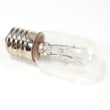
- Microwave light bulb 5304440031 (cooktop light or cavity light problems)
- Microwave grease filter (venting performance and grease capture)
- Door latch components (door not closing or not engaging)
Why it matters
Microwaves use door interlocks and high-voltage components; using the correct model-based parts list helps keep the unit operating safely and prevents repeat failures from mismatched components.
Last updated: February 2026
Is it worth repairing a Frigidaire microwave?
Yes, it’s worth repairing a Frigidaire PLMV169DCD microwave/hood combo when the problem is a common, lower-cost failure (door switch, latch parts, light, filters) and the unit is otherwise in good condition. For high-voltage heating failures or major electronic issues, replacement is usually the better value.
Quick decision checklist
- Repair when the symptom points to a simple part (door won’t start, light out, noisy vent, loose latch feel).
- Repair when the microwave is securely installed and matches your cabinet cutout; replacing an over-the-range unit often adds installation time.
- Replace when it does not heat, trips the breaker repeatedly, or has burning/arc marks that return after cleaning.
- Replace when the door is bent or won’t close correctly; the manual warns not to operate a damaged unit or defeat safety interlocks.
- Use the troubleshooting steps in the PLMV169DCD owner’s manual before buying parts.
Typical repair vs replace: what usually makes sense
| Situation | Most common direction | Why |
|---|---|---|
| Light out, everything else works | Repair | Simple access and low part cost (often just a bulb) |
| Door won’t start, intermittent running | Repair | Often a door interlock or latch-related issue |
| Fan/hood performance poor | Repair/maintenance | Grease filter and airflow issues are common |
| Runs but does not heat | Replace or pro service | High-voltage components can be costly and hazardous |
Parts that commonly make repair worthwhile on PLMV169DCD
These are model-matched parts we often see tied to “no start,” “door issue,” or “light out” complaints:
- Microwave door interlock switch 5304493153 (door safety switch circuit)
- Microwave door latch spring 5304440316 (helps the latch engage consistently)
- Microwave light bulb 5304440031 (cooktop or cavity light, depending on configuration)
- Microwave grease filter 5303319568 (venting performance and grease capture)
Why it matters
Microwave/hood combos use door interlocks to prevent operation with the door open. If the door, hinges, latches, seals, or sealing surfaces are damaged, safe operation is affected; that is why we treat door-related problems as “repair promptly or replace,” not “ignore.”
Last updated: February 2026
What are the signs of a bad microwave?
If your Frigidaire PLMV169DCD microwave/hood combo is failing, the most common signs are weak or no heating, unusual buzzing or humming, arcing or burning smells, and door problems (won’t close or latch correctly). Stop using it if the door, hinges, latches, or seals are damaged; see the PLMV169DCD owner's manual.
Quick signs you should not ignore
- Food takes much longer than normal to heat, or never gets hot
- Loud buzzing, grinding, or a harsh hum that is new or getting worse
- Sparks or arcing inside the cavity, scorch marks, or a persistent burning odor
- The unit runs with the door not fully closed, or the door feels loose or misaligned
- The microwave shuts off mid-cycle, goes dead, or trips a breaker
- The interior light or fan behaves erratically during normal operation
Door and safety interlock red flags (most important)
Your manual is clear: do not operate the microwave if it is damaged, especially if the door does not close properly or if there is damage to the door, hinges/latches, or door seals and sealing surfaces.
If the door is not latching consistently, a common repair item is the microwave door interlock switch 5304493153 (part ID 5304493153) because the microwave relies on interlocks to confirm the door is safely closed.
What to check first (safe, basic checks)
- Power reset: unplug for 2 minutes, then plug back into a properly grounded 3-prong outlet.
- Door fit: check for a bent door, loose hinge, or latch that does not catch every time.
- Sealing surfaces: wipe the door sealing area so residue does not prevent a full seal.
- Test heat: heat 1 cup of water for 1 minute; compare results to your normal performance.
Symptom-to-likely-cause guide
| Symptom | Common cause | What we recommend |
|---|---|---|
| Runs but does not heat | High-voltage circuit issue | Use the why is my microwave not heating guide; service is often required |
| Runs only with door pressure | Door latch/interlock problem | Inspect latch parts; consider interlock switch replacement |
| Sparks/arcing | Damaged waveguide cover, metal in cavity, burned area | Stop use; correct the cause before operating |
| Dead/no display | Blown fuse, power supply issue | Follow how to replace a microwave fuse if you are qualified |
Why it matters
A microwave that heats poorly, arcs, or has door/interlock issues can create unsafe operating conditions. The door and interlocks are designed to prevent exposure to microwave energy, so door-related symptoms always take priority.
Last updated: February 2026
What is the average lifespan of a Frigidaire microwave?
Most Frigidaire microwaves last 7 to 10 years with normal household use. For the Frigidaire PLMV169DCD microwave/hood combo, lifespan depends most on how often you cook, how clean you keep the cavity and filters, and whether the door closes and latches correctly (see the PLMV169DCD owner's manual).
Typical lifespan by usage
- Light use (reheating, short cook times): 10+ years
- Normal daily use: 7 to 10 years
- Heavy use (multiple long cook cycles daily): 4 to 6 years
Quick guide
| Usage pattern | What wears faster | What to watch for |
|---|---|---|
| Light | Interior coatings, light bulbs | Occasional arcing, dim lights |
| Normal | Door switches, turntable drive, venting | Intermittent starting, noisy operation |
| Heavy | Magnetron and high-voltage components | Weak heating, longer cook times |
What shortens microwave life fastest
- Running the microwave empty or with very small loads
- Poor airflow from grease buildup in the hood section
- Slamming the door or operating with a misaligned latch
- Repeated arcing from foil, metal trim, or damaged waveguide cover
- Skipping routine cleaning (spills become baked-on and corrosive)
Maintenance that helps you reach the high end of the range
- Clean the cavity and door seals regularly; follow the cleaning steps in the PLMV169DCD owner's manual
- Keep the hood filters clean; replace a damaged or clogged microwave grease filter 5303319568
- Replace burned-out cooktop lights promptly; use the correct microwave light bulb 5304440031
- If the unit starts only when you lift or push the door, inspect the latch system and interlocks (a common fix is the microwave door interlock switch 5304493153)
Why it matters
A microwave can still power on and spin but heat poorly when key components are wearing out. Catching early symptoms (weak heating, intermittent starting, unusual buzzing, or door issues) helps you avoid repeat failures and protects cooking performance.
Last updated: February 2026
What usually fails on a microwave?
On the Frigidaire PLMV169DCD microwave/hood combo, the most common failures we see are door-safety parts (interlock switches and latches), high-voltage heating components, and simple wear items like lights and filters. Many “failures” also start with unsafe use, such as running the microwave empty.
Most common parts that fail (and what you notice)
- Door interlock system: won’t start, stops when you close the door, or blows a fuse when starting. Consider the microwave door interlock switch 5304493153.
- Door latch hardware: door won’t close firmly, unit won’t run because the safety interlocks do not engage. Consider the microwave door latch spring 5304440316.
- High-voltage heating circuit (magnetron circuit components): runs but does not heat or heats weakly. One common component is the rectifier 5304468869.
- Cooktop light: light out or flickering. Consider the microwave light bulb 5304440031.
- Vent grease filter: poor airflow, greasy odors, louder venting. Consider the microwave grease filter 5303319568.
Quick checks before replacing parts
- Confirm the door closes squarely and nothing is stuck on the sealing surfaces.
- Never run it empty; operating with no food can overheat the magnetron area and shorten microwave life.
- Check for normal behaviors: the magnetron can cycle on and off at lower power levels, and some exterior warmth is normal.
- If it runs but won’t heat, use our troubleshooting steps in why is my microwave not heating.
Symptom-to-likely-cause guide
| Symptom | Most likely area | Example part to check |
|---|---|---|
| Won’t start, door feels “off” | Door latch/interlock | Microwave door interlock switch, latch spring |
| Runs but no heat | High-voltage circuit | Rectifier |
| Light out | Lighting | Microwave light bulb |
| Venting seems weak | Vent filtration | Microwave grease filter |
Why it matters
Microwaves use door safety interlocks to prevent operation with the door open. If the door, hinges, latches, or seals are damaged, we recommend stopping use and following the safety guidance in the PLMV169DCD owner’s manual.
Last updated: February 2026