Installation guide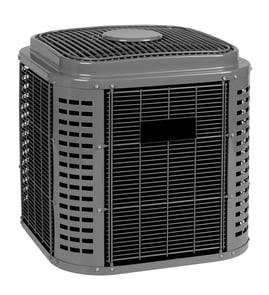





Which company is best for central AC?
The “best” central AC company depends on your home’s load calculation, installer quality, and long-term service support; the brand matters, but correct sizing, airflow, and electrical setup matter more for reliability and comfort. For Icp model CAC024AKA1, we recommend using the clearances and electrical requirements in the CAC024AKA1 installation guide as your baseline.
What to compare when choosing a central AC brand
- Installer network and warranty support in your area (service response time matters)
- Proper sizing (Manual J load calculation, not “same size as old unit”)
- Efficiency rating (SEER2/EER2) that matches your climate and budget
- Sound levels (dBA) if the condenser sits near bedrooms or neighbors
- Parts availability (common electrical parts like a contactor are routine service items)
Brand vs. installation: what matters most
A premium brand installed with poor airflow, incorrect clearances, or improper electrical connections will underperform. Your condenser needs adequate airflow around the coil and safe, code-compliant wiring.
Key installation basics (typical for split-system condensers)
| Item | Typical target | Why it matters |
|---|---|---|
| Top clearance above unit | About 48 in. | Prevents hot air recirculation and capacity loss |
| Side clearance at coil | About 18 in. (one side can be less in some layouts) | Protects efficiency and reduces overheating |
| Supply power | 208-230V, 60Hz, single phase | Prevents nuisance trips and component damage |
Why it matters
Central AC is a system: condenser, indoor coil, blower, ductwork, and controls. The “best company” is the one that delivers correct sizing, correct airflow, correct clearances, and dependable service for the life of the unit.
Last updated: January 2026
What is the average lifespan of a central air conditioning unit?
Most central air conditioning condensing units last 15 to 20 years with normal use and consistent maintenance. For the Icp CAC024AKA1 condensing unit, correct installation clearances, good airflow, and keeping the coil clean are key factors that help it reach that typical lifespan.
Typical lifespan ranges
Lifespan depends heavily on climate, run time, and maintenance. Use these as practical expectations:
- 15 to 20 years: typical for many modern central AC systems
- 10 to 12 years: common when maintenance is neglected or the unit runs in harsh conditions
- Shorter life is often tied to restricted airflow, dirty coils, low refrigerant from leaks, or electrical wear (contactor, wiring)
| What you have | Typical lifespan | What most affects it |
|---|---|---|
| Central AC condensing unit (like CAC024AKA1) | 15 to 20 years | Coil cleanliness, airflow, refrigerant charge, electrical health |
| Older or poorly maintained system | 10 to 12 years | Corrosion, compressor stress, chronic airflow issues |
Installation and airflow details that protect lifespan
The CAC024AKA1 installation guidance emphasizes airflow and service access. These practices reduce recirculation, overheating, and hard starts:
- Keep about 48 inches above the unit for discharge air when practical
- Keep about 18 inches around the coil for intake air on three sides (one side may be reduced to about 6 inches in some layouts)
- Avoid recessed or confined locations where hot discharge air recirculates
- Set the unit level and supported above grade on a stable pad or platform
- Aim for indoor airflow around 350 to 450 CFM per ton across a wet coil (set by the indoor blower)
For the exact placement and clearance guidance for this model, use the CAC024AKA1 installation guide.
Why it matters
A central AC usually fails early because the compressor runs hotter and longer than it should. Good clearances, correct airflow, and a stable refrigerant charge reduce compressor stress, improve efficiency, and extend service life.
Last updated: January 2026
How much should a central air conditioning unit cost?
A central air conditioning unit typically costs about $3,000 to $15,000+ installed, depending on size (tons/BTUs), efficiency (SEER2), brand, and how much labor and ductwork work is needed. For an Icp CAC024AKA1 condensing unit, the final price is driven as much by installation details as the equipment.
What drives the installed price most
- System size and load: Larger tonnage and higher capacity cost more.
- Efficiency rating (SEER2): Higher efficiency usually increases equipment cost.
- Installation complexity: Line-set routing, pad/roof mounting, electrical upgrades, and access.
- Refrigerant line length and elevation: Longer runs can require charge adjustments and more labor.
- Ductwork and indoor components: New evaporator coil, furnace/air handler changes, or duct modifications.
Installation details that can add cost (and why)
Your installation guide calls out common requirements that affect labor and materials, including clearances and refrigerant line considerations.
- Clearances: Typical guidance is 48 inches above the unit for discharge air and 18 inches around the coil for intake air on three sides (one side can sometimes be reduced). Tight spaces can increase labor and reduce performance. See the installation guide.
- Refrigerant line length: Outdoor units are commonly charged to match an indoor unit and a typical line length, and the charge may need adjustment for shorter or longer runs. See the installation guide.
- Airflow setup: Proper indoor airflow is critical; a common target is 350 to 450 CFM per ton across a wet coil, which can affect comfort and efficiency. See the installation guide.
Typical cost breakdown (example ranges)
| Cost item | Typical share of total | Notes |
|---|---|---|
| Outdoor condensing unit | 25% to 45% | Efficiency and brand drive this |
| Labor and commissioning | 30% to 50% | Includes evacuation, charge check, startup |
| Indoor coil and misc. parts | 10% to 25% | Coil, line set, pad, disconnect, whip |
| Ductwork or electrical upgrades | 0% to 30% | Varies by home |
Why it matters
A low bid can skip essentials like correct clearances, airflow verification, and proper refrigerant charging. Those steps protect compressor life, reduce nuisance issues, and help the system hit its rated efficiency.
Last updated: January 2026
Is it worth repairing a 10 year old air conditioner?
Yes; repairing a 10-year-old Icp central air conditioner condensing unit (model CAC024AKA1) is worth it when the problem is a single, straightforward electrical or airflow issue and the rest of the system is in good condition. Replacement is the better choice when you have repeated breakdowns or recurring refrigerant-charge problems.
A practical repair vs. replace checklist
- Repair when the issue is isolated (contactor, wiring, capacitor, thermostat signal) and the unit has been reliable.
- Repair when the outdoor coil is clean, clearances are maintained, and cooling returns after the fix.
- Replace when you have frequent failures each season or multiple expensive parts failing together.
- Replace when cooling is weak and refrigerant charge problems keep returning.
- Replace when comfort issues persist even after airflow and charge checks.
What “worth it” looks like at 10 years
A 10-year-old condensing unit is typically mid-life. Many owners choose repair when one repair restores normal operation and the unit has not been a repeat problem.
| Situation | Usually the better choice | Why |
|---|---|---|
| Outdoor unit will not start, suspected control issue | Repair | Often a single electrical part plus labor |
| Unit runs but charge is repeatedly low | Replace | Repeat service and performance issues add up |
| One-time failure after years of normal operation | Repair | Lower total cost, faster turnaround |
| Multiple major repairs in the last 2 to 3 years | Replace | Reliability trend points to more downtime |
Model-relevant checks before deciding
Follow the safety, clearance, and start-up guidance in the CAC024AKA1 installation guide before judging performance.
- Shut off power and verify with a meter before touching wiring.
- Keep the outdoor coil clean and maintain at least 2 feet of clearance around coil air inlets.
- Run the system 15 to 20 minutes before judging cooling performance.
- Typical airflow target is 350 to 450 CFM per ton through a wet coil.
A common repairable example
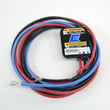
If the outdoor unit is not pulling in on a call for cooling, a failed contactor is a common fix; the model CAC024AKA1 uses a contactor such as part number 1050699.
Why it matters
A good decision balances total repair cost, reliability, and overall system condition. Fixing one electrical control can restore cooling quickly; repeated failures or recurring charge issues justify replacement.
Last updated: January 2026