Owner’s manual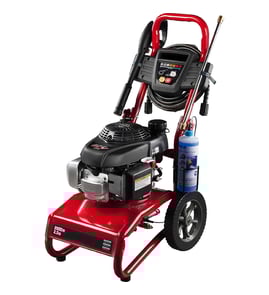



Can you put 87 gas in a pressure washer?
Yes. For the Craftsman 580752531 gas pressure washer, we use clean, fresh unleaded gasoline with a minimum rating of 87 octane (87 AKI). That means regular 87 gas is the correct fuel as long as it is not E85 and you do not mix oil into the gasoline (the engine uses separate crankcase oil).
Fuel requirements for model 580752531
The operator guidance for this model calls for:
- Clean, fresh, unleaded gasoline
- Minimum 87 octane (87 AKI)
- Up to 10% ethanol (E10) is acceptable
- Up to 15% MTBE is acceptable
- No E85 or other unapproved fuels
For the exact wording and any high-altitude notes, follow the owner's manual.
What to avoid (common fuel mistakes)
Using the wrong fuel can cause hard starting, surging, or poor power under load.
- Do not use E85
- Do not use old gas (stale fuel gums up the carburetor)
- Do not mix oil into the gasoline
- Do not “tune” or modify the engine to run alternate fuels
- Do not store fuel in the tank for long periods without stabilizer
Quick fuel checklist
| Item | What we recommend | Why |
|---|---|---|
| Octane | 87 AKI minimum | Meets engine requirement |
| Ethanol | Up to E10 | Acceptable blend |
| Fuel freshness | Fresh, clean gas | Reduces varnish and starting issues |
| Stabilizer | Use for storage | Helps prevent gum formation |
Why it matters
Correct fuel helps the engine start easier, run smoothly, and deliver consistent pressure at the pump. It also helps protect the fuel system from deposits that shorten engine life.
If the engine still runs rough or loses power after refueling with fresh 87 octane, use our troubleshooting steps in pressure washer engine losing power.
Last updated: February 2026
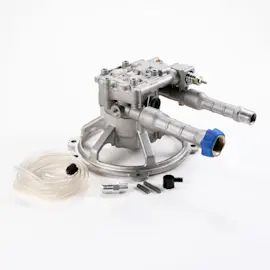
How to tell if your pressure washer pump is bad?
A bad pump on your Craftsman 580752531 gas pressure washer usually shows up as low or no pressure, surging or pulsing spray, water leaking at the pump head, or the engine bogging when you squeeze the trigger. Confirm the basics first (water supply, inlet screen, nozzle) before replacing the pump.
Quick symptoms that point to a failing pump
- Low or no pressure even with a good spray tip
- Pulsing/surging output that does not smooth out after purging air
- Water leaking from the pump manifold/head area
- Unusual noise (grinding, knocking) from the pump while running
- Engine loads down hard when the trigger is pulled (pump binding or unloader issue)
Rule out common non-pump causes first
The manual calls out a few setup issues that can mimic pump failure.
- Inspect and clean the pump inlet screen; do not run the washer if the inlet screen is damaged or missing
- Turn water fully ON, then purge air by pressing the gun safety button and holding the trigger until flow is steady
- Verify the high-pressure hose is connected to the pump and spray gun correctly and not kinked
- Avoid inlet devices that can cause problems; keep at least 10 ft of unrestricted garden hose between the pump inlet and any vacuum breaker or check valve
Fast check table
| What you see | Most likely cause | What to do next |
|---|---|---|
| Pressure starts OK then drops | Clogged inlet screen, restricted water supply | Clean screen, verify strong water flow |
| Pressure pulses constantly | Air in system, sticking unloader, worn check valves | Purge air; inspect unloader/check valves |
| Water leaking at pump head | Worn seals, cracked manifold | Inspect for cracks; plan seal or pump service |
| Engine bogs hard on trigger | Unloader not bypassing, pump binding | Check unloader operation before condemning pump |
Why it matters
Running with poor water supply, a damaged inlet screen, or freezing damage can permanently shorten pump life. For storage, protecting the pump with PumpSaver (item 7174403) helps prevent mineral and freeze damage.
Helpful repair guidance
- Owner's manual
- How to replace a pressure washer pump
- How to replace a pressure washer unloader valve
Last updated: February 2026
What is a good PSI for a gas pressure washer?
A good PSI for a gas pressure washer depends on what you’re cleaning; for typical home jobs, around 1,300 to 2,800 PSI covers most needs. Your Craftsman 580752531 is rated up to 3,000 PSI max outlet pressure (with 2.7 GPM), which is strong for heavy-duty residential cleaning. See the owner's manual for the model’s rated specifications and safe operating guidance.
Quick PSI guide by task
- 1,300 to 2,000 PSI: cars, patio furniture, grills, light siding rinse
- 2,000 to 2,800 PSI: decks, fences, driveways with moderate staining
- 2,800 to 3,200 PSI: concrete, brick, heavy mildew, tougher prep work
- 3,000 PSI and up: faster cleaning on hard surfaces; higher risk of surface damage if used incorrectly
What your Craftsman 580752531 is designed to deliver
The operator specs for this model list a max outlet pressure of 3,000 PSI and a max flow rate of 2.7 GPM. That combination is typically used for cleaning concrete, driveways, sidewalks, and large exterior surfaces efficiently.
| What matters | Why it matters | What to aim for |
|---|---|---|
| PSI (pressure) | Lifts stuck-on grime | Match PSI to the surface hardness |
| GPM (flow) | Rinses faster, improves cleaning speed | Higher GPM cleans faster at the same PSI |
| Spray tip/nozzle | Controls impact and coverage | Use wider spray for delicate surfaces |
How to choose the “right” PSI in real use
Even with a 3,000 PSI washer, you control effective pressure mostly through nozzle choice and technique.
- Start with a wider spray and increase only as needed
- Keep the nozzle moving; avoid dwelling in one spot
- Increase distance from the surface to reduce cutting/etching
- Use detergent only as directed for the job you’re doing
Why it matters
Using more PSI than the surface can handle can gouge wood, strip paint, or etch concrete. Using too little PSI can waste time and lead to repeated passes that still do not remove buildup. Matching PSI (and nozzle) to the task gives faster cleaning with less risk.
Last updated: February 2026