 Owner’s manual


What is the life expectancy of a whirlpool washing machine?
Most Whirlpool washing machines last 10 to 15 years; with consistent care, many reach the upper end of that range. For your Whirlpool WFW9500TW02 front-load washer, routine cleaning, correct detergent use, and fixing small leaks or drain issues early are the biggest factors in long service life (see the WFW9500TW02 owner's manual).
Typical lifespan and what changes it
A washer’s life is mostly driven by load size, water quality, and how quickly wear items are handled.
- Normal household use: 10 to 15 years
- Heavy use (large family, daily loads): closer to 8 to 12 years
- Light use and strong maintenance habits: often 15 years or more
Maintenance that extends washer life
These habits reduce strain on the motor, pump, bearings, and door seal.
- Use HE detergent and avoid overdosing (too many suds stresses the drain system)
- Keep loads balanced; avoid chronic overloading
- Leave the door slightly open between loads to reduce moisture and odor
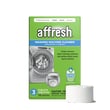
- Run a monthly cleaning cycle; many owners use washer cleaner tablets
- Check and clean the drain path if you notice slow draining or standing water
Parts that commonly affect longevity (and symptoms)
If these parts start failing, addressing them early often prevents bigger damage.
| What you notice | Common area involved | Example part for WFW9500TW02 |
|---|---|---|
| Water left in tub, slow drain | Drain system | Pump 280187 |
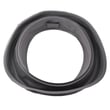
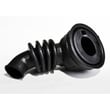
| Leaks at the door, mildew smell | Door seal area | Washer door boot WP8182119 |
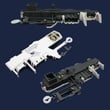
| Door won’t lock or cycle won’t start | Door latch system | Washer door lock WP8183270 |
Why it matters
A front-load washer like the WFW9500TW02 is efficient, but it depends on a tight door seal and a clear drain system. Keeping the boot clean and the pump path clear helps prevent leaks, odors, and repeated strain that can shorten the washer’s usable life.
Last updated: January 2026
What is the most common problem with whirlpool washers?
On the Whirlpool WFW9500TW02 washer, the most common service issues we see are draining problems, water-inlet problems, and vibration from an unbalanced load or an unlevel installation. These often show up as error codes (such as F20 or F21) or as “won’t drain/spin” symptoms.
Quick checks that fix many “common problems”
- Make sure both water faucets are fully open (hot and cold).
- Check the inlet hose screens at the washer for clogs.
- Straighten any kinked inlet hoses or the drain hose.
- Confirm the drain hose is not clogged and the standpipe height is not over 96 inches.
- Redistribute bulky items (one blanket or one towel can throw off balance).
- Level the washer so all four feet sit firmly on the floor.
What the most common symptoms usually point to
| Symptom or code | What it usually means | What to do first |
|---|---|---|
| F20 (water inlet problem) | Not enough water entering | Check faucets, screens, kinks, frozen hoses |
| F21 (drain problem) | Water not draining out fast enough | Check drain hose for kinks/clogs, verify height |
| Won’t drain or spin | Drain restriction or suds routine | Check drain path, reduce suds, rebalance load |
| Loud vibration | Leveling or load imbalance | Level feet, tighten locknuts, redistribute load |
Parts that commonly relate to these problems
If the basic checks do not resolve the issue, these model-matched parts are often involved:
- Pump 280187 (drain problems, slow drain, F21)
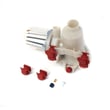
- Washer water inlet valve WPW10247305 (fill problems, F20)
- Washer door lock WP8183270 (won’t start because the door is not latching)
Why it matters
Fill and drain issues can stop a cycle mid-wash and leave water in the tub; vibration issues can cause excessive noise and movement. Addressing hoses, leveling, and detergent use early helps prevent repeat interruptions and reduces wear on the pump and suspension.
For model-specific troubleshooting steps and code meanings, use the WFW9500TW02 owner’s manual.
Last updated: January 2026
Is 4.8 cubic feet a large capacity washer?
Yes. A 4.8 cu. ft. washer is considered large to extra-large capacity, so it handles bigger loads and bulky items with fewer cycles. For Whirlpool model WFW9500TW02, that larger load size pairs well with its high-efficiency, front-load wash system for fewer, larger loads (see the WFW9500TW02 owner's manual).
What “large capacity” means in real use
A 4.8 cu. ft. tub is typically used for:
- Family-size loads (more items per cycle)
- Bulky items like bedspreads and comforters
- Fewer total loads per week (time and energy savings)
- Better water extraction at higher spin speeds (shorter dry times)
Typical capacity comparison
| Washer capacity | Common label | Best for |
|---|---|---|
| 3.5 to 4.4 cu. ft. | Standard | Everyday mixed loads |
| 4.5 to 5.0 cu. ft. | Large | Bigger loads, bulky items |
| 5.0+ cu. ft. | Extra-large | Frequent bulky loads, large households |
Tips to get the best results with a large tub
Even with a large-capacity washer, performance depends on loading and detergent.
- Load loosely; do not pack items tightly against the door boot
- Use HE detergent and measure carefully to avoid excess suds
- Mix item sizes (small and large) to help balance during spin
- Run the Clean Washer cycle periodically to reduce odor-causing residue
- If the washer vibrates, level the feet and keep the floor solid and stable
Why it matters
A larger capacity reduces the number of cycles you run, which saves time and can lower water and energy use. It also makes it easier to wash bulky items without overloading, which helps the washer drain and spin properly.
Last updated: January 2026
Where is the drain filter on a whirlpool duet washer?
On the Whirlpool WFW9500TW02 (Duet-style front-load), the drain filter is typically built into the drain pump cleanout at the very bottom front of the washer, behind the lower access panel (toe/kick panel). You open that panel to reach the pump filter cap and clean it.
How to access the drain filter (pump cleanout)
- Unplug the washer to prevent the drain pump from running.
- Place towels and a shallow pan under the front edge; some water usually comes out.
- Remove the lower front access panel (toe/kick panel) to expose the drain pump area.
- Slowly turn the pump filter cap counterclockwise to let water drain in a controlled way.
- Remove debris (coins, lint, small socks), then reinstall the cap snugly.
What to do if the washer will not drain
If you see a drain-related error or the tub stays full, we focus on the most common causes first:
- Check the drain hose for kinks, clogs, or freezing.
- Make sure the standpipe is not blocked and the hose is not shoved too far down.
- Inspect the pump cleanout for debris.
- If the pump is noisy, seized, or not moving water, replace the pump.
| Symptom | Most likely area to check | Common fix |
|---|---|---|
| Water left in tub, door stays locked | Drain system | Run Drain/Spin; clear pump filter |
| Hums but does not drain | Drain pump | Clear jam; replace pump if damaged |
| Slow drain | Hose or pump cleanout | Remove blockage; verify hose routing |
Parts that are commonly involved
These are model-matched parts we often use when a Duet-style washer has drain problems:
Why it matters
A clogged pump filter restricts water flow, which can trigger drain problems, leave water in the tub, and keep the door locked at the end of the cycle. Keeping the cleanout clear helps protect the drain pump and shortens cycle interruptions.
For panel removal details and model-specific guidance, follow the WFW9500TW02 manual.
Last updated: January 2026






