Owner’s manual
 Error Codes



What is the advantage of a bottom mount fridge?
A bottom-mount refrigerator like the LG LFXC22596S keeps the fresh-food section at eye level, so you reach everyday items with less bending. The freezer stays in the lower drawer, which works well when you access refrigerated foods more often than frozen foods.
Key advantages in day-to-day use
- Less bending for fresh food: milk, produce, leftovers, and drinks are easier to see and grab.
- Better organization up top: shelves and door bins are more usable when they are at chest and eye height.
- Freezer drawer storage: the bottom freezer typically holds bulky frozen items well in a deep drawer.
- Door-in-Door convenience (on this series): frequently used items can be accessed with less door opening, which helps reduce warm air entering the main compartment.
What this means for the LG LFXC22596S layout
This model is a counter-depth, Door-in-Door French door refrigerator with a bottom freezer. That design puts the refrigerator compartment front and center for daily use, while the freezer stays below in a pullout drawer.
| Feature | Bottom-mount benefit | Who it helps most |
|---|---|---|
| Fresh-food compartment on top | Easier access and visibility | Families, frequent cooks |
| Bottom freezer drawer | Good for stacking and larger packages | Bulk shoppers |
| French doors | Wide access to shelves with less swing space | Narrow kitchens |
Why it matters
Most households open the refrigerator far more than the freezer. With a bottom-mount design, we reduce repeated bending and make it faster to find what you use every day. For model-specific features and storage zones, use the owner's manual.
Last updated: February 2026
What are the disadvantages of a bottom freezer refrigerator?
Bottom-freezer refrigerators like the LG LFXC22596S put fresh food at eye level, but the tradeoffs are real: you bend more for frozen items, deep freezer drawers can hide food, and the bottom compartment is more prone to frost or drain-related messes if airflow or drainage gets restricted. See the owner's manual for model-specific use and care details.
Common disadvantages you may notice
- More bending and lifting: You reach down for everyday freezer items, and heavy frozen foods can be awkward to lift out.
- Deep drawer organization: Stacking in a pull-out drawer can bury items, which increases door-open time and temperature swings.
- Potential for puddles or ice buildup: Bottom compartments can be affected by defrost drain issues, leading to water under the crisper or ice in the freezer.
- Higher repair complexity in some cases: Features like an ice maker and dispenser add components that can need service over time.
- Heavier doors and alignment sensitivity: French door styles can be less forgiving if doors are slightly out of level or seals are dirty.
What we recommend for the LG LFXC22596S to reduce the downsides
The manual notes that blocked air vents can make sections run warm and that it can take up to 24 hours to reach set temperatures after installation. Keeping airflow and door sealing in good shape helps prevent many bottom-freezer complaints.
- Keep air vents clear in both compartments; avoid packing food tightly against vent areas.
- Limit long door openings; it reduces warm, humid air entering the freezer.
- Let hot foods cool about 30 minutes before freezing to reduce moisture and frost.
- Use freezer bins or labeled bags to prevent “lost” items in the deep drawer.
- If you see water, check for simple causes first (overfilled bins, door not closing fully, heavy humidity).
Quick comparison: bottom freezer vs top freezer
| Feature | Bottom freezer | Top freezer |
|---|---|---|
| Fresh food access | Easier (eye level) | More bending |
| Freezer access | More bending | Easier |
| Organization | Drawer can hide items | Shelves often easier to see |
| Common annoyance | Drawer clutter, potential drain mess | Less fresh-food convenience |
Why it matters
Most “disadvantages” show up as daily-use friction: longer door-open time, harder freezer access, and occasional moisture issues. Managing airflow, door sealing, and organization keeps your LFXC22596S running efficiently and helps protect food quality.
Last updated: February 2026
What is the most common problem with LG refrigerators?
The most common issue we see with LG refrigerators is a cooling failure (refrigerator and freezer not staying cold). On the LG LFXC22596S, a top cause to rule out first is Demo/Display Mode, which keeps lights and the display working while disabling cooling; the reset steps are in the owner's manual.
What to check first on model LFXC22596S (fast triage)
- Confirm the unit is not in Demo/Display Mode (cooling disabled).
- Make sure air vents are not blocked by food packages.
- Reduce long or frequent door openings that add warm, humid air.
- If it was recently installed, allow up to 24 hours to reach set temperatures.
- Verify the refrigerator is not operating in ambient temperatures above 110°F.
Common symptoms and the most likely direction
| Symptom | Most likely direction | What we recommend next |
|---|---|---|
| Lights and display work, but no cooling | Demo/Display Mode enabled | Follow the manual steps to deactivate Demo/Display Mode |
| Fresh food warm, freezer colder | Airflow restriction | Clear vents and avoid overpacking |
| Temps swing after loading groceries | Normal recovery load | Let hot food cool first; allow time to stabilize |
| Clicking/buzzing with poor cooling | Sealed system or compressor-side issue | Plan for sealed-system diagnosis; parts may be involved |
Why it matters
Cooling problems can look like a “bad compressor,” but on LFXC22596S the simplest fixes (Demo/Display Mode, blocked vents, door habits, and normal 24-hour pull-down after install) can restore proper temperatures without replacing major parts.
Parts that commonly relate to cooling performance
If troubleshooting points to a component failure, these model-matched parts are often involved in cooling complaints:
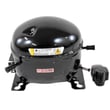
- Refrigerator compressor TCA36811409 (sealed-system component)
- Refrigerator condenser fan motor EAU63923602 (moves air across the condenser)
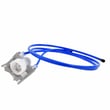
- Refrigerator temperature sensor 6500JB2002X (feeds temperature data to controls)
- Refrigerator condenser coil ACG73749403 (heat rejection surface)
Last updated: February 2026