Owner’s manual
 Error Codes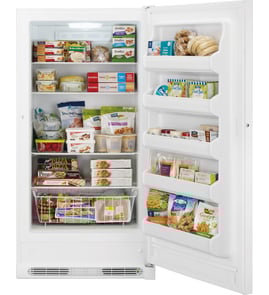



How do I reset my Frigidaire upright freezer?
To reset your Frigidaire LFUH21F7LM0 upright freezer, power-cycle it: unplug it for about 1 minute, then plug it back in. This clears minor control glitches and restarts the electronic temperature control without changing your normal temperature setting.
Quick reset steps (power cycle)
- Unplug the freezer from the wall outlet.
- Wait 60 seconds.
- Plug the freezer back in.
- If the alarm is sounding, press Alarm Reset to silence it.
- Allow several hours for temperatures to stabilize after any control changes.
If the control panel seems “stuck” (control lock)
This model can lock the controls to prevent accidental changes.
- To lock or unlock, press and hold Alarm Reset for 3 seconds.
- When locked, the display indicates the lock status.
- After unlocking, recheck your temperature setting.
Turning the freezer off and back on from the control panel
If you prefer using the control panel instead of unplugging:
- Press the DOWN (v) button until the display shows “1”.
- Press DOWN (v) three more times until the display shows “0” (off).
- To turn it back on, press the UP (A) button three times until the display shows “1”, then adjust colder/warmer as needed.
| Method | What it does | Best for |
|---|---|---|
| Unplug for 60 seconds | Full power reset of the control | Random beeping, odd display behavior |
| Alarm Reset button | Silences alarms, toggles control lock | Door ajar or hi temp alarm noise |
| Control panel off/on | Restarts operation without unplugging | Routine shutdown or restart |
Why it matters
A proper reset helps you rule out a simple electronic control hiccup before replacing parts like an electronic control board or door switch. If an “E” appears on the display after resetting, the freezer typically continues running but needs professional diagnosis.
For control details and display behavior, use the LFUH21F7LM0 owner's manual.
Last updated: February 2026
What is the life expectancy of a Frigidaire upright freezer?
A Frigidaire upright freezer like model LFUH21F7LM0 typically lasts 12 to 16 years, and 10 to 20 years is a normal overall range for upright freezers. Consistent airflow around the cabinet, correct leveling, and keeping frost under control are the biggest factors that extend service life.
Typical lifespan at a glance
| Item | Typical range | What shortens it fastest |
|---|---|---|
| Upright freezer (overall) | 10 to 20 years | Poor ventilation, dirty coils, door not sealing |
| Many units in normal home use | 12 to 16 years | Frequent warm-air entry, heavy frost buildup |
| Major sealed-system parts (compressor, evaporator) | 10 to 20 years | Overheating, low airflow, long run times |
What to do to reach the high end of the range
- Leave space for air circulation around the freezer, especially in warmer rooms.
- Level the freezer so the door closes and seals easily; a misaligned door causes moisture, frost, and longer run times.
- Defrost and clean when frost reaches about 1/4 to 1/2 inch (for non-frost-free operation or if frost accumulates).
- Avoid sharp tools when removing frost; use a plastic scraper to prevent damage.
- Keep the door closed as much as possible; warm, moist air drives frost and makes the compressor work harder.
Parts that commonly affect longevity (and symptoms)
If your freezer is running hot, building heavy frost, or running constantly, these parts often matter most:
- Door seal issues: warm air leaks in, causing frost and long run times (see door gasket 5304507212).
- Defrost system problems: heavy frost on the back wall, weak airflow (see refrigeration appliance defrost heater 297253602 and refrigeration appliance defrost bi-metal thermostat 297216600).
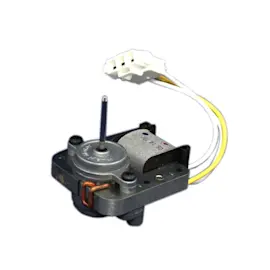
- Air movement problems: warm spots, noisy fan, poor temperature recovery (see freezer evaporator fan motor 297309000 and blade 5308000010).
Why it matters
A freezer that runs longer to hold temperature wears the compressor and electrical components faster. Good ventilation, a tight door seal, and controlled frost buildup reduce run time, stabilize temperatures, and help your LFUH21F7LM0 reach its full expected lifespan.
For model-specific use and care details (leveling, alarms, defrosting, and cleaning), use the LFUH21F7LM0 owner's manual.
Last updated: February 2026
Is Frigidaire Gallery high end?
Frigidaire Gallery is not a true luxury, high-end line; it is an upper-mid-range (premium mainstream) tier that typically adds nicer finishes and more features than basic Frigidaire models. For your Frigidaire LFUH21F7LM0 upright freezer, performance and features are best confirmed in the LFUH21F7LM0 owner's manual.
What “high end” usually means (and where Gallery fits)
“High end” typically refers to premium build materials, very quiet operation, advanced controls, and higher price tiers. Frigidaire Gallery generally sits below luxury lines but above entry-level models.
Common Gallery upgrades you may see (varies by model):
- More refined exterior finishes and handles
- More electronic controls and convenience features
- Better interior organization options (bins, shelves, baskets)
- Improved temperature management features
- More design-focused styling than basic models
How to judge your LFUH21F7LM0 specifically
For a freezer, “high end” is less about brand tier and more about storage design, temperature consistency, and defrost/control features.
Check these items on your model:
- Control type (basic dial vs electronic control)
- Storage features (door bins, baskets, specialty shelves)
- Defrost system (manual vs automatic)
- Door seal quality and fit (gasket condition matters)
- Noise level and fan operation
Quick comparison (typical positioning)
| Tier | What you usually get | Typical buyer goal |
|---|---|---|
| Entry-level | Basic controls, fewer features | Lowest upfront cost |
| Gallery / premium mainstream | More features and styling | Best value with upgrades |
| Luxury / true high-end | Premium materials, advanced systems | Top performance and design |
Why it matters
If you are deciding whether to repair or upgrade, the “tier” matters less than your freezer’s condition and parts support. For example, a worn door seal can waste energy and cause frost; replacing the door gasket 5304507212 often restores performance and helps the freezer hold temperature.
Last updated: February 2026
What is the most common problem with Frigidaire refrigerators?
Cooling performance problems are the most common issue we see across Frigidaire refrigeration, and the same root causes apply to your Frigidaire LFUH21F7LM0 upright freezer: doors not sealing well, controls set incorrectly, or airflow problems that lead to warm temperatures or frost buildup. Use the owner's manual troubleshooting chart to pinpoint the cause.
Most common causes (and what to check first)
- Door not sealing: a slightly open door or a worn, dirty gasket makes the unit run longer and can cause frost.
- Temperature control set wrong: set too warm causes thawing; set too cold can overwork the system.
- Door opened too often: warm air enters every time the door opens, raising temps and adding moisture.
- Recently loaded with warm food: the freezer needs time to pull temperatures back down.
- Recently unplugged or power outage: the cabinet needs time to stabilize after power returns.
Quick troubleshooting steps for LFUH21F7LM0
- Confirm the control is not set to OFF; then set to a colder setting and allow several hours to stabilize.
- Inspect the door seal for gaps; clean the gasket and mating surface.
- Reduce door openings for a day and check whether temperatures recover.
- If the door will not close, level the freezer so the cabinet is square and the door aligns.
- If you see heavy frost or warm temps persist, check common defrost and airflow components.
Parts that commonly relate to cooling and frost symptoms
| Symptom you notice | Common area involved | Example part for this model |
|---|---|---|
| Frost buildup, warm temps after a few days | Defrost system | Refrigeration appliance defrost heater 297253602 |
| Frost buildup, temperature swings | Defrost thermostat | Refrigeration appliance defrost bi-metal thermostat 297216600 |
| Warm temps, weak airflow inside | Evaporator fan | Freezer evaporator fan motor 297309000 |
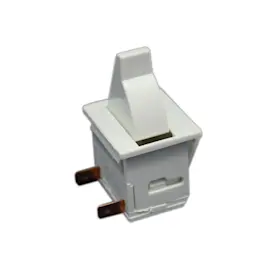
| Light or fan behavior changes when door opens/closes | Door switch | Refrigerator door switch 216822900 |
| Door won’t seal, runs too long | Door seal | Door gasket 5304507212 |
Why it matters
A small air leak at the door gasket or frequent door openings adds moisture; that moisture turns into frost, restricts airflow, and forces the compressor to run longer. Fixing sealing and airflow issues early protects food quality and reduces energy use.
Last updated: February 2026
Is it worth repairing an upright freezer?
Yes; repairing a Frigidaire upright freezer like model LFUH21F7LM0 is worth it when the failure is limited to airflow, defrost, or door sealing and the cabinet is in good condition. It is less worth it when the compressor or sealed system is failing and the repair cost is close to replacement.
Quick decision checklist
- Repair when the freezer still cools but has heavy frost, warm spots, or a noisy fan.
- Repair when the door does not seal well due to leveling or a worn gasket.
- Repair when symptoms point to a replaceable part (fan motor, defrost heater, thermostat, door switch).
- Replace when it will not cool at all or cooling is consistently weak after basic checks.
- Replace when the cabinet is badly rusted, damaged, or the door cannot align.
Repairs that are usually worth doing first
These fixes commonly restore normal temperatures and reduce frost buildup:
- Door sealing: door gasket 5304507212
- Door-ajar or light circuit issues: refrigerator door switch 216822900
- Poor airflow or loud fan: freezer evaporator fan motor 297309000 and/or blade 5308000010
- Defrost failure symptoms (frost blanket behind rear panel): refrigeration appliance defrost heater 297253602 and refrigeration appliance defrost bi-metal thermostat 297216600
Cost and complexity at a glance
| Area | Typical symptoms | Difficulty | Usual call |
|---|---|---|---|
| Door seal or leveling | Moisture, frost near door | Low | Repair first |
| Defrost system | Heavy frost, warmer temps | Medium | Usually repair |
| Evaporator fan | Warm zones, noisy airflow | Medium | Usually repair |
| Compressor/sealed system | Not cooling, constant running | High | Often replace |
Checks to do before deciding
- Level the freezer so the door closes and seals; the owner's manual explains proper leveling.
- If you see an “E” on the display or repeated alarms, use the Frigidaire deluxe electronic control module freezer error codes guide to narrow the fault.
- Look at the frost pattern: thick, even frost often means a defrost problem; little or no frost often points to sealed-system trouble.
Why it matters
Small air leaks and defrost problems make the freezer run longer, build frost faster, and risk food warming. Fixing the root cause protects food quality and reduces energy use.
Last updated: February 2026