Installation guide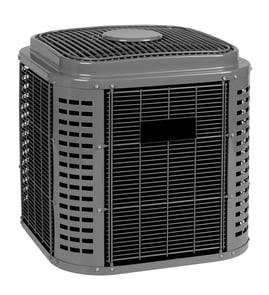




How to look up AC model number?
To look up your AC model number for a Goodman central air conditioner like model GSC130421AC, start by finding the unit’s data tag on the outdoor condenser cabinet. Once you have the full model number, you can match the correct parts and installation specs using the GSC130421AC installation guide.
On most outdoor condensing units, the model number is printed on a rating plate or label attached to the cabinet.
Check these common spots:
- Outside of the unit on a metal rating plate (often on a side panel)
- Inside the service panel area (after power is disconnected)
- Near the refrigerant service valves or line-set connections
- On paperwork from the original installation (invoice, start-up sheet)
- On the manufacturer’s documentation packet if it was left with the home
Use the model number exactly as printed (letters and numbers) to ensure you get compatible parts and correct clearances.
Here is what we recommend doing next:
- Write down the full model number and serial number
- Confirm the unit type and electrical characteristics before ordering parts
- Use the model number to match the correct capacitor, contactor, fan motor, and other components
- Follow the required airflow and service clearances during any reinstall or relocation
| What you see on the label | What it’s used for | Example |
|---|---|---|
| Model number | Identifies the exact unit design for parts and specs | GSC130421AC |
| Serial number | Identifies the production run/date for service history | Varies by unit |
The model number drives everything: correct replacement parts, wiring and electrical characteristics, and even minimum airflow clearances. Using the wrong model number can lead to ordering the wrong capacitor or installing the unit with inadequate service space.
Last updated: January 2026
What are common 2 ton AC problems?
Common 2-ton central AC problems are usually the same issues we see across most residential outdoor condensing units, including the Goodman GSC130421AC: airflow restrictions, electrical/control failures, and refrigerant charge or metering problems. Start with airflow and power checks before moving to electrical testing.
- No cooling at all: power failure, blown fuse/breaker, loose connection, shorted/broken wires, failed contactor, or a failed capacitor.
- Runs but cools poorly: dirty condenser coil, restricted indoor airflow (filter, blower, indoor coil), or incorrect refrigerant charge.
- Outdoor unit short-cycles: overheating from a dirty coil, weak capacitor, or hot air recirculating around the condenser.
- Ice on the indoor coil or suction line: low airflow or low refrigerant.
- Humming or hard-starting: weak run capacitor; some compressor designs also use a hard start kit.
- Set thermostat to Cool and lower the set temperature.
- Replace the air filter and open supply and return vents.
- Clear debris around the outdoor unit; gently rinse the condenser coil.
- Confirm the outdoor disconnect is on and the breaker is not tripped.
- If the outdoor fan or compressor will not start, stop and schedule service (electrical testing is required).
| Symptom | Most likely area | What to do next |
|---|---|---|
| Outdoor unit completely dead | Power, wiring, controls | Check breaker/disconnect; technician checks control voltage and safeties |
| Fan runs, little or no cooling | Airflow or refrigerant | Replace filter, clean coil; technician checks superheat/subcooling |
| Hums, struggles to start | Capacitor/start components | Technician tests capacitor and start components |
Goodman installation guidance emphasizes safe electrical practices (disconnect all power before servicing, correct wire sizing, and limiting voltage drop). Use the GSC130421AC installation guide to follow the correct wiring and setup expectations.
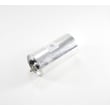
A weak run capacitor can cause hard starting or a no-start condition. If testing confirms failure, match the replacement by exact ID and rating, such as the capacitor CAP050550440RTP.
Airflow and electrical issues often mimic refrigerant problems. Starting with airflow and power checks reduces unnecessary parts replacement and helps protect the compressor.
Last updated: January 2026
What is the tonnage of gsc130421ac?
The Goodman GSC130421AC central air conditioner is a 3.5-ton outdoor unit (about 42,000 BTU/hr of cooling). This tonnage helps you match the condenser to the correct indoor evaporator coil, refrigerant line sizing, and overall system capacity.
| Tonnage | Approx. BTU/hr |
|---|---|
| 3.0 ton | 36,000 |
| 3.5 ton | 42,000 |
| 4.0 ton | 48,000 |
Using the correct tonnage helps prevent poor cooling, short cycling, and efficiency loss. It also ties directly to refrigerant piping practices and charging checks called out in the installation guide.
- Indoor evaporator coil is rated for 3.5 tons (or an approved match for your system).
- Refrigerant type and service practices match the unit (many Goodman systems use R-410A).
- Refrigerant line set is sized correctly for the run length; longer runs often require special guidance.
- Electrical components (like the run capacitor) are correct for the condenser’s motor/compressor.
- Charging method is done correctly (superheat/subcooling targets depend on metering device such as a TXV).
If you are diagnosing hard starts, humming, or a fan that will not spin up, the run capacitor is a common suspect on outdoor units. For this model, we list the capacitor CAP050550440RTP.
A correctly sized 3.5-ton condenser keeps the system balanced; mismatched capacity can reduce comfort and increase wear on the compressor and fan motor.
Last updated: January 2026