 Owner’s manual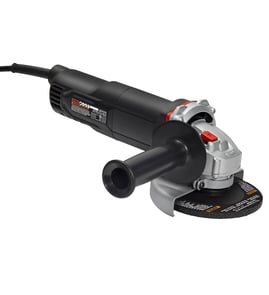

Which brand of angle grinder is best?
For most people, the “best” angle grinder brand is the one that matches your work type and safety needs. Bosch grinders like the Bosch 1375A are a strong choice for reliable corded performance; this model is rated 120V, 6A, and 11,000 RPM no-load and is designed around 4-1/2 inch accessories (per the Bosch 1375A owner's manual).
Different brands excel in different areas. Use these quick filters to narrow it down:
- Corded power and value: Bosch, Makita, DeWalt
- Cordless ecosystem and convenience: Milwaukee, DeWalt, Makita (battery platform matters)
- Heavy-duty, long service life: Metabo (often favored for industrial use)
- DIY and occasional use: Choose based on comfort, guard design, and accessory availability
Even within the same brand, performance and safety vary by model. For a grinder like the Bosch 1375A, these are the big decision points:
- Wheel size compatibility: 4-1/2 inch wheels are common and widely available
- Speed rating match: wheel/accessory RPM rating must meet or exceed the grinder’s no-load speed
- Guard and handle setup: always run the wheel guard and side handle for control
- Switch feel and reliability: a switch that does not turn ON/OFF reliably needs repair
- Accessory type fit: grinding wheel vs cut-off wheel vs wire cup brush (use the correct type)
| If you prioritize | What to look for | Typical best-fit brands |
|---|---|---|
| All-day metal grinding | Durable motor, comfortable grip, proven reliability | Metabo, Bosch, Makita |
| Cordless portability | Battery platform, brushless motor, runtime | Milwaukee, DeWalt, Makita |
| Budget-friendly corded | Solid specs, common wheel size, good ergonomics | Bosch, DeWalt, Makita |
Angle grinders are high-speed tools; the right brand and model helps you stay in control and reduces the chance of wheel damage. For example, Bosch’s guidance includes inspecting wheels for chips/cracks, running a new wheel at no-load for about a minute pointed away from people, and using the correct wheel type and size for the tool.
Last updated: January 2026
Are Bosch angle grinders worth the money?
Bosch angle grinders are typically worth the money when you want reliable power, safe operation, and long-term durability. For the Bosch 1375A specifically, the manual lists a 6A motor, 11,000 RPM no-load speed, and a 4-1/2 inch max wheel size, which fits many common grinding and cut-off tasks; see the 1375A owner's manual for safe accessory selection and setup.
If your projects match the tool’s design limits, you usually get strong value from this model.
- 6A corded power for consistent performance (no battery fade)
- 11,000 RPM no-load speed for fast material removal
- 4-1/2 inch wheel capacity for common grinding and cut-off work
- 5/8"-11 spindle thread (common accessory fit)
- Guard and side handle support for safer control
| Item | Bosch 1375A (from manual) | Why it matters |
|---|---|---|
| Amperage | 6A | Helps indicate cutting and grinding capability |
| Speed | 11,000/min (no-load) | Higher speed demands correct wheel ratings |
| Max wheel diameter | 4-1/2 in (115 mm) | Limits what discs and wheels you can safely use |
| Spindle thread | 5/8"-11 UNC | Determines accessory compatibility |
Even a good grinder feels like a bad purchase if setup or accessories are wrong.
- Using a wheel larger than the maximum recommended size
- Using damaged or dropped grinding wheels
- Running wheels not rated for the grinder’s speed
- Skipping the wheel guard or positioning it incorrectly
- Forcing the tool instead of letting the wheel do the work
Angle grinders fail expectations most often because of accessory mismatch and unsafe technique, not because the motor is weak. Following the guard, lock nut, and wheel selection guidance in the 1375A owner's manual protects you from wheel breakage risk and helps the grinder perform the way it was designed.
Last updated: January 2026
Can I cut a 2x4 with an angle grinder?
Yes, you can cut a 2x4 with a Bosch 1375A angle grinder if you use the correct wood-rated cutting wheel and safe technique. That said, this model’s safety rules specifically warn against using a “woodcarving” blade because it can cause frequent kickback and loss of control; follow the 1375A owner's manual closely.
Use accessories that match the tool’s ratings and the job.
- Use a wood-rated cut-off wheel designed for angle grinders (not a grinding wheel)
- Keep the wheel guard installed and positioned between you and the wheel
- Use the side handle for two-handed control
- Avoid “woodcarving” blades (high kickback risk)
- Do not exceed the grinder’s maximum wheel diameter
| Spec | Bosch 1375A rating | What it means for cutting a 2x4 |
|---|---|---|
| Max wheel diameter | 4 1/2 in (115 mm) | Choose a 4 1/2 in wood-rated cut-off wheel |
| No-load speed | 11,000 RPM | Wheel must be rated at or above this speed |
| Spindle thread | 5/8 in-11 UNC | Accessory must match this arbor/thread setup |
- Unplug the grinder before changing accessories
- Inspect the wheel for chips or cracks; then run the tool no-load for 1 minute pointed away from people
- Clamp the 2x4 securely; never hold it by hand
- Start the cut gently; do not force the tool
- Keep your body out of the wheel’s line of fire; maintain a stable stance
Wood can grab and pinch a fast-spinning wheel, which is why kickback is a bigger concern than when cutting metal. Using the correct wheel, guard position, and two-handed control reduces the chance of losing control.
Last updated: January 2026
Which is better, a 4 inch or 5-inch angle grinder?
For the Bosch 1375A angle grinder, a 4-1/2 inch wheel size is the correct and safest choice; it is designed for 4-1/2 inch accessories and running larger wheels increases the risk of wheel failure and loss of control. For “better,” choose based on the job: 4 to 4-1/2 inch for control, 5 inch for more depth (on a different grinder rated for 5 inch).
A 4 to 4-1/2 inch grinder is usually better for control and access; a 5 inch grinder is usually better for slightly more cutting depth and coverage.
- Choose 4 to 4-1/2 inch for tight spaces, lighter grinding, and better maneuverability
- Choose 5 inch for a bit more reach and depth on medium-duty cutting and grinding
- Match the wheel to the tool rating; never oversize the wheel to “get more depth”
- Use the guard and side handle to improve control and reduce kickback risk
- Inspect and test-run new wheels before putting them into the work
The 1375A is a small angle grinder platform with a 4-1/2 inch maximum wheel diameter.
| Item | Bosch 1375A specification | What it means for you |
|---|---|---|
| Max wheel diameter | 4-1/2 in (115 mm) | Do not use 5 in wheels on this model |
| No-load speed | 11,000 RPM | Use wheels/accessories rated at or above grinder speed |
| Spindle thread | 5/8"-11 UNC | Accessories must match this thread |
For the full list of approved accessory types (cutoff wheel, sanding disc, wire wheel, guard setup), use the 1375A owner’s manual.
Using the correct wheel size is a safety issue, not just a performance choice.
- Unplug before changing accessories
- Check wheels for chips/cracks; replace damaged wheels immediately
- Run the grinder at no-load for about a minute after installing a new wheel (pointed away from people)
- Do not use wheels larger than the tool’s maximum recommended size
- Keep the wheel guard between you and the work
Wheel diameter affects guard coverage, safe operating speed, and how the grinder handles under load. Staying within the Bosch 1375A’s 4-1/2 inch rating helps prevent wheel breakage, binding, and loss of control.
Last updated: January 2026