Owner’s manual
How to tell if an air compressor pressure switch is bad?
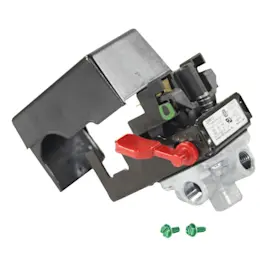
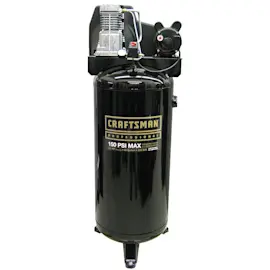
On a Craftsman air compressor model 921153620, a bad pressure switch is typically easy to spot because the compressor stops starting and stopping at the right tank pressure. Common signs include no start, no shutoff, rapid cycling, or air leaking at the switch area; these symptoms point to failed pressure sensing or worn internal contacts.
- Compressor won’t start even with low tank pressure
- Compressor won’t shut off and runs past normal cut-out
- Rapid on/off cycling (short-cycling)
- Air leaking from the pressure switch or unloader area after shutdown
- Burning smell, buzzing, or chattering at the switch (electrical contacts failing)
- Breaker trips when the motor tries to start (switch or start circuit issue)
- Unplug the compressor and let it cool.
- Drain the tank fully using the tank drain valve.
- Remove the switch cover and inspect wiring and terminals for heat damage or loose connections.
- Restore power and run a test cycle; confirm whether it cuts in (starts) and cuts out (stops) consistently.
- If it shuts off but then hisses continuously, focus on the unloader and check valve path; use our guide: how to replace an air compressor pressure switch.
| What you observe | Most likely cause | What to do next |
|---|---|---|
| Won’t start at low pressure | Switch contacts not closing, wiring issue | Inspect terminals; replace switch if contacts are burned |
| Won’t shut off | Switch not opening at cut-out | Replace pressure switch |
| Rapid cycling | Misadjusted switch, failing switch, air leak | Check for leaks; verify regulator settings |
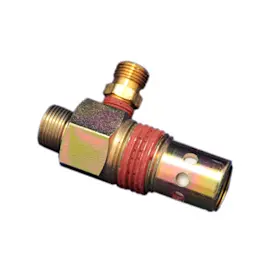
| Hissing after shutdown | Unloader stuck open or check valve leaking | Follow how to replace an air compressor check valve |
The pressure switch is the main control that protects the motor and tank by managing start and stop points. When it fails, the compressor can overrun, short-cycle, or struggle to restart, which accelerates wear on the motor, check valve, and pump.
- If it won’t run at all: air compressor won't start
- If it runs but won’t build pressure: air compressor won't build tank pressure
For model-specific safety notes, wiring diagrams, and adjustment guidance, use the 921153620 owner's manual.
Last updated: February 2026
Is a 150 PSI air compressor good for car tires?
Yes. A 150 PSI air compressor (including many Craftsman units like model 921153620) is more than enough for car tires because most passenger tires run around 30 to 40 PSI; what matters most for how fast it fills is the compressor’s airflow (CFM) and the tank size. See the 921153620 owner's manual for the rated PSI/CFM and recommended use.
PSI is the maximum pressure the compressor can produce, not the tire pressure you should inflate to. For tire work, higher max PSI mainly gives you headroom so the compressor is not working at its limit.
- Typical passenger-car tire pressure: 30 to 40 PSI
- Many light truck and SUV tires: 35 to 55 PSI (varies by tire and vehicle)
- A 150 PSI compressor easily covers these ranges
For topping off tires, almost any 150 PSI compressor will work; speed and convenience depend on a few details.
- CFM rating at 40 PSI or 90 PSI (higher CFM fills faster)
- Tank size (a tank helps with short bursts and reduces cycling)
- Duty cycle (how long it can run before cooling)
- Regulator and gauge accuracy (helps you hit the target PSI)
- Hose and fittings (leaks or restrictions slow inflation)
| What you care about | Spec to look at | What it affects most |
|---|---|---|
| Reaching tire pressure | Max PSI (150 PSI) | Capability (headroom) |
| Filling speed | CFM at 40 PSI or 90 PSI | Time to inflate |
| Consistent performance | Tank size + duty cycle | How often it cycles and overheats |
Using a compressor with plenty of max PSI and adequate CFM makes tire inflation quicker and more consistent, especially when you are topping off multiple tires back-to-back. It also reduces strain on the motor because it is not operating at the edge of its capability.
If your compressor struggles to start or runs but does not build pressure, use our troubleshooting steps in air compressor won't build tank pressure or air compressor won't start.
Last updated: February 2026
What is the average lifespan of an air compressor?
Most air compressors last 10 to 15 years with normal DIY or light shop use and basic care; a Craftsman air compressor like model 921153620 typically reaches that range when you drain the tank, keep airflow clean, and avoid overheating. For model-specific maintenance intervals, use the 921153620 owner's manual.
Lifespan depends mainly on compressor design, duty cycle, and maintenance.
- Oil-free, portable compressors: about 5 to 10 years
- Oil-lubricated, belt-drive shop compressors: about 10 to 20 years
- Industrial rotary screw systems: about 20 to 30 years
- Hard daily use with poor maintenance: often under 5 years
| Compressor type | Typical use | Typical lifespan |
|---|---|---|
| Oil-free portable | Nailers, inflators, light tools | 5 to 10 years |
| Oil-lubricated reciprocating | Garage, small shop | 10 to 20 years |
| Rotary screw | Continuous commercial use | 20 to 30 years |
These are the most common life-shorteners we see across Craftsman and similar air compressors:
- Water left in the tank (internal rust and contamination)
- Restricted cooling airflow (dusty shrouds, blocked vents)
- Running past the duty cycle (long continuous run time)
- Air leaks that force frequent cycling
- Dirty intake filter (higher heat, more wear)
- Wrong extension cord or low voltage (motor stress and hard starts)
Use these habits to get the longest service life from model 921153620:
- Drain the tank after use or at the end of the day
- Check and tighten fittings if you hear hissing or frequent cycling
- Keep the intake area clean so the pump and motor can cool
- Verify cut-in/cut-out behavior so it is not short-cycling
- Store it dry and protect it from freezing temperatures
A good next step for troubleshooting and upkeep is our air compressor common questions guide.
Air compressor “lifespan” is often limited by heat and moisture. Keeping temperatures down and water out of the tank protects the pump, valves, pressure switch operation, and the tank itself.
Last updated: February 2026
What is the most common cause of air compressor failure?
The most common cause of failure in a Craftsman air compressor like model 921153620 is overheating caused by poor maintenance. Restricted airflow, dirty intake filtration, running beyond duty cycle, and (on oil-lubricated units) low or wrong oil all raise operating temperature and accelerate wear.
- Clogged or dirty air intake filter that starves the pump of cooling airflow
- Poor ventilation (compressor pushed against a wall, used in a hot enclosed space)
- Excessive run time (long continuous use that exceeds the unit’s duty cycle)
- Air leaks that force the compressor to run longer to maintain pressure
- High backpressure or restriction from a kinked hose, blocked coupler, or faulty regulator
- Electrical issues (weak extension cord, low voltage) that make the motor run hot
- Unplug the compressor and let it cool fully.
- Inspect and clean the intake area; replace the filter if it is dirty or damaged.
- Confirm you are using a proper power source (avoid long, undersized extension cords).
- Listen for leaks at fittings, drain valve, pressure switch, and check valve.
- Drain tank moisture after use to reduce internal corrosion and contamination.
| What you notice | Most common underlying cause | What to do next |
|---|---|---|
| Runs hot and shuts off | Poor airflow or overuse | Improve ventilation; reduce continuous run time |
| Runs constantly, won’t reach cut-out | Leak or pump wear | Find leaks; evaluate pump condition |
| Hard start, trips breaker | Voltage drop or pressure not unloading | Check cord/power; inspect unloader/check valve |
| Loud knocking | Internal wear from heat | Stop use; inspect pump before further damage |
Overheating is the fastest way to shorten pump and motor life. Keeping airflow clear and run time reasonable reduces friction, protects seals and bearings, and helps the compressor reach and hold normal tank pressure.
For model-specific operating and maintenance guidance, follow the schedule and safety steps in the owner's manual. You can also use our troubleshooting flow for air compressor won't start when heat-related shutdowns turn into no-start problems.
Last updated: February 2026