Installation guide
 Owner’s manual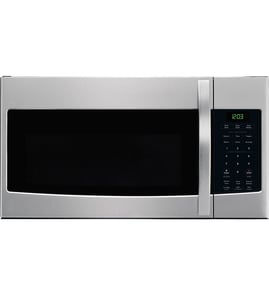



Are all microwaves 1200 watts?
No. Microwaves are not all 1200 watts; cooking power varies by model and size. Many countertop and over-the-range units fall in a broad range (often roughly 700 to 1200 watts), and higher wattage typically heats food faster and more evenly. For your KitchenAid KMHS120ESS1, confirm the rated cooking power in the KMHS120ESS1 owner's manual.
Microwave wattage is the cooking power delivered to the food (not the same as the electrical supply requirement). In general, higher wattage:
- Shortens cook and reheat times
- Improves performance on dense foods (potatoes, casseroles)
- Helps reduce cold spots when used with proper stirring and standing time
- Can require adjusting times when following recipes written for lower-wattage ovens
If a recipe is written for a different wattage than your microwave, use this quick adjustment approach:
- If your microwave is higher wattage, start with less time and check early
- If your microwave is lower wattage, add time in small increments
- Stir, rotate, or rearrange food partway through when possible
- Use standing time (let food sit) to finish heating evenly
| Recipe written for | If your microwave is about 1200W | If your microwave is about 900W |
|---|---|---|
| 1000W | Use ~10% less time | Use ~10% more time |
| 1200W | Use the stated time | Use ~25% more time |
Wattage is one of the biggest reasons the same “2 minutes” can produce very different results from one microwave to another. Knowing your KMHS120ESS1’s rated cooking power helps you set more accurate times and avoid overcooking.
Last updated: February 2026
What is the disadvantage of a low profile microwave?
A low-profile microwave saves cabinet space and can look cleaner over the range, but the main disadvantage is reduced cooking space and flexibility. In most kitchens, the shorter cavity limits tall items and large dishes, and the vent fan performance can be less effective than a dedicated range hood.
- Smaller interior capacity: less room for tall mugs, large bowls, and some covered casserole dishes.
- Less effective ventilation: more steam, smoke, and grease can linger compared with a full-size hood.
- More installation constraints: duct routing, cabinet depth, and mounting height can be less forgiving.
- Potentially more noise for the airflow you get: higher perceived sound when trying to clear heavy cooking.
- Fewer placement options for cookware: you may need to use smaller microwave-safe containers.
Your KitchenAid KMHS120ESS1 is a microwave/hood combo designed to be used above cooking equipment up to 36 inches wide, and it needs its openings kept clear so the hood and microwave can vent and cool properly. For exact mounting clearances and venting configurations, follow the installation guide.
| What you care about | Low-profile microwave impact | What to do |
|---|---|---|
| Large plates and tall containers | More likely to not fit comfortably | Measure your most-used dish height and diameter |
| Heavy sautéing, frying, wok cooking | More smoke and grease to manage | Use the fan early, clean filters often |
| Cabinet and duct layout | Tighter tolerances | Confirm duct direction and cabinet depth in the guide |
A microwave/hood combo has to do two jobs: heat food and move air. When the unit is compact, you often trade away either cooking capacity or ventilation headroom. Keeping the vent hood clean (filters and grille) helps performance and reduces odor and grease buildup.
Last updated: February 2026
How to hard reset a KitchenAid microwave?
To hard reset your KitchenAid KMHS120ESS1 microwave/hood combo, unplug it (or turn off the breaker) for 1 minute, then restore power and test-heating 1 cup of cold water for 2 minutes on 100% power. This clears most control glitches after a power interruption.
- Unplug the microwave, or switch the dedicated circuit breaker OFF.
- Wait 60 seconds.
- Restore power.
- If the display shows “Enter clock”, set the clock.
- Test: heat 1 cup (250 mL) of cold water for 2 minutes on High (100%).
- If it still will not run, confirm the door is fully closed and the controls are responding.
These checks solve the most common “dead” or “won’t run” complaints after a reset:
- Control Lock: touch and hold Cancel for about 3 seconds to toggle Control Lock.
- Door not sensed: open and close the door firmly, then try again.
- House power issue: check the household fuse or reset the circuit breaker.
- Demo mode or settings: use the Options/Clock menu to review settings.
- Door switch problem: if the unit acts like the door is open, a door interlock switch can be the cause.
| Action | What it fixes | What it does not fix |
|---|---|---|
| Power reset (unplug 1 minute) | Frozen keypad, odd display, minor control glitches | Failed door switch, blown internal fuse, heating circuit failures |
| Factory reset (Options/Clock menu) | Restores default settings (clock, sound, options) | Hardware failures or wiring issues |
| Control Lock toggle | “Buttons don’t work” due to lock | Power loss, heating problems |
A power reset is the fastest way to clear a temporary control-board state after a power outage. The water-heating test confirms the microwave is actually running a cook cycle and producing heat, not just lighting up.
If the reset works but the problem returns, door interlock parts are frequent culprits on over-the-range microwaves:
For model-specific control and option steps, use the owner's manual.
Last updated: February 2026
Are KitchenAid microwaves any good?
Yes. KitchenAid microwaves, including the KitchenAid KMHS120ESS1 microwave/hood combo, are a solid choice when you want strong fit-and-finish, useful sensor features, and an over-the-range design with ventilation. Like any brand, long-term satisfaction depends on installation, daily use habits, and keeping key wear items in good shape (door switches, lights, and airflow parts). See the owner's manual for model-specific use, care, and troubleshooting.
Most owners choose KitchenAid for a premium look and a feature set that fits a built-in kitchen layout. For KMHS120ESS1, these are the areas that typically matter most:
- Cooking convenience: sensor-style cooking and quick settings are designed to reduce guesswork.
- Ventilation help: the hood fan supports basic cooktop smoke and steam removal.
- Everyday durability: performance stays more consistent when the door closes firmly and the unit has good airflow.
- Serviceability: common wear parts (switches, bulbs, grille) are replaceable.
| What you notice | Usually means | What to do next |
|---|---|---|
| Heats slowly or unevenly | Cooking technique, cookware, or a heating-system issue | Try a 1-cup water heat test; review heating tips in the owner's manual |
| Won’t start unless you push the door | Door latch or interlock switch alignment | Inspect latch area; consider a door switch check |
| Runs but does not heat | High-voltage circuit problem | Stop using and have it serviced (high-voltage hazard) |
| Hood light out | Bulb or socket issue | Replace the bulb first |
If performance or usability is slipping, these model-matched parts are common fixes:
- Microwave/hood light bulb 8206232A (light out or dim)
- Microwave door interlock switch W10269458 (won’t start, intermittent operation)
- Microwave door switch W10727360 (door-related starting issues)
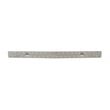
- Microwave vent grille (black) W10701697 (damaged grille can restrict airflow)
A microwave/hood combo is only as “good” as its door safety system and ventilation path. A weak door close, failing interlock switch, or restricted airflow can cause nuisance symptoms (no-starts, inconsistent heating, overheating shutdowns) that feel like the microwave is “bad” even when the core unit is fine.
Last updated: February 2026