Error Codes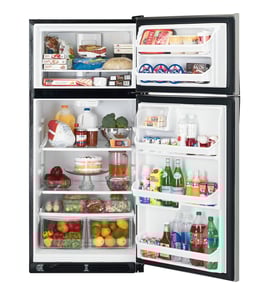





Is GE Cafe considered high end?
Yes. GE Café is widely considered a high-end (premium) appliance line within the GE family; it typically sits above standard GE models in design, finishes, and feature sets. It is separate from your GE GTE16DTNERWW top-mount refrigerator, which is a more traditional, value-focused configuration.
What “high end” usually means for GE Café
Premium lines are defined less by a single feature and more by the overall package. In most kitchens, GE Café is considered high end because it commonly includes:
- Upgraded finishes and styling (often with customizable hardware)
- More advanced temperature management and convenience features
- Higher price points than standard GE models
- Broader “built-in look” options across product categories
- More feature-rich controls and lighting compared to entry-level lines
GE Café vs other GE lines (quick comparison)
| GE line | Market position | Typical focus |
|---|---|---|
| GE (standard) | Mainstream | Practical features, value, broad selection |
| GE Café | Premium | Design-forward styling plus upgraded features |
| GE Monogram | Luxury | Built-in integration, pro-style options, top-tier materials |
Why it matters when you are shopping parts
For parts and repairs, the most important detail is the exact model number, not the “line.” GE Café parts are not automatically interchangeable with standard GE models.
- Always match parts to the full model number on the rating label
- Use the symptom to narrow the system (cooling, ice maker, door seal, controls)
- For cooling airflow issues, the evaporator fan system is a common checkpoint
- For door-related issues, hinges, pins, and gaskets are frequent wear items
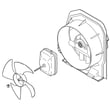
If you are troubleshooting a cooling or airflow complaint on this model, the GE refrigerator evaporator fan motor WR60X31522 is one of the key components that drives cold-air circulation.
Related help
Last updated: January 2026
What are the disadvantages of a top mount fridge?
Top-mount refrigerators like the GE GTE16DTNERWW are reliable and space-efficient, but the main tradeoffs are convenience and features: you bend more to reach fresh foods, the freezer can be harder to organize, and you typically get fewer premium options than bottom-freezer designs.
Common disadvantages (what most owners notice)
- More bending for fresh food: the refrigerator section sits lower, so everyday items are below waist level.
- Freezer organization is basic: top freezers often have fewer bins and less “grab-and-go” layout.
- Fewer built-in features: many top-mount models skip in-door ice and water and advanced controls.
- Less eye-level visibility: it is easier to forget items in lower shelves and crispers.
- Can feel tighter for wide platters: shelf geometry is often simpler than higher-end layouts.
When a top-mount is still the better choice
Top-mount designs are a strong fit when you want straightforward cooling with fewer components to maintain.
| If you prioritize... | Top-mount is usually | Bottom-freezer is usually |
|---|---|---|
| Budget and simplicity | Better | Higher cost |
| Fresh-food access | Less convenient | More convenient |
| Freezer access | More convenient | Less convenient |
| Premium features | Fewer | More |
Quick tips to reduce the downsides
- Keep daily-use items on the upper refrigerator shelves to reduce bending.
- Use clear bins to “zone” foods (deli, snacks, leftovers) for faster visibility.
- Do not block air vents; airflow matters more in compact top-mount layouts.
- If the door does not seal well, fix it quickly to prevent temperature swings and frost.
- For sealing issues on this model, the refrigerator freezer door gasket WR14X27230 is the model-matched replacement.
Why it matters
Most top-mount complaints come down to ergonomics and organization, not cooling performance. If you shop and cook often, the extra bending and lower visibility can increase food waste and make daily use feel less convenient.
Last updated: January 2026
What is the most common problem with GE profile refrigerators?
The most common issue we see across GE Profile refrigerators is a cooling problem: the refrigerator or freezer is warm, temperatures swing, or food spoils early. On the GE GTE16DTNERWW top-mount, the fastest checks are airflow, fan operation, and frost buildup.
What “not cooling” usually means
Cooling complaints typically fall into one of these patterns:
- Fresh food section warm, freezer OK: restricted airflow or a damper issue
- Freezer warm and fresh food warm: fan, sealed system, or control problem
- Temps OK but fluctuate: door sealing, defrost, or sensor/control behavior
- Noisy plus warm temps: fan blade rubbing, failing motor, or ice buildup
Quick checks we recommend first (no parts swapping)
- Confirm the temperature controls are set to normal mid-range settings.
- Make sure vents are not blocked by food packages in the fresh food section or freezer.
- Listen for the evaporator fan; if it is silent when the compressor is running, suspect the fan circuit.
- Check door closing and gasket contact all the way around.
- Look for heavy frost on the freezer back wall; that points to a defrost airflow restriction.
Common causes and the parts that match the symptom
| Symptom | Most likely area | Example model-matched part to check |
|---|---|---|
| Freezer cold, fridge warm | Airflow/damper | Fixed damper WR02X31092 |
| Warm temps, weak/no airflow | Evaporator fan | GE refrigerator evaporator fan motor WR60X31522 |
| Frost buildup, warming over days | Defrost system | Refrigerator defrost heater assembly WR55X31113 |
| Random behavior, no cooling cycles | Controls | Main control board WR55X43825 |
Why it matters
A “not cooling” problem is the most common because it can be caused by simple airflow issues (blocked vents, door not sealing) or by key components like the evaporator fan motor, defrost heater, or control board. Catching it early helps prevent food loss and compressor overwork.
Helpful DIY guidance
For GE-specific steps that often solve the most common complaints, we use these guides:
Last updated: January 2026