 Error Codes




How do I find the right GE part number?
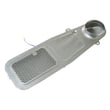
For your GE electric dryer model PFD87ESSV0WW, the right part number comes from matching the model number on the dryer’s ID tag to the exact part listing, then confirming the part by name and location on the dryer (for example, a lint screen or door switch). Use a known match like the dryer lint screen WE16X32537 as a reference point.
Step-by-step: get the correct part number
- Find the model tag on the dryer (commonly inside the door opening, on the door frame, or on the back panel).
- Write the full model number exactly as shown: PFD87ESSV0WW.
- Identify the part you need by function and symptom (no heat, won’t start, door won’t latch, squealing).
- Match the part by part name + part ID (not just a description).
- Compare your old part to the listing: mounting points, wire terminals, and shape.
- If multiple similar parts exist, confirm by where it installs (front panel, blower housing, heater housing, door area).
Common “right part” checks (quick comparison)
| What you’re fixing | What to verify | Example part for this model |
|---|---|---|
| Dryer won’t start when door closes | Door closes firmly; switch lever clicks | Door switch WE04X34281 |
| Clothes not drying well | Lint screen fits correctly; airflow not restricted | Dryer lint screen WE16X32537 |
| Squealing or thumping | Belt tension and pulley movement | Dryer idler assembly WE03X30657 |
| No heat (electric dryer) | Heater circuit parts match terminals and housing | Dryer heater assembly WE11X29790 |
Why it matters
GE often uses similar-looking parts across different dryer series. Matching the exact model PFD87ESSV0WW to the exact part ID prevents ordering a part that fits physically but has different wiring, mounting, or temperature rating.
Pro tip: confirm by symptom first
If you’re unsure which part is actually bad, start with the symptom and the most common causes:
- No heat: heating circuit components and airflow restrictions
- Long dry times: lint screen and venting/airflow
- Won’t start: door switch and control-related issues
Last updated: February 2026
How do I know if my GE dryer heating element is bad?
If your GE PFD87ESSV0WW electric dryer runs but doesn’t heat (or heats weakly), the heating element is a top suspect. We confirm a bad element by checking for a broken coil (visible damage) and by testing the heater circuit for continuity with the dryer unplugged.
Quick symptoms that point to a bad heating element
- Dryer tumbles normally but clothes stay cold and damp
- Heat works briefly, then stops (often after a few minutes)
- Burning smell or a visible hot spot inside the heater housing
- Breaker trips when heat should turn on (can also be wiring or heater short)
- No heat on any cycle that should heat
How we test it (safe, practical method)
- Unplug the dryer (or switch off the breaker). Electric dryers use 240 volts.
- Access the heater area and locate the heater terminals on the dryer heater assembly WE11X29790.
- Pull the wires off the heater terminals (note their positions).
- Set your multimeter to continuity or the lowest ohms setting.
- Touch one probe to each heater terminal:
- Continuity present / low resistance: the element is not open.
- No continuity / OL: the element is bad (open) and needs replacement.
What readings usually mean
| Meter result | What it indicates | Next step |
|---|---|---|
| OL / no beep | Element is open | Replace heater assembly |
| Beep / low ohms | Element likely intact | Check thermostats, airflow, power |
| Continuity to metal housing | Element shorted to ground | Replace heater assembly |
Don’t skip these common “no-heat” checks
Even with a good element, these issues can stop heat:
- House power: dryer can run on 120V but needs full 240V to heat
- Airflow restriction: clogged lint screen or venting can overheat and trip safeties
- Safety thermostats: test the dryer outlet backup thermostat WE04X10190 and inlet backup thermostat WE04X29792 for continuity
- Lint screen condition: clean and inspect the dryer lint screen WE16X32537
Why it matters
A failed heating element is a straightforward fix, but restricted airflow or a tripped safety thermostat can cause repeat failures. Verifying the element and the safety devices together helps restore normal drying and prevents overheating.
Last updated: February 2026
What are common dryer part failures?
On the GE PFD87ESSV0WW electric dryer, the most common part failures involve the heating circuit, airflow safety thermostats, and door or drum-drive components. These issues typically show up as no heat, long dry times, a dryer that will not start, or squealing and thumping noises.
Most common failures we see (and what they look like)
- No heat or weak heat: failed heater, thermostat, or a power supply issue (one leg of 240V missing)
- Long dry times: restricted venting, lint buildup, or a thermostat cycling incorrectly
- Will not start: door switch not closing, control problem, or motor/drive issue
- Squealing or grinding: idler or drum support wear
- Thumping or banging: drum baffle damage or drum support wear
Model-relevant parts to check first
These are common culprits on electric dryers like the PFD87ESSV0WW:
| Symptom | Likely area | Example part for this model |
|---|---|---|
| No heat | Heating circuit | Dryer heater assembly WE11X29790 |
| Overheats or shuts off | Safety thermostats | Dryer outlet backup thermostat WE04X10190 or inlet backup thermostat WE04X29792 |
| Runs but poor airflow | Lint handling | Dryer lint screen WE16X32537 |
| Will not start when door closes | Door interlock | Door switch WE04X34281 |
| Squeals | Belt tension system | Dryer idler assembly WE03X30657 |
Quick checks before you buy parts
- Confirm power: electric dryers need full 240V; a tripped breaker can leave the drum turning with little or no heat.
- Check airflow: clean the lint screen, then verify strong airflow at the outside vent hood.
- Listen for clues: squeal points to the idler; thump can point to a baffle or drum support.
- Inspect the door latch action: if the door switch does not click reliably, starting problems are common.
Why it matters
Most “bad dryer” complaints are really airflow restrictions or heat-safety parts doing their job. Fixing venting and replacing the correct thermostat, heater, or drive component restores drying performance and helps prevent repeat failures.
Last updated: February 2026
What if I can't find my part on Sears PartsDirect?
If you cannot find a part for your GE PFD87ESSV0WW electric dryer, we use your model number and the part description to match the correct replacement, then confirm fit by comparing the part category and where it installs on the dryer.
Fast ways to locate the right part
- Double-check the model number on the dryer label: PFD87ESSV0WW
- Search by the part ID or part number if you have it (example: dryer lint screen WE16X32537)
- Try searching by the symptom (no heat, won’t start, noisy, long dry times)
- Look in the most common wear items first: lint screen, door switch, heater, thermostats, idler
- If you only know what it does, search by the part name (example: “door switch”)
Common “missing part” situations (and what to do)
| What you have | What it usually means | What to try next |
|---|---|---|
| A partial number | One digit/letter is off | Recheck the label and search again |
| A different brand part number | Cross-reference needed | Search by model number first, then filter by category |
| A description only (example: “belt pulley”) | Part name varies by brand | Search by function, then compare photos and location |
| A control/display issue | Part may be listed under controls | Check control board and UI listings |
Why it matters
GE dryers often use similar-looking parts across multiple model series, but mounting points, wiring connectors, and temperature ratings can differ. Matching parts specifically to PFD87ESSV0WW helps prevent wrong-part returns and repeat breakdowns.
Helpful DIY resources
If you are troubleshooting first (before ordering), our what are the main parts of a clothes dryer guide helps you identify which section of the dryer the part belongs to.
Last updated: February 2026





