Installation guide
 Owner’s manual
 Error Codes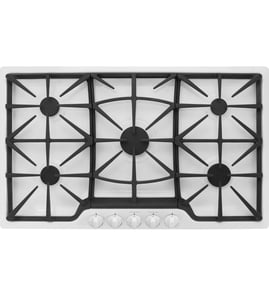

What is the average cost to install a gas cooktop?
For an Electrolux gas cooktop like model E36GC76GPS3, most professional installations typically run $500 to $1,000. Your final price depends on whether the installer must modify the gas line, add or update an electrical connection, or adjust the countertop cutout to match the cooktop’s required clearances.
What usually changes the price
- Gas supply work: extending, rerouting, or adding a shutoff valve
- Electrical work: adding a proper outlet or correcting wiring to meet local code
- Countertop cutout adjustments: resizing or reinforcing the opening
- Ventilation needs: adding or upgrading a range hood or ducting
- Access and labor time: tight cabinets, stone countertops, or hard-to-reach connections
Typical cost breakdown (what you are paying for)
| Item | Typical scope | Typical cost impact |
|---|---|---|
| Basic swap (like-for-like) | Remove old cooktop, connect gas, leak test, set in place | Lower end of range |
| Gas line modifications | New flex connector, shutoff relocation, pipe work | Medium to high |
| Electrical modifications | New circuit/outlet, corrections for grounding/polarity | Medium to high |
| Countertop changes | Cutout resizing, sealing, support changes | Medium to high |
Installation requirements that matter for this model
Electrolux specifies that installation and service be performed by a qualified installer, and the cutout dimensions and clearances are critical for safe fit and operation. We recommend reviewing the exact cutout and clearance requirements in the installation guide.
Why it matters
A correct install is not just about getting the burners to light; it is about safe gas connections, proper clearances to combustibles, and a cutout that supports the cooktop without stress. Those details are what most often drive installation cost.
Last updated: January 2026
Which brand of gas cooktop is best?
The “best” gas cooktop brand depends on your priorities (power, simmer control, reliability, service support, and budget). If you already own an Electrolux gas cooktop like model E36GC76GPS3, the best choice is usually the brand and model that matches your cooking style and fits your existing cutout and gas setup per the E36GC76GPS3 installation guide.
How we recommend choosing a “best” brand
- Performance: look for strong high-heat burners plus a stable low simmer.
- Ease of cleaning: sealed burners and fewer crevices reduce cleanup time.
- Parts and service support: availability of common items like burner heads, igniters, and valves matters long-term.
- Build and ergonomics: sturdy grates, smooth knob action, and stable cookware support.
- Fit and installation requirements: cutout size, gas type (natural gas vs LP), and regulator requirements.
Brand comparison (what “best” usually means)
| What you value most | What to prioritize | What to check before buying |
|---|---|---|
| High heat and fast boiling | Higher BTU output, stable grates | Ventilation and cookware stability |
| Precise simmer | Low flame stability, consistent valves | Ability to hold a very small flame |
| Reliability and value | Proven designs, common replacement parts | Typical cost of igniters, valves, modules |
| Easy maintenance | Sealed burners, removable caps | Cleaning access around burner bases |
Why installation requirements matter (especially when switching brands)
Even a “better” brand can be a bad experience if it does not match your kitchen setup. For cooktops like the Electrolux E36GC76GPS3, proper installation includes using a pressure regulator and meeting gas supply requirements; the unit is designed for natural gas at 4 inches water column manifold pressure, with maximum inlet pressure limits noted in the installation instructions. Use the E36GC76GPS3 installation guide to confirm clearances, cutout details, and gas supply expectations.
Parts support is part of “best” ownership
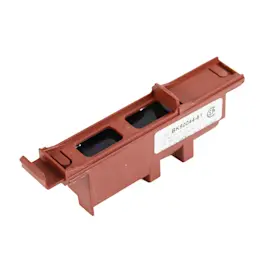
When a cooktop starts clicking, won’t ignite, or has uneven flames, the fix is often a serviceable part. For example, ignition issues can involve the range spark module 808608804 or a burner ignition component, depending on symptoms.
Why it matters
The best brand is the one that delivers the flame control you want and can be installed correctly in your kitchen; long-term, it is also the one you can maintain with readily available Electrolux-compatible parts.
Last updated: January 2026
How do you measure for a gas cooktop replacement?
To measure for a replacement gas cooktop, we measure the countertop cutout (length and depth) and the clearances to the back wall and front edge so the new unit fits and the gas and power routing openings line up. Use the E36GC76GPS3 installation guide dimensions as your reference.
What to measure (in order)
- Cutout length and cutout depth: measure the opening in the countertop, not the cooktop glass/trim.
- Back clearance: distance from the back edge of the cutout to the back wall or backsplash.
- Front clearance: distance from the front edge of the cutout to the front edge of the countertop.
- Cabinet clearance below: confirm there is enough space below the cutout for the cooktop body and gas line.
- Utility routing openings: note where the gas supply and power cable pass through; the install guide calls out openings that must be sealed after routing.
Match the cutout to the installation specs
The E36GC76GPS3 installation instructions call out that the cutout dimensions labeled as critical should be treated carefully because countertop materials vary. A practical approach is to undercut slightly and fine-tune during test-fit.
| Measurement | Where you measure | Why it matters |
|---|---|---|
| Cutout length | Left-to-right inside the opening | Prevents gaps and avoids forcing the cooktop in |
| Cutout depth | Front-to-back inside the opening | Ensures the cooktop sits flat and seals correctly |
| Back clearance | Cutout back edge to wall/backsplash | Prevents interference and heat damage |
| Front clearance | Cutout front edge to counter front | Keeps controls and trim properly supported |
Installation tips that prevent costly mistakes
- Measure in at least two spots (front and back); cutouts are often slightly out of square.
- Record measurements to the nearest 1/16 inch.
- Do not slide the cooktop into the cutout; lifting and lowering helps avoid finish damage.
- Plan access to the gas shutoff valve in the same room as the cooktop.
- Confirm electrical supply is a 120V, 60Hz, grounded circuit (typical requirement for ignition).
Why it matters
A cooktop replacement fails most often because the cutout is even slightly off, or because the back/front clearances do not match the new unit. Measuring the cutout and clearances first helps you avoid countertop rework and ensures safe routing for gas and power.
Last updated: January 2026