Owner’s manual
 Error Codes


What is the most common problem with Samsung refrigerators ice?
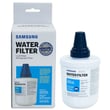
The most common ice problem we see on Samsung refrigerators like model RFG298AARS is an ice maker that stops producing because water cannot reliably reach the ice maker. A clogged water filter is a top cause, and the next most common issues are an “Ice Off” setting, low water pressure, or ice buildup in the ice room.
Quick checks first (no tools)
- Confirm Fridge Ice Off and Freezer Ice Off are not enabled; if either is on, that ice maker will not produce ice.
- Make sure the dispenser is not in Lock mode (controls may not respond as expected).
- Verify the household shutoff valve is fully open and the water line is not kinked.
- Dump old ice and check for clumps; clumped ice can jam the bucket and stop dispensing.
- Power reset: unplug the refrigerator for about 10 minutes, then plug it back in.
Most common causes and what they look like
| Symptom | Most likely cause | What to do next |
|---|---|---|
| No ice at all | “Ice Off” enabled | Turn Ice Off off; allow 24 hours for normal production |
| Slow or hollow cubes | Restricted water flow (often filter related) | Replace filter; flush water line |
| Ice maker cycles but no fill | Low water pressure or frozen fill path | Check supply pressure; inspect for freezing |
| Ice jams in bucket | Clumped ice or auger issue | Break up ice; inspect auger and bucket |
When a part is likely needed
If settings and water supply check out, the failure is often in the ice-making hardware.
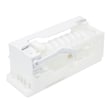
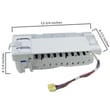
- If the ice maker will not cycle or harvest ice, the refrigerator ice maker assembly da97-07365g is a common fix.
- If ice dispenses poorly or jams frequently, the refrigerator auger motor DA97-05246G or the ice container can be involved.
Why it matters
Ice problems are usually a water-flow or control-setting issue first; fixing those prevents repeat failures and helps protect components like the ice maker assembly and auger motor from strain.
For model-specific control panel icons and operating details (including Ice Off and Lock), use the RFG298AARS manual.
Last updated: February 2026
Why is my freezer icing up underneath the bottom drawer?
On the Samsung RFG298AARS, ice under the bottom freezer drawer almost always happens when warm, moist air leaks in (drawer not fully closed or gasket not sealing) or when defrost water cannot drain and refreezes on the freezer floor. Use the RFG298AARS owner’s manual steps to confirm the drawer is closing and aligned.
Most common causes (and what to check first)
- Freezer drawer not closing completely: packages, an overfilled basket, or a mis-seated upper drawer can hold the door open.
- Door gasket not sealing: gaps, folds, or debris let humid air in and create frost that turns into ice.
- Drain system icing/clogging: defrost water backs up, runs to the bottom, then freezes into a sheet of ice.
- Drawer alignment issue: rails or the door front can sit slightly crooked after removal or cleaning.
- Frequent openings: repeated warm-air exposure accelerates frost buildup.
Quick fix checklist (10 to 20 minutes)
- Empty the lower drawer area enough to see the freezer floor.
- Make sure the upper drawer and lower basket are seated correctly on the rails.
- Inspect the gasket all the way around; wipe it clean with warm water and mild soap, then dry.
- Confirm nothing is preventing full closure; close the drawer firmly and listen for the door alarm behavior described in the manual.
- If ice is already present, unplug the refrigerator and melt the ice with towels and a hair dryer on low (keep heat moving, do not overheat plastic).
If you suspect a drain problem
A frozen or restricted drain typically causes recurring ice on the freezer floor even when the drawer seals well.
| Symptom | More likely cause | What we recommend |
|---|---|---|
| Ice sheet returns in 1 to 3 days | Drain icing/clog | Inspect/clear drain path; consider replacing the drain tube |
| Frost on food and bins | Air leak at drawer/gasket | Clean gasket, reduce overpacking, verify alignment |
| Water/ice only after defrost | Drain issue | Check drain trough and tube for blockage |
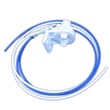
If the drain tube is damaged or won’t clear, replacing the refrigerator drain tube DA97-04049D is a common repair.
Why it matters
Ice buildup under the drawer can block airflow and prevent the freezer drawer from closing properly. That leads to warmer temperatures, more frost, and extra strain on the evaporator fan and defrost system.
Last updated: February 2026
What is the difference between force defrost FD and RD?
On Samsung refrigerator model RFG298AARS, FD and RD are display abbreviations used in the forced defrost and diagnostic modes; they indicate different defrost selections as you step through the service options. Use the exact key sequence and definitions in the RFG298AARS owner's manual for your control panel.
What FD and RD typically indicate
On Samsung French door and bottom-mount designs, forced defrost options are used to melt frost off evaporator coils so airflow and temperatures can recover.
- FD: A forced defrost selection shown on the display during service mode.
- RD: Another forced defrost selection shown on the display during service mode.
- Different selections: They represent different defrost choices (the exact target can vary by control version).
- Not everyday features: These are for troubleshooting, not normal cooling operation.
When forced defrost is useful (and when it is not)
Use forced defrost when you have symptoms that strongly point to frost buildup.
- Fridge section warming but freezer still cold
- Fan noise changes, or airflow feels weak at vents
- Frost or ice on the rear interior panel
- Repeated temperature swings after normal settings are correct
- Water leaking after a defrost event (often tied to a drain restriction)
If you have water pooling or recurring ice buildup, checking the drain path is important; the refrigerator drain tube DA97-04049D is a common replacement part when the drain tube is damaged or restricted.
FD vs RD: what you should expect
| Display code | What it is | What you may notice | What to do next |
|---|---|---|---|
| FD | Forced defrost selection | Unit may stop cooling briefly while heaters melt frost | Monitor temps and airflow after cycle completes |
| RD | Forced defrost selection | Similar behavior; selection differs from FD | Use the manual’s definitions to pick the correct option |
Why it matters
Choosing the correct forced defrost selection helps you restore airflow faster and prevents misdiagnosis. If frost returns quickly, the root cause is usually a defrost system issue, airflow restriction, or a blocked drain.
Last updated: February 2026