 Owner’s manual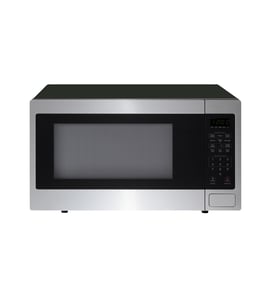




How much clearance for a countertop microwave?
For the Kenmore countertop microwave model 72166993011, plan on at least 3 inches of clearance on both sides and the top, 1 inch at the rear, and keep the front edge of the microwave set back 3 inches or more from the counter edge to reduce tipping risk. See the 72166993011 owner's manual for any model-specific placement notes.
Recommended clearances (quick guide)
- Sides: 3 inches minimum each side
- Top: 3 inches minimum
- Rear: 1 inch minimum
- Front setback: Place the front edge at least 3 inches back from the counter or shelf edge
- Surface: Use a flat, stable, level countertop or shelf
Why clearance matters
Adequate airflow helps prevent overheating and nuisance shutoffs, and proper front setback helps keep the microwave stable when opening the door or pressing the control panel.
Placement checklist before you plug it in
- Confirm the microwave is not boxed in by cabinets or a tight cubby
- Keep vents unobstructed (do not cover side or rear vents)
- Avoid placing it next to heat sources (range, toaster oven, space heater)
- Leave room to open the door fully without hitting a wall or backsplash
- Use a dedicated, properly grounded outlet (avoid extension cords)
Clearance summary table
| Area around microwave | Minimum clearance | What it prevents |
|---|---|---|
| Left side | 3 in. | Restricted airflow, overheating |
| Right side | 3 in. | Restricted airflow, overheating |
| Top | 3 in. | Heat buildup above unit |
| Rear | 1 in. | Blocked rear ventilation |
| Front edge to counter edge | 3 in. or more | Tipping when door opens |
Last updated: January 2026
Do countertop microwaves need venting?
Countertop microwaves like Kenmore model 72166993011 do not need external venting or ductwork; they need open air clearance so the built-in intake and exhaust vents can move cooling air. Keep the vents unblocked and follow the spacing guidance in the 72166993011 owner's manual.
What “venting” means for a countertop microwave
A countertop microwave is designed to cool itself by pulling room air in and pushing warm air out through its cabinet vents.
- No outside vent connection is required (unlike many over-the-range microwaves).
- The unit still needs space around it so heat can escape.
- Blocking vents can cause overheating, weak heating performance, or shutdowns.
Placement and clearance tips we recommend
Use these practical rules any time you place a countertop microwave on a counter or in a cabinet opening.
- Leave open space on the sides and top; do not wedge the microwave tightly between walls.
- Keep the rear and bottom vent areas clear; do not push it flush against a wall if it blocks airflow.
- Do not store items (paper towels, cookbooks, trays) on top that can trap heat.
- Avoid running it inside a closed cabinet unless the cabinet is designed for appliance airflow.
- Keep the air path clean; grease and dust buildup can restrict cooling.
Quick guide: countertop vs. over-the-range venting
| Microwave type | Needs ducting to outside? | Needs open air clearance? |
|---|---|---|
| Countertop (like 72166993011) | No | Yes |
| Over-the-range | Often yes (or recirculating) | Yes |
| Built-in (trim kit style) | No ducting, but requires a designed enclosure | Yes |
Why it matters
Microwaves generate heat in the high-voltage system and cooking cavity. If the cooling airflow is restricted, internal temperatures rise and protective devices can trip. If your microwave runs but does not heat, airflow and overheating-related issues are common starting points; our why is my microwave not heating guide walks through the most likely causes.
Last updated: January 2026
Can you put stuff on top of a countertop microwave?
Yes, you can place light items on top of a Kenmore countertop microwave model 72166993011 as long as you do not block the cooling vents, restrict airflow, or add enough weight to dent the cabinet. For model-specific placement and clearance guidance, follow the 72166993011 owner's manual.
What is safe to store on top
Use the top surface only for lightweight, non-heat-sensitive items that will not slide off.
- Paper towels (single roll)
- Plastic wrap or foil boxes (if they do not cover vents)
- Microwave-safe covers or splatter guards
- Lightweight oven mitts
- A thin rubberized shelf liner or mat for grip
What to avoid (common causes of overheating)
Avoid anything that traps heat, blocks vents, or adds significant weight.
- Heavy appliances (air fryer, toaster oven, stand mixer)
- Stacks of cookbooks or canned goods
- Anything that covers side, rear, or top venting areas
- Items that can melt or deform (candles, some plastics)
- Wet items that can drip into seams or the control area
Quick checklist before you store anything
| Check | What to do | Why it matters |
|---|---|---|
| Vent clearance | Keep vents fully open | Prevents overheating and shutdowns |
| Weight | Keep it light | Avoids cabinet damage and door misalignment |
| Stability | Use a non-slip mat | Prevents items from falling when the door closes |
| Heat | Keep heat-sensitive items off | Top panel can get warm during use |
Why it matters
Countertop microwaves pull cooling air through vents to protect the magnetron, high-voltage components, and internal thermostat. Blocking airflow can lead to poor performance, nuisance shutoffs, or premature part wear.
If your microwave starts running but not heating after airflow issues, use our why is my microwave not heating guide to narrow down likely causes.
Last updated: January 2026
Can you replace a built-in microwave with a countertop?
Yes, you can replace a built-in microwave with a countertop model, but it only works when the cabinet opening, ventilation clearances, and power supply match what the countertop microwave requires. For Kenmore model 72166993011 (a countertop microwave), we recommend following the placement and clearance rules in the 72166993011 owner's manual so the unit can vent heat properly.
What to check before you swap
- Ventilation and clearances: Countertop microwaves must breathe; enclosing them tightly can cause overheating.
- Cabinet opening size: Measure height, width, and depth; allow extra space for airflow.
- Electrical outlet location: Most countertop units plug into a standard outlet; built-in setups may be hardwired or placed where the cord cannot reach safely.
- Support surface: The shelf must be level and strong enough to hold the microwave’s weight.
- Door swing and trim: A built-in trim kit and frame usually will not fit a countertop microwave.
Safe installation approach (recommended)
We recommend treating the countertop microwave as a countertop appliance even if it sits on a shelf.
- Place it on a solid, level surface.
- Maintain open space around the sides, top, and back per the manual.
- Keep the air intake and exhaust openings unobstructed.
- Plug directly into a properly grounded outlet (no extension cords).
Quick comparison: built-in vs countertop
| Feature | Built-in microwave | Countertop microwave (like 72166993011) |
|---|---|---|
| Mounting | Brackets or trim kit | Sits on a surface |
| Venting | Designed for enclosure | Needs open-air clearance |
| Electrical | Often dedicated circuit | Typically standard plug-in |
Why it matters
Microwaves generate heat in the high-voltage system and need consistent airflow to protect components like the magnetron and thermal cutoffs. Poor ventilation is a common reason for “runs but won’t heat” symptoms.
Related troubleshooting help
If your replacement powers on but does not heat, use our guide: why is my microwave not heating.
Last updated: January 2026


