 Installation guide
 Owner’s manual



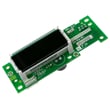
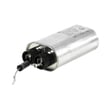

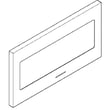
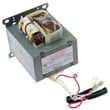
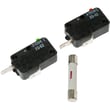
Do all GE over the range microwaves use the same mounting bracket?
No. GE mounting brackets are model-specific, so we recommend using the bracket and hardware designed for your exact microwave model. For the GE ZWL1126SJ4SS, follow the approved mounting method and fastener locations shown in the ZWL1126SJ4SS installation guide to ensure proper fit and safe support.
What to do when replacing a microwave
- Use the mounting bracket (or mounting flanges) specified for the exact model you are installing.
- Match the cabinet cutout, clearances, and support requirements to the installation instructions.
- Use the correct screw locations and quantity; do not reuse a bracket that does not align perfectly.
- Confirm the electrical supply and cord routing match the installation requirements.
- If the new unit is a different style (over-the-range vs. built-in drawer), do not try to adapt brackets.
Why brackets are not interchangeable
Even within the GE family, brackets vary by:
- Chassis width and mounting hole pattern
- Venting and airflow path
- Door or drawer geometry and front trim fit
- Weight distribution and required support points
Quick comparison: over-the-range vs. this model
| Feature | Over-the-range microwave | GE ZWL1126SJ4SS drawer microwave |
|---|---|---|
| Typical mounting | Wall bracket + upper cabinet bolts | Cabinet/wall opening with mounting flanges and screws |
| Venting | Often recirculating or ducted | Built-in drawer venting path per install instructions |
| Fit dependency | Bracket alignment is critical | Cutout dimensions and flange screw points are critical |
Why it matters
Using the wrong bracket can leave the microwave unsupported or misaligned, which can cause vibration, door or drawer closing issues, and cabinet damage. Following the model-specific instructions also helps ensure required clearances and proper grounding.
Last updated: February 2026
Is it worth repairing a GE microwave?
Yes, repairing a GE microwave is usually worth it when the fix is a common, lower-cost issue (power, door/latch, light, fan) or when you have a premium built-in model like GE ZWL1126SJ4SS where replacement and installation costs are higher. For major high-voltage failures, we compare repair cost to replacement value and warranty coverage.
Quick decision checklist
- If the unit is under warranty, schedule service first (repairs often make the most sense).
- If it runs but does not heat, the repair can involve high-voltage parts and professional service.
- If the door does not close or latch correctly, stop using it until the latch issue is corrected.
- If the light fails, the manual directs you to call for service.
- If the power cord is damaged or the unit was dropped, do not operate it.
For model-specific safety and service guidance, use the ZWL1126SJ4SS owner's manual.
Repair vs replace: practical cost guide
Use this as a simple way to decide:
| Situation | Typical recommendation | Why |
|---|---|---|
| Minor symptom (light out, intermittent operation, noisy fan) | Repair | Lower parts and labor; keeps a built-in installation intact |
| Door/latch problem | Repair (do not use until fixed) | Door seals and latches are safety-critical |
| No heat but everything else works | Repair only if cost-effective | Often involves high-voltage components and labor |
| Control/display problems | Compare estimates | Control parts can be expensive on built-in models |
Parts that commonly drive the decision
These are examples of higher-impact parts for this model:
- Microwave magnetron WB27X24683 (common cause of “runs but won’t heat”)
- Power supply board WB27X27465 (power and control-related failures)
- Control panel WB56X25202 (display and keypad issues)
Why it matters for this model
ZWL1126SJ4SS is a drawer-style built-in microwave. Built-in replacements typically add cabinetry fit and installation considerations, so a solid repair often delivers better value than replacing the entire unit. Also, the manual specifies that service and adjustments should be handled by qualified service personnel.
When we recommend professional service immediately
- Burning smell, arcing, or visible damage
- Door is bent, hinges/latches are loose, or seals look damaged
- No-heat symptoms (high-voltage system)
Installation requirements and grounding details are covered in the ZWL1126SJ4SS installation guide.
Last updated: February 2026
What's the average lifespan of a GE microwave?
Most GE microwaves last about 8 to 10 years with normal household use. For the GE ZWL1126SJ4SS built-in (drawer) microwave, lifespan depends heavily on ventilation, clean operation, and avoiding overheating; the magnetron and control system are the most common life-limiting components.
Typical lifespan and what affects it
A microwave’s service life is mainly driven by heat stress, door use, and electrical load.
- Heavy daily use (multiple long cook cycles) shortens lifespan
- Poor airflow around a built-in unit increases internal temperatures
- Slamming the drawer or forcing it closed can damage latches and switches
- Running the microwave empty can overheat key components
- Grease and food buildup can cause arcing and premature failures
What “end of life” usually looks like
These symptoms often show up as a microwave approaches the end of its useful life:
| Symptom | Common cause | What we typically replace |
|---|---|---|
| Runs but does not heat | High-voltage system issue | Microwave magnetron WB27X24683 or microwave high-voltage capacitor WB27X25193 |
| Display dark or unresponsive | Standby mode or control issue | Check settings in the ZWL1126SJ4SS owner’s manual; then inspect power and controls |
| Drawer will not close or start | Door/drawer interlock problem | Latch hook WB10X25192 |
| No power at all | Fuse, cord, or power board issue | Power input checks; sometimes power cord WB18X30442 or power supply board WB27X27465 |
Why it matters
Knowing the average lifespan helps you decide whether to repair or replace. If your ZWL1126SJ4SS is within the typical 8 to 10-year window and the cabinet and drawer are in good shape, replacing a targeted part (like a magnetron, latch, or power board) often restores reliable heating and operation.
Tips to help your microwave last longer
- Keep the cavity and waveguide area clean and dry
- Use microwave-safe cookware and avoid metal trim
- Do not run the unit empty
- Make sure the built-in installation clearances match the ZWL1126SJ4SS installation guide
- If heating performance drops, stop using it and troubleshoot promptly
Last updated: February 2026


