Installation guide
 Owner’s manual
 Error Codes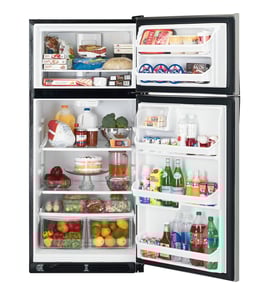



What are the disadvantages of a top mount fridge?
A top-mount refrigerator like the Frigidaire NFTR18X4LB6 is reliable and efficient, but the main disadvantages are less convenient fresh-food access (you bend more), fewer premium organization features, and typically fewer built-in dispenser options than many bottom-freezer designs.
- More bending for fresh food: the refrigerator section is lower, so you reach down more often.
- Freezer is easiest to access: great if you use frozen foods frequently, less ideal if you mainly use fresh foods.
- Organization can be simpler: many top-mount models have fewer adjustable bins, drawers, and specialty zones.
- Fewer built-in dispenser options: many top-mount units do not include an external water or ice dispenser.
- Door sealing and leveling matter more than people expect: if the cabinet is not level, doors can close poorly and cause temperature swings.
Your installation and setup can make a top-mount feel much better in daily use. We recommend:
- Level the cabinet side-to-side and tilt it slightly back so doors self-close.
- Confirm the door seals contact the cabinet on all sides.
- Set controls, then wait 24 hours before making additional temperature adjustments.
- Keep airflow paths clear (do not overpack against vents).
For model-specific setup targets (clearances, leveling, door seal checks), use the NFTR18X4LB6 installation guide.
| Feature | Top mount (like NFTR18X4LB6) | Bottom freezer |
|---|---|---|
| Fresh food access | Lower, more bending | Higher, easier access |
| Freezer access | Eye level | Lower drawer |
| Typical organization | Simpler | Often more flexible |
| Dispenser options | Less common | More common |
Most cooling complaints we see after a move or install are not “bad refrigeration”; they come from setup issues like poor leveling, weak door sealing, or control changes made too quickly. Getting those basics right helps food stay colder, reduces frost, and improves efficiency.
Last updated: January 2026
What should go on the top shelf of your fridge?
In a Frigidaire NFTR18X4LB6 top-mount refrigerator, the top shelf in the fresh food section is a steady-temperature spot that works best for ready-to-eat foods and drinks you grab often. Use it for items that do not need the coldest storage.
We recommend using the top shelf for foods that are already cooked or ready to consume:
- Leftovers in sealed containers
- Deli meats and cheeses (short-term use)
- Yogurt and other grab-and-go snacks
- Beverages (water, soda, juice)
- Prepared foods (meal prep, takeout)
Some foods keep better in colder or more humidity-controlled areas of the refrigerator:
- Raw meat, poultry, and seafood: store on the lowest shelf to reduce drip risk
- Produce: use the crisper drawers and set the crisper humidity controls correctly
- Condiments: store in the door, since door bins see more temperature swings
| Food type | Best location | Reason |
|---|---|---|
| Leftovers, ready-to-eat foods | Top shelf | Convenient access, stable temps |
| Raw meat/seafood | Bottom shelf | Helps prevent cross-contamination |
| Fruits and vegetables | Crispers | Humidity control supports freshness |
| Milk and eggs | Middle shelf (not the door) | More consistent temperature |
| Condiments | Door bins | Less sensitive to temp changes |
Good shelf placement helps food stay fresh longer and reduces spills and cross-contamination. It also supports more even cooling, especially when you wait about 24 hours between temperature control changes as outlined in the NFTR18X4LB6 installation guide.
Last updated: January 2026
Which is better, top mount or bottom mount refrigerator?
A top-mount refrigerator like the Frigidaire NFTR18X4LB6 is usually the better pick when you want simple, reliable cooling with a lower purchase price and fewer complex features to maintain. A bottom-mount is usually better when you want fresh-food items at eye level and easier access to the refrigerator section.
| Feature | Top-mount (freezer on top) | Bottom-mount (freezer on bottom) |
|---|---|---|
| Everyday access | Freezer is easiest to reach | Fresh-food section is easiest to reach |
| Typical cost | Lower | Higher |
| Repair complexity | Often simpler | Often more complex |
| Organization | Basic shelving and bins | Often more drawers and zones |
Top-mount designs are a strong fit when you prioritize value and straightforward operation.
- You use the freezer often (frozen foods are at chest or eye level)
- You want a simpler layout with fewer moving parts
- You want easier installation planning (clearances, leveling, door swing)
- You prefer a lighter door load (less bending stress on hinges over time)
- You want a dependable “set it and forget it” style refrigerator
For model-specific setup details like required clearances, leveling, and door sealing checks, follow the NFTR18X4LB6 installation guide.
Bottom-mount designs usually win on convenience for fresh-food use.
- You cook frequently and access the refrigerator section many times per day
- You want less bending for produce, deli items, and beverages
- You prefer wider refrigerator shelves and more drawer-style organization
- You store heavier items in the refrigerator more than the freezer
“Better” depends on what you open most. If you open the refrigerator door far more than the freezer, a bottom-mount can reduce bending and make daily use easier. If you want lower cost and simpler long-term ownership, a top-mount is usually the smarter buy.
Last updated: January 2026
What is the most common problem with a Frigidaire refrigerator?
Cooling problems are the most common issue we see in Frigidaire refrigerators, including model NFTR18X4LB6. The usual causes are restricted airflow (dirty condenser coils), a failed evaporator fan, or warm air leaking in through a door gasket, which leads to warm temps and long run times.
- Refrigerator warm, freezer OK: airflow restriction between sections or freezer fan issue
- Freezer warm and refrigerator warm: dirty condenser coils, condenser fan problem, or sealed system issue
- Heavy frost on freezer back wall: defrost system failure (heater or thermostat)
- Moisture or sweating around doors: door not sealing, cabinet not level, or gasket not seating
- Set controls correctly; then wait 24 hours after changes (noted in the NFTR18X4LB6 installation guide).
- Confirm the cabinet is level and tilted about 1/4 inch front to back so doors close consistently.
- Check door sealing on all sides; the install checklist calls out full door seal contact.
- Clean condenser coils and keep airflow space around the cabinet.
- Listen for the evaporator fan in the freezer when the compressor is running.
| Problem pattern | Common fix area | Example part for NFTR18X4LB6 |
|---|---|---|
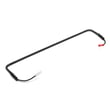
| Frost blanket, weak airflow | Defrost heater | Refrigerator defrost heater 242044008 |
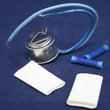
| Frost returns quickly | Defrost thermostat | Refrigerator defrost bi-metal thermostat 5303918202 |
| No freezer airflow sound | Evaporator fan motor/blade | Refrigerator evaporator fan motor 241854301 |
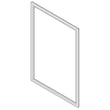
| Warm air leaks at door | Door gasket | Refrigerator gasket 242193213 |
When airflow is blocked or the door does not seal, the refrigerator runs longer, temperatures drift into unsafe ranges, and frost buildup can get worse and further restrict cooling.
Last updated: January 2026