



What is the life expectancy of a GE dishwasher?
A GE dishwasher like model GPT225SSL2SS typically lasts 10 to 12 years. With consistent cleaning and normal household use, many owners see 10 to 15 years; heavy daily use and poor water quality can shorten lifespan.
- Average household use: 10 to 12 years
- Well-maintained units: 12 to 15 years
- Heavy use or hard water: 8 to 10 years
- Key wear areas over time: wash system, controls, door latch components
| Usage and care level | Typical life expectancy | What usually ends the run |
|---|---|---|
| Light to normal use + regular cleaning | 12 to 15 years | Pump/sump wear, rack corrosion, seals |
| Normal use + minimal maintenance | 10 to 12 years | Drain/fill issues, sensor or control faults |
| Heavy use + hard water | 8 to 10 years | Mineral buildup, leaks, motor strain |
- Clean the filter area regularly; trapped debris makes the pump work harder.
- Run a dishwasher cleaner or descale periodically if you have hard water.
- Use the right detergent amount; too much can cause residue and poor rinsing.
- Keep spray arms clear of labels, seeds, and glass fragments.
- Fix small leaks quickly so water does not reach wiring or the control area.
If the dishwasher stops running, won’t respond, or behaves erratically, these are common repair points:
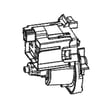
- Dishwasher electronic control board WD21X24676 (no-start, dead controls, random stopping)
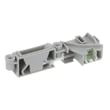
- Machine control fuse WD21X25696 (sudden loss of power to the control)
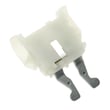
- Door striker assembly WD12X24648 (won’t latch, won’t start because the door switch won’t engage)
Knowing the typical lifespan helps you decide whether to maintain, repair, or replace. If your GPT225SSL2SS is under about 10 years old, a targeted repair is often worthwhile; past 12 years, compare repair cost to replacement value.
Last updated: January 2026
Do you leave the water running the whole time for a portable dishwasher?
Yes. For the GE GPT225SSL2SS portable dishwasher, the faucet must stay turned on during the wash so the unit can fill and maintain water supply; the dishwasher controls when water actually flows into the machine, so it is not running full blast the entire cycle.
A portable dishwasher connects to a kitchen faucet using a unicouple style connector. Once connected and the faucet is on, the dishwasher opens and closes its internal fill valve as needed.
- Turn the faucet on fully after you connect the adapter and lock the connector in place.
- Start the cycle; the dishwasher will draw water only when it needs to fill.
- Keep the faucet on until the cycle ends and the unit finishes draining.
- Turn the faucet off, then disconnect the connector.
- If you stop a cycle mid-cycle, leave the faucet on until the dishwasher has paused and stopped filling.
If you need the sink during the cycle, plan to run the dishwasher when the faucet will not be needed (overnight is common for portable units).
| Situation | Best practice | What can happen if you turn water off early |
|---|---|---|
| Normal wash cycle | Leave faucet on until end | Fill errors, poor cleaning |
| Mid-cycle pause | Keep faucet on while paused | Unexpected refill issues |
| End of cycle | Turn off after it finishes | None |
A loose connection can drip at the faucet or under the sink area.
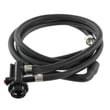
- Unicouple assembly with faucet adapter WD15X30838: the main quick-connect that locks to the faucet adapter.
- Faucet adapt WD01X10383: the threaded adapter that fits many faucet spouts.
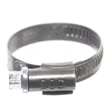
- Clamp WD35X10382: used to secure hoses so they do not seep under pressure.
Portable dishwashers rely on steady water pressure to fill correctly. Leaving the faucet on prevents fill interruptions that can cause long cycle times, poor wash performance, or a no-start condition after a pause.
Last updated: January 2026
What is the most common problem with a GE dishwasher?
The most common problems we see on GE dishwashers like model GPT225SSL2SS are draining issues (clogged filters or drain path), “won’t start” complaints (door not latching, power, or controls), and poor cleaning from restricted water flow. Most fixes start with cleaning and a few quick checks.
- Not draining: Clean the sump area and filters; check the drain hose routing for kinks or a blockage.
- Won’t start: Confirm the door closes firmly and the latch engages; verify the outlet/breaker is good.
- Not cleaning well: Make sure spray arms can spin freely and the filter is not packed with debris.
- Leaks: Look for loose hose connections and signs of overflow.
- Error codes: Use GE-specific code guidance to narrow the failure.
- Power cycle: turn the breaker off for 1 minute, then back on.
- Close the door firmly; listen for a solid latch “click.”
- Pull the lower rack and inspect/clean the filter area; rinse parts under hot water.
- Check the drain hose for kinks and confirm the sink drain/disposal connection is not plugged.
- Run a short cycle and listen: fill sound, wash motor sound, then drain sound.
| Symptom | Common area | Example part for GPT225SSL2SS |
|---|---|---|
| Won’t start or dead panel | Controls/power protection | Machine control fuse WD21X25696 |
| Random stopping, no response | Main control | Dishwasher electronic control board WD21X24676 |
| Overfilling or fill problems | Fill/overflow sensing | Dishwasher case break and overflow sensor WD12X24598 |
Drain clogs and restricted filtration can cause standing water, odors, and poor cleaning; start with cleaning and hose checks before replacing electrical parts. If you’re seeing a code, follow GE dishwasher error codes to target the right circuit or component.
Last updated: January 2026
Is the GE Portable dishwasher any good?
Yes. The GE portable dishwasher model GPT225SSL2SS is a solid choice when you want full-size cleaning performance without a built-in install; it’s generally valued for strong wash results, quiet operation, and a roomy tub, with the main tradeoff being rack layout for oversized items.
A portable unit is “good” when it consistently cleans, connects easily to the faucet, and runs without leaks or error interruptions.
- Cleans baked-on and dried-on soils when you use the right cycle and detergent
- Runs relatively quietly for a kitchen appliance
- Offers a full-size 24-inch style capacity in a portable format
- Rolls to the sink and stores away when not in use
- Uses a unicouple and faucet adapter connection instead of permanent plumbing
| Area | What you’ll likely like | What can be frustrating |
|---|---|---|
| Cleaning | Strong wash coverage on everyday loads | Poor results if filters are clogged or spray arms are blocked |
| Noise | Often quieter than older portables | Louder if something is rattling or the load is unbalanced |
| Racks | Good overall capacity | Large pans and tall items can be awkward depending on rack layout |
| Setup | No cabinet cutout needed | Faucet hookup parts must match your sink threads |
- Keep the filters clean; a clogged filter can cause gritty residue and weak spray.
- Load so spray arms can spin freely; avoid blocking the mid arm.
- Use fresh detergent and the correct amount for your water hardness.
- Run hot water at the sink before starting so the fill begins hot.
- If you see a fault or blinking pattern, use GE electronic dishwasher error codes to narrow it down.
If your “good” experience depends on easy connection and reliable filling, these are the parts we check most often on GPT225SSL2SS:
- Unicouple assembly with faucet adapter WD15X30838 (portable sink connection)
- Faucet adapt WD01X10383 (adapter that mates to certain faucet styles)
- Fine filter WD12X24656 (helps prevent redepositing debris on dishes)
Portable dishwashers are all about convenience. When the hookup is secure and the filtration system stays clean, you get built-in style results without remodeling, and you reduce re-washing and water waste.
Last updated: January 2026





