 Installation guide
 Owner’s manual


What is the average lifespan of a GE microwave?
Most GE microwaves average about 9 years of service life. For a built-in model like GE ZSC2201NSS01, heavy daily use, poor airflow around the cabinet, and door-switch wear can shorten lifespan; consistent cleaning and correct installation clearances help it reach the typical range.
Typical lifespan ranges (what we see most often)
- Average: ~9 years
- Common range: 7 to 10 years
- Heavy-use homes: 5 to 7 years (multiple cook cycles per day)
- Light-use homes: 10+ years
What affects lifespan the most
- Door use and slamming: stresses the interlock system (a common failure point)
- Ventilation and heat buildup: built-in units need proper cabinet clearances
- Keeping the cavity clean: prevents arcing and damage around the waveguide area
- Power quality: frequent surges can stress the control board
- Running empty or using metal incorrectly: can damage internal components
Quick checks that help a microwave last longer
- Wipe spills promptly; keep the ceiling and sidewalls clean.
- Keep the door closing smoothly; do not force it shut.
- Use microwave-safe cookware and avoid running the unit empty.
- If you see sparking or burn marks, stop using it until the cause is corrected.
- Confirm the built-in opening and support match the requirements in the installation guide.
Common “end-of-life” symptoms and likely areas
| Symptom | What it often points to | Example part on this model page |
|---|---|---|
| Runs but does not heat | High-voltage circuit issue | Microwave high-voltage transformer WB17X10030 |
| Dead display or intermittent power | Control or power supply issue | Microwave electronic control board WB27X11019 |
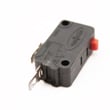
| Won’t start, door error, or stops when door moves | Door interlock switch/latch alignment | Primary switch WB24X10047 |
| Loud hum or unusual noise | Motor or internal component wear | Circulating motor WB26X10182 |
Why it matters
Knowing the typical lifespan helps you decide whether to troubleshoot and replace a part (like a door switch or control board) or plan for replacement when multiple major components start failing close together.
Last updated: February 2026
Can you convert a countertop microwave to a built-in microwave?
Yes, but only if your specific countertop microwave is designed for built-in use with an optional built-in trim kit made for that exact model. Without the correct trim kit and required clearances, a countertop unit should not be installed as a built-in.
What “convert to built-in” really means
A countertop microwave does not get “converted” internally; it gets installed into a cabinet opening using a manufacturer-approved trim kit that provides:
- Proper airflow and ventilation spacing
- A finished, built-in look (trim frame)
- Correct mounting support and alignment
If a trim kit is not listed for your countertop model, treat it as countertop-only.
Built-in installation rules to follow (important)
For GE built-in models like ZSC2201NSS01, the installation requirements are specific. Key points to plan around include:
- The unit must be installed in a cabinet that is firmly attached to the house structure.
- It cannot be installed in an island, peninsula, or below a countertop.
- The oven must be installed at least 36-3/4 inches above the floor.
- The mounting surface must support the cabinet load plus the appliance weight and additional load.
Use the installation guide for the exact cutout, clearance, and electrical requirements for your cabinet.
Quick comparison: countertop vs built-in
| Feature | Countertop microwave | Built-in microwave (or trim-kit install) |
|---|---|---|
| Cabinet cutout required | No | Yes |
| Ventilation engineered for enclosure | No | Yes |
| Finished trim/frame | No | Yes |
| Approved mounting method | Countertop feet | Brackets and trim kit or built-in chassis |
Why it matters
Built-in installations depend on controlled airflow and secure mounting. Installing a countertop microwave in a cabinet without the correct trim kit can lead to overheating, poor performance, and unsafe installation conditions.
If you are installing GE ZSC2201NSS01 as a built-in
ZSC2201NSS01 is already a built-in style unit, so you should follow the cabinet and clearance requirements in the ZSC2201NSS01 owner's manual and the installation instructions rather than trying to adapt it like a countertop model.
Last updated: February 2026
What are the disadvantages of an inbuilt microwave?
Built-in microwaves like the GE ZSC2201NSS01 look seamless, but the main disadvantages are higher total cost, tighter fit requirements, and more involved service access. If the unit fails, replacement options are limited by the cabinet cutout and trim, so swaps can be more time-consuming than with a countertop microwave.
Common disadvantages to plan for
- Higher upfront cost: The microwave, trim, and installation materials often add up.
- More complex installation: Built-ins must be secured correctly and aligned to the cutout; see the installation guide.
- Harder replacement later: You typically need a unit that matches the existing opening and trim style.
- Service access can be tighter: Built-ins may require partial removal from the cabinet for diagnosis.
- Ventilation and heat management: Poor airflow around a built-in can shorten component life.
- Ergonomics: Under-counter installs can mean bending; higher installs can be awkward for hot liquids.
Built-in vs countertop: quick comparison
| Feature | Built-in microwave (like ZSC2201NSS01) | Countertop microwave |
|---|---|---|
| Installation | Cutout, mounting, alignment required | Plug in and place |
| Replacement | Must match opening and trim | Easy to swap |
| Service access | Often requires removal | Usually accessible |
| Look | Integrated, custom | Visible appliance |
Why it matters for safety and daily use
Built-in placement changes how you handle hot food and liquids. For example, superheated liquids can boil over suddenly when disturbed, so placement at a comfortable height and careful handling reduces burn risk. Our owner's manual also covers safe cookware and normal operating sounds so you can avoid issues like arcing and overheating.
Tips to reduce the downsides
- Confirm cabinet cutout and electrical requirements before ordering or replacing.
- Keep the cooking cavity and waveguide area clean to prevent arcing.
- Avoid running the microwave empty; it can overheat internal components.
- Use only microwave-safe cookware and avoid metal trim.
- If the door does not close or latch smoothly, stop using it until the latch system is checked.
Last updated: February 2026
What are common problems with GE profile microwaves?
Common problems we see with GE Profile-style microwaves like the GE ZSC2201NSS01 include running but not heating, not powering on, arcing (sparks) in the cavity, and door or control issues that prevent the oven from starting. Many of these symptoms trace back to door interlock switches, high-voltage components, or control boards.
Most common symptoms and what they usually point to
- Runs but does not heat: high-voltage circuit issue (capacitor, transformer, or related components)
- Dead, no display, no response: power supply problem, fuse/thermal protection, or control board issue
- Starts then stops when the door moves: door latch or interlock switch problem
- Arcing or burn marks: metal/foil contact, damaged waveguide cover (mica), or food splatter buildup
- Turntable not rotating: turntable motor/drive issue or tray support problem
Quick checks we recommend first
- Confirm safe operation: never defeat the door safety interlocks; the manual warns against operating with the door open or with door damage. Use the owner's manual.
- Rule out “normal” behavior: clicks and fan cycling during cooking can be normal because the control turns components on and off.
- Stop arcing immediately: press CLEAR/OFF and correct the cause (foil, metal rack/cookware, twist ties, gold-rimmed dishes, or recycled paper towels with metal fibers).
- Inspect the cavity: look for grease buildup and splatter around the waveguide area.
Parts that commonly solve these problems (when diagnosis confirms)
If troubleshooting points to a failed component, these model-matched parts are commonly involved:
| Symptom | Common part area | Example model-matched part |
|---|---|---|
| Won’t start, door-related | Door interlock circuit | Primary switch WB24X10047 or monitor switch WB24X25397 |
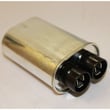
| Runs but no heat | High-voltage circuit | Drive capacitor WB27X11033 or microwave high-voltage transformer WB17X10030 |
| Arcing near side wall | Waveguide protection | Microwave waveguide cover WB06X10828 |
| Touchpad or logic issues | Controls | Microwave electronic control board WB27X11019 |
Why it matters
Microwave door interlocks and high-voltage parts are safety-critical. Correct diagnosis prevents repeat failures (like repeated door-switch damage) and helps restore proper heating, sensor cooking performance, and reliable start/stop operation.
Last updated: February 2026


