Error Codes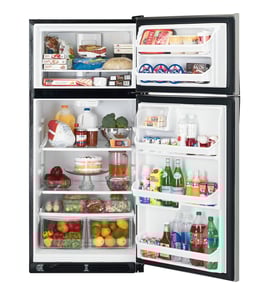

What are the disadvantages of a top mount fridge?
Top-mount refrigerators like the Whirlpool WRT318FZDB09 are reliable and space-efficient, but the main tradeoffs are convenience and features: you bend more to reach fresh food, the freezer can feel less organized, and many top-mount designs skip built-in dispenser options.
- Fresh-food access is lower: you typically bend more to reach everyday items like produce and drinks.
- Freezer organization is simpler: fewer bins and dividers than many bottom-freezer styles.
- Fewer premium features: external water and ice dispensers are less common on top-mount models.
- Less “eye-level” storage: wide shelves can make it easier for items to get lost in the back.
- Door-swing clearance matters: in tight kitchens, door clearance can limit access to drawers and shelves.
| Feature | Top-mount (like WRT318FZDB09) | Bottom-freezer | Side-by-side |
|---|---|---|---|
| Fresh-food ergonomics | Lower | Higher | Medium |
| Freezer organization | Basic | Often best | Medium |
| Dispenser availability | Less common | Common | Very common |
| Footprint | Usually compact | Similar | Often wider |
- Put everyday items at waist to chest height on the middle shelves.
- Use clear bins to create “zones” (snacks, lunch items, leftovers).
- Keep the freezer efficient by checking airflow and listening for fan noise; a weak fan can worsen uneven temps (see how to fix your evaporator cooling fan).
- If you notice warm spots or inconsistent temperatures, checking the temperature sensor is a common next step (see thermistor, refrigerator W11438736).
Most “disadvantages” are really usability issues. If your priority is easy access to fresh food and more built-in features, a bottom-freezer style often feels better day to day. If you want a simpler layout and typically lower cost to own, a top-mount can be a strong fit.
Last updated: February 2026
What should go on the top shelf of your fridge?
In a Whirlpool top-mount refrigerator like model WRT318FZDB09, we recommend using the top shelf for ready-to-eat foods (items you will not cook again), because it helps reduce the chance of raw-meat drips or cross-contamination reaching them.
- Leftovers in sealed containers
- Ready-to-eat deli meats and prepared foods
- Yogurt, soft cheeses, and other dairy snacks
- Washed fruit (in a container) and grab-and-go items
- Drinks and packaged foods that will be eaten as-is
Raw proteins belong lower in the refrigerator so any leaks cannot drip onto ready-to-eat foods.
- Raw poultry (highest risk)
- Raw ground meat
- Raw seafood
- Uncovered foods (more odor transfer and drying)
| Fridge area | Best use | Why |
|---|---|---|
| Top shelf | Ready-to-eat foods, leftovers | Helps protect foods you will not reheat |
| Middle shelves | Dairy, eggs, beverages | Stable temps and easy access |
| Bottom shelf | Raw meat/seafood (on a tray) | Contains leaks and drips |
| Crispers | Produce | Helps manage humidity |
| Door bins | Condiments, juices, butter | Warmest area; frequent temp swings |
Using the top shelf for ready-to-eat foods is a simple food-safety habit. It also helps keep odors down and makes it easier to rotate leftovers so they get eaten before they spoil.
If you are troubleshooting cooling consistency (warm top shelf, freezing items, or temperature swings), start with airflow and sensing components such as the thermistor, refrigerator W11438736 and the refrigerator evaporator fan motor WP2315539.
Last updated: February 2026
Is 35dB quiet for a fridge?
Yes. 35 dB is considered quiet for a refrigerator, including a Whirlpool top-mount like model WRT318FZDB09. Most modern fridges typically run in the low-to-mid 30 dB range up into the 40s, so 35 dB usually blends into normal household background noise.
A 35 dB refrigerator is usually a soft, steady hum that is easy to ignore in a kitchen.
- Similar to a quiet library or a whisper at a distance
- You may notice it more at night when the house is silent
- Short bursts of louder sound can still happen during defrost or when the compressor starts
- Fan noise can be more noticeable than compressor noise in some situations
Even if the spec says 35 dB, real-world conditions can amplify sound.
- Fridge not level; cabinet can vibrate against the floor
- Items on top of the refrigerator rattling
- Ice maker cycling (if equipped)
- Evaporator fan hitting ice buildup or a loose cover
- Condenser area touching a wall or cabinet
If you suspect a fan-related noise, the refrigerator evaporator fan motor WP2315539 and refrigerator evaporator fan blade WP2163777 are common noise-related parts to inspect for wear, rubbing, or imbalance.
- Confirm the refrigerator is level front-to-back and side-to-side
- Pull the unit slightly away from the wall to prevent contact vibration
- Secure loose bins, shelves, and items stored on top
- Listen for where the sound is loudest (freezer area often points to the evaporator fan)
| Noise level | What it usually means | Typical perception |
|---|---|---|
| 30 to 35 dB | Very quiet operation | Soft background hum |
| 36 to 42 dB | Normal for many fridges | Noticeable in a quiet room |
| 43 to 47 dB | On the louder side | More obvious cycling sounds |
Lower noise usually indicates smoother airflow and fewer vibration issues. If the sound suddenly increases, it often points to a leveling problem, a loose panel, or a fan issue that is worth addressing before it causes cooling problems.
Last updated: February 2026
What brand of refrigerator has the least problems?
Whirlpool, GE, and Bosch tend to have the fewest day-to-day problems overall; for a simpler, lower-repair experience, we also recommend choosing a basic top-mount design like the Whirlpool WRT318FZDB09 with fewer features that commonly fail (especially ice maker and water dispenser components).
In real-world service patterns, reliability is driven as much by design simplicity as the logo on the door.
- Whirlpool: strong parts availability and straightforward designs
- GE: generally solid cooling systems and wide service coverage
- Bosch: good build quality, typically fewer nuisance issues
- Sub-Zero (premium): long service life, but higher purchase and repair costs
If your goal is fewer repairs, prioritize fewer moving parts and fewer water connections.
- In-door ice makers and dispensers (valves, tubes, leaks, freezing)
- Complex electronic controls and extra sensors
- Door-in-door and motorized features
- Crowded condenser areas that are hard to keep clean
- Poor door sealing (warm air leaks cause frost and temperature swings)
| Choice | Typical reliability outcome | Why |
|---|---|---|
| Basic top-mount | Fewer service calls | Simple airflow and fewer water features |
| Bottom-freezer | Moderate | More parts and tighter packaging |
| French door with dispenser | Most service calls | More doors, more seals, more water/ice parts |
On Whirlpool top-mount models like WRT318FZDB09, the most common “problem” complaints are cooling noise, warm temps, frost, or water leaks. These checks usually narrow it down fast:
- Verify doors close and seal fully; inspect the gasket for gaps
- Set temps to mid-range and allow 24 hours to stabilize
- Listen for the evaporator fan; a failed fan can cause warm fridge temps
- If you have an ice maker, confirm water supply is on and not kinked
- Check for water under the unit (often a drain or water line issue)
Helpful resources we use:
A “reliable” refrigerator is usually one that keeps stable temperatures with minimal add-ons. Fewer ice and water parts also means fewer leak points, fewer clogs, and fewer no-ice/no-water service calls.
Last updated: February 2026
What is the most common problem with whirlpool refrigerators?
The most common Whirlpool refrigerator problem is a cooling complaint (fresh food too warm, freezer too warm, or temperature swings). On a Whirlpool WRT318FZDB09 top-mount refrigerator, the most frequent root causes are airflow restrictions (frost buildup or blocked vents) and heat-transfer issues (dirty condenser coils), followed by fan or temperature-sensing failures.
- Confirm the freezer and refrigerator vents are not blocked by food packages.
- Set temperatures to normal mid-range settings and wait 24 hours for stabilization.
- Clean condenser coils and the area around the condenser (dust and pet hair reduce cooling).
- Make sure doors close fully and the gasket seals all the way around.
- Listen for the evaporator fan running when the compressor is on.
- Check for heavy frost on the freezer back wall (often points to a defrost problem).
| Symptom | Most common cause | What to check next |
|---|---|---|
| Fridge warm, freezer cold | Poor airflow from freezer to fridge | Frost buildup, blocked vents, weak evaporator fan |
| Both sections warm | Heat not being removed | Dirty condenser coils, condenser airflow, compressor running |
| Noisy humming or rattling in freezer | Fan issue | Fan blade rubbing ice, worn fan motor |
| Water under fridge or inside fridge | Drain or water line issue | Defrost drain, water tube connections |
If your checks point to a fan or sensor issue, these model-matched parts are common fixes:
- Refrigerator evaporator fan motor WP2315539 (moves cold air through the freezer and into the fresh food section)
- Refrigerator evaporator fan blade WP2163777 (can crack or rub if iced up)
- Thermistor, refrigerator W11438736 (helps the control track temperature accurately)
Cooling problems usually get worse over time. Restoring proper airflow and heat removal helps protect food, reduces run time, and prevents icing that can damage the evaporator fan area.
For display codes or diagnostic indicators, use Whirlpool refrigerator error codes.
Last updated: February 2026
What's the average lifespan of a whirlpool refrigerator?
Most Whirlpool refrigerators, including top-mount models like WRT318FZDB09, typically last 10 to 18 years. We see the longest life when the refrigerator maintains steady temperatures, has good airflow around it, and gets basic upkeep like condenser cleaning and door-seal care.
In normal household use, these are realistic expectations for a Whirlpool refrigerator:
- Average: 10 to 18 years
- Often replaced around: 12 to 15 years (performance or efficiency reasons)
- Can reach: 18+ years with consistent maintenance and stable conditions
| Condition | What you’ll usually see | Why it matters |
|---|---|---|
| Clean condenser area, good ventilation | Longer compressor life | Less heat stress on sealed system |
| Doors seal tightly | Better temps, less run time | Reduces wear and frost issues |
| Frequent power outages/surges | Shorter component life | Can stress controls and compressor |
These issues commonly reduce life expectancy on top-mount refrigerators:
- Dirty condenser area causing high operating temperatures
- Torn, warped, or loose door gaskets letting warm air leak in
- Heavy frost buildup from air leaks or door left ajar
- Weak airflow from an evaporator fan problem
- Repeated overloading (packed tight so air cannot circulate)
A few simple habits make a measurable difference:
- Keep food from blocking vents in the fresh food and freezer sections
- Keep the cabinet level so doors self-close and seal consistently
- Clean dust and pet hair from the condenser area regularly
- Check for gasket gaps; a thin paper strip should drag slightly when pulled
- Address unusual noises early (fan rubbing, clicking, or buzzing)
If your WRT318FZDB09 starts warming, running constantly, or making new noises, these model-matched parts are common suspects:
- Refrigerator evaporator fan motor WP2315539
- Thermistor, refrigerator W11438736
- Refrigerator door gasket (white) W10861499
A refrigerator that runs longer each day to hold temperature wears out key components faster (especially the compressor and fans). Keeping airflow clear and seals tight reduces run time, improves food safety, and helps your Whirlpool refrigerator reach its full service life.
Last updated: February 2026