 Owner’s manual
 Error Codes



How to look up AC model number?
For a Goodman split-system outdoor unit like model CKL42-1A, we look up the model number on the unit’s rating plate (data tag). On most outdoor condensers, that tag is on the cabinet side panel or inside the service access panel; once you find it, use the exact Model or M/N value when searching parts in the owner's manual.
Where to find the model number on an outdoor condenser
Check these common locations on a split-system outdoor unit:
- Outside cabinet side panel (often near the refrigerant line connections)
- Inside the electrical/service access panel (remove screws, then look for the label)
- Near the control box area, close to the contactor and wiring diagram label
- On the back panel if the unit is installed tight to a wall on one side
What the label looks like and what to write down
The rating plate usually includes several fields. Copy them exactly (letters, numbers, and dashes).
| Label field | What it means | Why we need it |
|---|---|---|
| Model / M/N | Model number (example: CKL42-1A) | Ensures the correct parts list and diagrams |
| Serial / S/N | Serial number | Helps identify production run details |
| Electrical (V/PH/Hz, MCA, MOCP) | Power requirements | Helps confirm safe, correct electrical parts |
Tips to avoid ordering the wrong part
These quick checks prevent the most common mix-ups:
- Match the model number character-for-character (including dashes)
- Use the outdoor unit model number (not the thermostat or indoor air handler)
- If the label is faded, take a clear photo and zoom in to confirm characters
- If you are comparing parts like a contactor or fan blade, match the part description and mounting style, not just the size
Why it matters
Goodman outdoor units can look similar across model families, but parts like a contactor, condenser fan blade, or rubber grommet can vary by model and electrical rating. Using the exact model number keeps your repair compatible and safe.
Last updated: February 2026
How to tell AC tonnage by model number?
For the Goodman CKL42-1A split-system outdoor unit, the “42” in the model number indicates about 42,000 BTU/hr, which equals 3.5 tons (42,000 ÷ 12,000 = 3.5). We use this BTU-to-tons conversion to estimate cooling capacity from common model-number sizing codes.
Quick tonnage math (what to look for)
Many central AC model numbers include a two-digit capacity code that represents BTU in thousands.
- Find the two-digit number in the model number (often 18, 24, 30, 36, 42, 48, 60)
- Convert to BTU/hr by adding three zeros (42 becomes 42,000 BTU/hr)
- Divide BTU/hr by 12,000 to get tons
- Round to the nearest half-ton when comparing to equipment listings
- Confirm the exact rated capacity on the unit data plate or in the owner's manual
Common capacity codes (BTU to tons)
| Model code | Approx. BTU/hr | Approx. tons |
|---|---|---|
| 24 | 24,000 | 2.0 |
| 30 | 30,000 | 2.5 |
| 36 | 36,000 | 3.0 |
| 42 | 42,000 | 3.5 |
| 48 | 48,000 | 4.0 |
| 60 | 60,000 | 5.0 |
Why it matters
Tonnage affects comfort and operating cost. If the outdoor unit tonnage does not match the indoor coil/air handler and ductwork, you can see issues like poor humidity control, short cycling, coil freeze-ups, or higher energy use.
Related parts that often come up during AC capacity or performance issues
If you are troubleshooting weak cooling or frequent cycling on CKL42-1A, these model-matched parts are commonly involved:
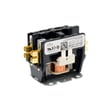
- Central air conditioner contactor CONT2P025024VS (controls power to the compressor and condenser fan)
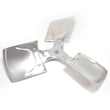
- Central air conditioner condenser fan blade B1086771S (moves air across the condenser coil)
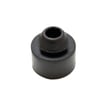
- Grommet B1339530 (helps isolate vibration and protect wiring/tubing pass-throughs)
Last updated: February 2026
What AC parts are most commonly replaced?
For a Goodman CKL42-1A split-system outdoor unit, the most commonly replaced parts are the electrical start/control parts and the outdoor fan components because they handle high heat, vibration, and frequent cycling. Use the owner's manual to match symptoms to the correct part and wiring.
Most common replacements (and what they do)
- Contactor: switches high voltage to the compressor and condenser fan when the thermostat calls for cooling
- Capacitor (not listed in the parts shown here): helps start and run the compressor and fan motor
- Condenser fan blade: moves air through the outdoor coil to reject heat (vibration or impact can damage blades)
- Fan motor (not listed in the parts shown here): spins the fan blade; can fail from heat or worn bearings
- Grommets and vibration isolators: reduce vibration and protect wiring/tubing from rubbing
Parts we commonly see ordered for this model
These are examples of frequently replaced items available for Goodman CKL42-1A:
| Part | What you might notice | Typical reason to replace |
|---|---|---|
| Central air conditioner contactor CONT2P025024VS | Outdoor unit will not start, clicking, intermittent cooling | Pitted/burned contacts, coil failure |
| Central air conditioner condenser fan blade B1086771S | Loud vibration, wobble, poor airflow | Bent blade, cracked hub |
| Grommet B1339530 | Rattling, rubbing wires/lines, vibration noise | Worn or missing isolator |
Quick checks before you order a part
- Turn off power at the disconnect and breaker before opening the outdoor unit.
- Confirm the thermostat is calling for cooling and the indoor blower is running.
- Look for obvious issues: loose spade connectors, burned wiring, debris blocking airflow.
- If you suspect an electrical part, test safely with a meter (resistance/voltage as appropriate).
- Compare the old part’s markings and mounting style to the replacement listing for compatibility.
Why it matters
Replacing the correct wear part (especially a contactor or fan blade) restores safe operation and protects expensive components like the compressor from hard-starting, overheating, and repeated short cycling.
Last updated: February 2026
What is the average lifespan of a Goodman AC unit?
A Goodman central AC unit typically lasts 12 to 15 years. With correct installation, clean airflow, and yearly maintenance, many systems reach 15 to 20 years. For model-specific care and service guidance for your Goodman CKL42-1A outdoor unit, use the CKL42-1A owner's manual.
Typical lifespan ranges (what to expect)
Most split-system outdoor units fall into these real-world ranges:
| Condition | Typical lifespan | What usually shortens life |
|---|---|---|
| Average use and basic maintenance | 12 to 15 years | Dirty coils, low airflow, electrical wear |
| Well maintained, normal climate | 15 to 20 years | Poor installation, chronic refrigerant issues |
| Harsh conditions (coastal, extreme heat, heavy runtime) | 10 to 14 years | Corrosion, overheating, frequent cycling |
What makes a Goodman AC last longer
We see the biggest lifespan gains when these basics are handled consistently:
- Keep the outdoor condenser coil clean and unobstructed (leaves, lint, grass clippings).
- Replace or clean indoor air filters on schedule to protect airflow and compressor health.
- Maintain proper clearance around the outdoor unit for ventilation.
- Schedule annual inspection and tune-up (electrical checks, coil condition, refrigerant performance).
- Address unusual noises or hard starts early to prevent compressor and contactor damage.
Parts that commonly affect reliability
On a CKL42-1A outdoor unit, these parts often show wear as the system ages:
- Central air conditioner contactor CONT2P025024VS (can cause no-cool or intermittent starts)
- Central air conditioner condenser fan blade B1086771S (damage can reduce airflow and overheat the system)
- Grommet B1339530 (helps reduce vibration and wear on mounted components)
Why it matters
Once an AC gets into the 12 to 15 year range, small efficiency losses and repeated electrical or airflow problems can add up. Staying ahead of airflow restrictions and electrical wear helps protect the compressor, which is the most expensive component in the outdoor unit.
Last updated: February 2026





