Owner’s manual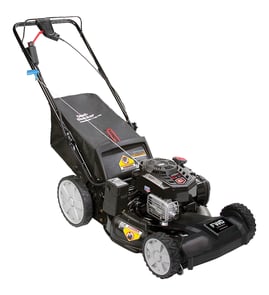



How do I find my Craftsman model number?
On a Craftsman walk-behind mower like model 917376544, the model number is typically printed on a sticker or metal tag on the mower deck or frame, usually near the rear wheels or the handle mounting area. Use the exact model number to match the correct parts list and diagrams in the 917376544 owner's manual.
Where to look on a walk-behind mower
Check these common spots first:
- Top of the mower deck near the engine (often close to the oil fill or spark plug side)
- Rear of the deck near the discharge opening or rear door
- Side of the deck near a wheel height-adjuster bracket
- Frame area where the handle bolts to the deck
- Under the rear bagger door (if your mower has a grass bag)
What the tag looks like (and what to write down)
Most Craftsman tags include multiple identifiers. Record them exactly as shown:
- Model number (example: 917376544)
- Product number or item number (if listed)
- Serial number (helps confirm production run)
- Engine model/type/code (useful for engine-specific parts like air filters and carburetor items)
Quick ID checklist
Use this table to avoid ordering the wrong part.
| What you find | What it’s used for | Example format |
|---|---|---|
| Model number | Mower chassis and deck parts | 917376544 |
| Serial number | Confirms exact build/version | Letters and numbers |
| Engine model/type/code | Engine tune-up and fuel parts | Varies by engine maker |
Why it matters
Craftsman walk-behind mowers can look similar across years, but parts like the blade, drive belt, and transmission components can differ by model and production run. Using the correct model number helps us match the right diagrams and parts the first time.
Last updated: January 2026
Is it cheaper to repair or replace a lawn mower?
For a Craftsman walk-behind mower like model 917376544, it’s usually cheaper to repair when the problem is a wear item (blade, belt, fasteners). Replacement makes more sense when major systems fail (engine or transmission) or when repair costs reach about half the price of a comparable new mower.
Quick rule of thumb
- Repair if the mower starts and runs well and the fix is a maintenance part.
- Replace if the engine has low compression, heavy smoking, or major internal damage.
- Replace if the self-propel system needs multiple major parts and labor adds up fast.
- Repair if the deck and handle structure are solid (no severe rust-through or cracks).
- Replace if you need repeated repairs every season and reliability is the main goal.
Common repairs that are typically cost-effective
These are the fixes we see most often that keep a mower like 917376544 going for much less than a new unit:
- Replace a dull or bent blade (poor cut, vibration)
- Replace a worn drive belt (self-propel slips or stops)
- Replace damaged discharge parts (clippings blow back, unsafe discharge)
- Tighten or replace hardware after blade service
Helpful model-specific examples:
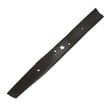
- Blade: husqvarna lawn mower 22-inch deck 3-in-1 blade 532421825
- Drive belt: lawn mower ground drive belt 532196853
When replacement is usually the better value
Major component failures can quickly exceed the mower’s value, especially on older walk-behind mowers:
| Situation | Typical best choice | Why |
|---|---|---|
| Blade or belt issue | Repair | Low parts cost, fast DIY fix |
| Transmission assembly issue | Often replace (or compare costs carefully) | High part cost and labor |
| Engine internal problem | Replace | Repair cost often rivals a new mower |
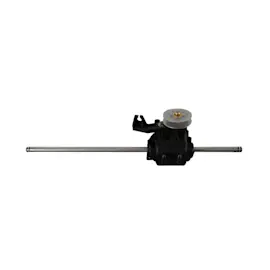
If the self-propel system is the issue, compare the cost of a transmission to the mower’s overall condition. One high-cost part can be worth it only if everything else is in great shape.
Why it matters
A mower that’s mechanically sound but needs routine parts (blade, belt, deflector) is usually a smart repair. Replacing the mower becomes the better long-term investment when reliability drops and big-ticket components drive the total cost up.
What to check before you decide
Use the 917376544 manual to confirm maintenance intervals and safe service steps, then evaluate:
- Engine starts easily and runs smoothly
- No excessive vibration after blade inspection
- Self-propel engages consistently (if equipped)
- Deck is not rusted through
- Wheels and height adjusters hold position
Last updated: January 2026
What are the most common issues with 917376544?
For the Craftsman 917376544 22-inch, power-propelled mower, the most common problems we see are drive system issues (won’t self-propel or slips), poor cutting or uneven cut, and discharge or bagging problems. Many of these are fixed with basic adjustments, cleaning, or replacing wear parts listed in the owner's manual.
Common problems and what they usually point to
- Self-propel won’t move or is weak: worn or stretched drive belt, cable out of adjustment, or transmission wear
- Uneven cut or poor cut quality: dull/bent blade, deck packed with wet grass, cutting height set unevenly
- Clumping or poor bagging: clogged deck or chute, damaged deflector/door, grass bag frame not seated
- Excess vibration: blade damage, loose fasteners, debris wrapped around the blade adapter area
- Hard to push: drive system dragging, wheel/pawl issues, debris in wheels
Parts that commonly wear on this model
These are frequent wear items for the 917376544 drive and cutting systems:
| Symptom | Likely wear item | Example part for this model |
|---|---|---|
| No self-propel or slipping | Drive belt | Lawn mower ground drive belt 532196853 |
| Poor cut, tearing grass | Blade | Husqvarna lawn mower 22-inch deck 3-in-1 blade 532421825 |
| Weak bagging or messy discharge | Deflector/door parts | Lawn mower clipping deflector 532426129 |
| Drive feels inconsistent | Drive control cable | Lawn mower drive control cable 532431649 |
Quick checks we recommend before replacing parts
- Tip the mower safely (spark plug wire disconnected) and clean packed grass from the deck and discharge area.
- Inspect the blade for nicks, bends, and heavy rounding; replace if damaged.
- Check the drive belt for cracks, glazing, or looseness.
- Verify the drive control cable has proper tension and the control bar fully engages.
- Confirm all four wheels are set to the same cutting height.
Why it matters
Drive and cutting issues usually get worse quickly: a slipping belt can overheat and wear faster, and a damaged blade can stress the crankshaft area and create unsafe vibration. Keeping the deck clean and wear parts fresh improves cut quality and helps the mower last.
Last updated: March 2026