Owner’s manual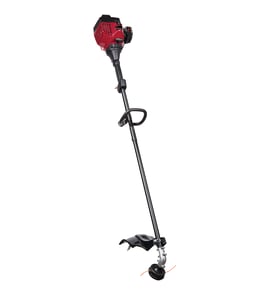



What is the gas mix for a string trimmer?
For the Ryobi 700R gas line trimmer, we use a 32:1 fuel mix: unleaded gasoline plus 2-cycle engine oil. Mix the fuel in a separate approved fuel can (not in the trimmer’s tank) to help prevent hard starting, stalling, and engine damage; see the owner's manual for the exact mixing table.
Correct 32:1 mixing amounts
Use this quick reference for the 700R fuel/oil ratio:
| Gasoline amount | 2-cycle oil to add | Mix ratio |
|---|---|---|
| 1 U.S. gallon | 4.0 fl oz (118 ml) | 32:1 |
| 1 liter | 30 ml | 32:1 |
How we recommend mixing and fueling
- Use fresh, unleaded gasoline and 2-cycle engine oil.
- Measure oil accurately; too much oil can cause heavy smoke and fouled plugs, too little can damage the engine.
- Pour gas and oil into a separate fuel can, then cap and shake to blend thoroughly.
- Fill the fuel tank with the mixed fuel; wipe up spills before starting.
- Replace old fuel; stale or improperly mixed fuel is a common cause of no-start and poor performance.
If the trimmer runs poorly after fueling
Improper or old fuel is a top cause of “won’t start,” “won’t accelerate,” and “stalls when cutting” on the 700R. Check these items first:
- Confirm you mixed 32:1 (not 40:1 or 50:1)
- Drain the tank and refill with fresh 32:1 mix
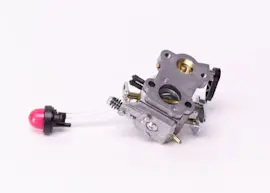
- Press the primer bulb 5 to 7 times before starting
- Check and clean the air filter and muffler screen (if equipped)
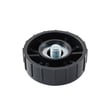
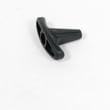
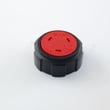
- Inspect the bump head; if line will not advance, the bump knob can be the issue (see knob asm-bmp 791-153066b)
Why it matters
The 700R is a 2-stroke engine that relies on oil mixed into the gasoline for lubrication. The correct 32:1 ratio reduces plug fouling, improves starting, and helps the engine reach proper cutting power.
Last updated: February 2026
What is the difference between a line trimmer and a brushless line trimmer?
A standard line trimmer can use a brushed motor (common on many corded and battery models), while a brushless line trimmer uses an electronic brushless motor design. Brushless designs typically deliver more torque and runtime with less heat and wear; your Ryobi 700R is a gas trimmer, so it does not use a brushless electric motor. See the owner's manual for safe operation and maintenance details specific to the 700R.
Quick comparison
| Feature | Brushed (electric) line trimmer | Brushless (electric) line trimmer | Gas line trimmer (Ryobi 700R) |
|---|---|---|---|
| Power source | Battery or corded | Battery (most common) | Gasoline 2-cycle mix |
| How it works | Brushes contact a commutator | Electronics drive the motor | Small internal combustion engine |
| Typical benefits | Lower upfront cost | More torque, longer runtime, less maintenance | Strong cutting power, no battery limits |
| Typical tradeoffs | More wear, more heat | Higher upfront cost | Fuel mixing, more vibration/noise, more routine maintenance |
What “brushless” usually means in real use
- More usable torque under load (thick grass, weeds)
- Better efficiency (often longer runtime per battery charge)
- Less motor wear (no brushes to replace)
- Cooler operation under heavy trimming
- Often lighter motor for the same output
Why it matters for your Ryobi 700R
Even though “brushless” is an electric-motor term, the practical buying decision is still about power and upkeep:
- If you want maximum convenience, electric brushless models reduce routine motor maintenance.
- If you want long sessions without charging, a gas trimmer like the 700R keeps going as long as you have fresh fuel mix.
- For cutting performance, keep the string head in good shape and avoid overextending line; excess line can overheat the clutch (the guard blade trims line to the proper length).
Related maintenance tip (applies directly to the 700R)
A bump-feed head releases line when you tap the head on the ground at higher speed; the guard blade cuts it to the correct length. If your bump feed is worn or not feeding smoothly, replacing the knob assembly can restore normal line advance (see knob asm-bmp 791-153066b).
Last updated: February 2026
What is the significance of the number 700R?
On the Ryobi 700R gas line trimmer, 700R is the model number that identifies the exact trimmer design and its correct replacement parts, specifications, and maintenance procedures. It is not a “meaningful” code like an angel number; it is the product identifier used for service and parts matching.
What 700R tells you (and why we use it)
When you use 700R, we can match you to the right information for your trimmer, including the correct operator instructions and specs listed for this model in the owner's manual.
Key ways the model number helps:
- Confirms you are viewing the correct Ryobi line trimmer parts list
- Ensures you order compatible items (for example, bump feed components)
- Ties your trimmer to the correct specifications (engine size, line size, cutting path)
- Helps troubleshoot using the model’s troubleshooting chart and maintenance schedule
- Prevents “looks the same” parts from being installed incorrectly
Model-specific details tied to 700R
For the Ryobi 700R, the operator manual lists these specifications:
| Spec (700R) | What it means for you |
|---|---|
| Engine displacement: 31 cc | Helps when comparing performance and tune-up parts |
| Fuel/oil ratio: 32:1 | Critical for 2-cycle engine life and starting |
| Cutting path diameter: 15 in | Sets trimming swath and guard expectations |
| Trimming line diameter: 0.080 in | Guides what line size feeds correctly |
Common “parts matching” example
If your bump head is not feeding line correctly, the model number helps you choose the right bump feed components. One example part commonly associated with bump feed operation is the knob asm-bmp 791-153066b.
Why it matters
Using the exact model number 700R is the difference between a repair that fits and works the first time versus a return, poor line feed, vibration, or premature wear from mismatched parts or incorrect setup.
Last updated: February 2026
Can I use .095 trimmer line in a .080 trimmer?
Yes, you can sometimes run .095-inch trimmer line in a trimmer set up for .080-inch line, but on a Ryobi 700R it commonly feeds worse in the bump head and can overload the clutch if the line ends up too long. For reliable bump-feed performance, we recommend sticking with the line size and length limits listed in the owner's manual.
What changes when you go from .080 to .095
Thicker line increases cutting power, but it also increases drag on the engine and string head.
- Harder on the clutch and can make the engine bog down in heavy grass
- More likely to jam or “not bump” smoothly in the spool
- Can reduce trimming RPM and make the head feel less responsive
- Typically lasts longer per length, but uses more power to spin
- Can make stalling more likely if you try to bump in tall grass
How to try it safely (if you choose to)
If you want to experiment with .095, keep the setup conservative so the head can still auto-trim to the correct length.
- Load the line neatly and evenly on the reel (overlaps cause feed problems).
- Start with a short test session in light grass.
- Bump on bare ground or hard soil at higher speed so the head can release line correctly.
- Stop immediately if you smell hot clutch, hear abnormal squealing, or the head stops spinning.
Quick comparison
| Line size | Best for | Common downside in a .080 head |
|---|---|---|
| .080 in | General trimming, lighter weeds | Less durability in thick brush |
| .095 in | Heavier weeds, thicker stems | More drag; more feed issues; higher clutch heat risk |
Why it matters for the Ryobi 700R bump head
Your 700R uses a bump head that releases about 1 inch of line per bump, and the guard blade trims excess line back to the proper length. If thicker line feeds inconsistently or you run the line longer than the guard allows, the clutch can overheat and performance drops quickly.
Related part if your bump feed is acting up
If the head will not bump-feed smoothly even with the correct line, a worn knob can contribute to poor operation. Replacing the knob asm-bmp 791-153066b is a common fix when the bump mechanism is damaged or stripped.
Last updated: February 2026
What gas string trimmer has the most power?
The most powerful gas string trimmers are professional-grade, higher-displacement straight-shaft models built to hold RPM in thick weeds and brush. Your Ryobi 700R is a capable homeowner trimmer; you get its best power by using the correct fuel mix and keeping airflow and the cutting head in good condition (see the 700R owner's manual).
What “most power” means on a gas trimmer
On a string trimmer, “power” shows up as torque under load and less bogging when the line hits heavy growth. These factors drive it:
- Larger engine displacement (cc) and pro-duty clutch/drive components
- Straight shaft with a gear head (common on pro units)
- Correct 2-cycle fuel mix and fresh fuel
- Clean air filter and unobstructed muffler/spark arrestor
- Correct line diameter and a properly feeding bump head
How the Ryobi 700R stacks up (real-world expectations)
Use this comparison to decide whether you need a higher-power trimmer or just maintenance.
| Cutting situation | What a higher-power gas trimmer improves | What to do first on a Ryobi 700R |
|---|---|---|
| Thick weeds, tall grass | Less stalling, faster clearing | Use fresh 2-cycle mix; clean air filter |
| Fence lines, edging | More consistent RPM under load | Keep line at proper length; clear head debris |
| Brushy growth | More torque; some accept brush blades | Use the right line and technique; consider a brush-capable model if needed |
If your 700R feels underpowered, fix these first
Low power is usually fuel, airflow, ignition, or a dragging cutting head.
- Drain old fuel; refill with fresh, properly mixed 2-cycle fuel
- Replace a fouled spark plug
- Clean or replace the air filter
- Remove grass wrap and debris from the string head
- Clean or replace a plugged muffler/spark arrestor
Line-feed problems can feel like “no power”
If the head will not advance line, cutting performance drops fast because the line stays too short. If the bump feed is slipping or damaged, replace the knob asm-bmp 791-153066.
Why it matters
“Most powerful” only pays off if you routinely cut heavy growth; pro trimmers are heavier and use more fuel. For typical yard trimming, a properly maintained Ryobi 700R delivers strong performance.
Last updated: February 2026